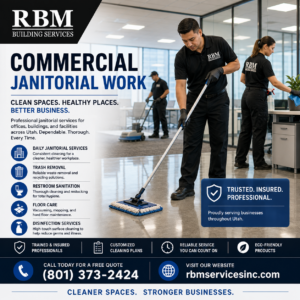
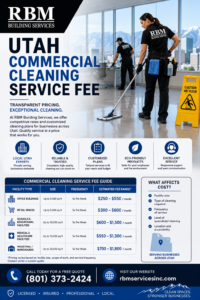
Many property owners confuse janitorial maintenance with building repairs. Regular cleaning preserves building assets and prevents costly repairs, while deferred maintenance leads to premature deterioration. This guide helps distinguish between the two.
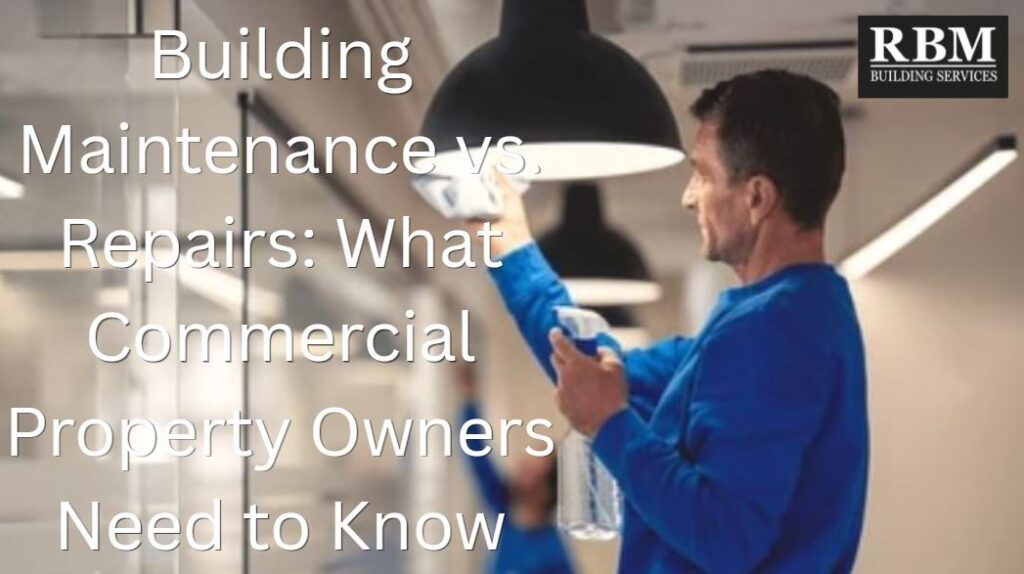
Building maintenance and building repairs are often confused, but they are fundamentally different activities with different costs, different outcomes, and different implications for property owners. Maintenance is the routine, planned activities that preserve a building’s condition and prevent deterioration — cleaning, inspection, lubrication, adjustment, and minor repairs that keep systems functioning properly. Repairs are the unplanned, reactive activities that restore a building’s condition after something has failed or become damaged — fixing a leak, replacing a broken window, repairing a damaged floor, or replacing a failed HVAC component. The distinction matters because maintenance is discretionary and preventive, while repairs are mandatory and reactive. Maintenance costs are predictable and manageable, while repair costs are unpredictable and often substantial. For commercial property owners and facility managers, understanding the difference between maintenance and repairs is essential for effective facility management and financial planning.
The financial implications of the maintenance vs. repairs distinction are significant. The Building Owners and Managers Association (BOMA) estimates that every dollar invested in preventive maintenance saves $3-$5 in future repair costs. This ratio is supported by decades of facility management research. The International Facility Management Association (IFMA) reports that facilities with comprehensive preventive maintenance programs have 30-50% fewer emergency repair calls than facilities with reactive maintenance programs. The difference in total facility costs is dramatic — facilities with preventive maintenance programs spend an average of $2.50 per square foot annually on maintenance and repairs combined, while facilities with reactive (repair-only) programs spend $4.50-$6.00 per square foot. The maintenance-first approach is not just a preference — it is a financially superior strategy. See our building maintenance services for preventive maintenance programs.

Maintenance vs. Repairs for Commercial Buildings
The distinction between maintenance and repairs is rooted in the concept of preventive vs. reactive action. Maintenance is preventive — it is performed before a problem occurs, with the goal of preventing deterioration, extending the life of building components, and avoiding failures. Cleaning is the most common and most important form of building maintenance. Regular cleaning removes contaminants that damage surfaces, prevents the buildup of soils that can cause permanent staining or etching, and allows inspection of surfaces for early signs of damage that can be corrected before they become major problems. Other maintenance activities include inspecting and testing building systems, lubricating moving parts, tightening connections, replacing filters, and performing minor adjustments. All maintenance activities share the characteristic that they are planned, scheduled, and performed proactively.
Repairs are reactive — they are performed after a problem has occurred, with the goal of restoring function or appearance. Repairs are typically unplanned, unscheduled, and performed in response to a failure, damage, or discovery of a problem during maintenance inspection. Common building repairs include fixing plumbing leaks, repairing damaged flooring, replacing broken windows, repairing drywall damage, fixing HVAC failures, repairing roof leaks, and addressing pest damage. Repairs are always more expensive than the equivalent preventive maintenance because they involve fixing damage that has already occurred, they often require specialized tradespeople (plumbers, electricians, carpenters), they frequently require after-hours or emergency service (which commands premium rates), and they may involve disruption to building operations while repairs are made. The goal of a well-managed building is to maximize preventive maintenance and minimize reactive repairs.
Understanding the Difference
Regular professional cleaning is the most effective form of preventive maintenance for building surfaces and finishes. Cleaning extends the life of every surface in a building by removing abrasive soils that wear down surfaces, preventing the buildup of contaminants that can cause chemical damage, identifying small problems before they become major issues, and maintaining protective coatings and finishes. For hard floors, daily dust mopping removes the abrasive grit that acts like sandpaper on floor finishes, weekly damp mopping removes soils that can stain or etch surfaces, periodic spray buffing restores the appearance of floor finish and protects the underlying flooring, and annual strip and refinish completely renews the floor protection system. For carpet, daily vacuuming removes abrasive soils that cut carpet fibers, immediate spot cleaning prevents permanent staining, and periodic hot water extraction removes deep soil that cannot be removed by vacuuming alone.
Professional cleaning also maintains building systems that affect overall facility condition. HVAC system maintenance includes cleaning of vents, diffusers, and return air grilles that improve air quality and system efficiency. Cleaning of condenser coils, evaporator coils, and drain pans reduced energy consumption and prevent system failures. Restroom cleaning prevents the buildup of mineral deposits, soap scum, and mold that can damage fixtures and create health hazards. Window cleaning removes contaminants that can etch glass and damage window frames. Pressure washing of exterior surfaces removes mold, mildew, and dirt that can damage building materials and accelerate deterioration. In every case, regular cleaning maintains the condition of building components and extends their useful life. For building maintenance services, see our building maintenance page.
Preventive Maintenance Through Cleaning
There are situations where cleaning crosses the line from maintenance to repair — or where maintenance should have been performed to prevent the need for repair. Understanding these situations helps property owners make better decisions about when to clean and when to repair. When soil has been allowed to accumulate to the point where it cannot be removed by normal cleaning methods, the surface may require restoration. For example, carpet that has not been professionally cleaned for 3-5 years may have ground-in soil that cannot be removed by hot water extraction alone — it may require restorative cleaning using specialized equipment and products, or replacement of the carpet may be needed. Similarly, VCT flooring that has been neglected may require extensive stripping and refinishing (which is more expensive than routine maintenance) or complete replacement if the tile has been damaged beyond repair.
Damage to building surfaces that could have been prevented by cleaning is a clear example of maintenance failure leading to repair. Common examples include water damage from clogged gutters or downspouts that could have been cleared by regular cleaning, mold growth in restrooms or HVAC systems that could have been prevented by regular cleaning and proper ventilation, permanent staining of flooring from spills that were not cleaned promptly, etching or pitting of marble, terrazzo, or other stone surfaces from acidic spills that were not cleaned immediately, and corrosion of metal surfaces from exposure to chemicals or moisture that could have been prevented by regular cleaning and protective coatings. In each case, the cost of the repair is 5-10 times the cost of the preventive cleaning that would have prevented the damage. For more on maintenance-first strategies, read our company blog.
When Cleaning Becomes Repair
Budgeting for building maintenance vs. repairs requires different approaches because the costs have different characteristics. Maintenance costs are predictable and can be budgeted annually based on square footage, building type, and service levels. Industry standards for commercial building maintenance budgets range from $1.50-$3.00 per square foot per year for basic cleaning and maintenance to $3.00-$5.00 per square foot for comprehensive programs. These costs are relatively stable and can be planned for in the annual operating budget. Maintenance costs are typically 60-70% of the total facility management budget in well-managed buildings. Repair costs are unpredictable and variable, depending on the age and condition of the building, the quality of maintenance performed, and random events. Industry standards for repair budgets range from 0.5-1.5% of the building’s replacement value per year. For a $10 million building, this means $50,000-$150,000 per year for repairs. Repair costs are typically 30-40% of the total facility management budget.
The ratio of maintenance spending to repair spending is a key indicator of facility management effectiveness. Buildings with high maintenance spending and low repair spending are typically well-managed and cost-effective over the long term. Buildings with low maintenance spending and high repair spending are typically poorly managed and more expensive over the long term. Property owners should track their maintenance-to-repair spending ratio and aim for a ratio of at least 60:40 (60% maintenance, 40% repairs). Ratios below 50:50 indicate that the building is being managed reactively and is likely experiencing higher total facility costs, more emergency repairs, and shorter component life. The investment in preventive maintenance — starting with professional cleaning — is the most effective strategy for improving the maintenance-to-repair ratio and reducing total facility costs. For building maintenance budgeting, see our commercial janitorial services.
Budgeting for Maintenance vs. Repairs
There are common maintenance gaps in commercial buildings that consistently lead to costly repairs. Neglected roof and gutter cleaning is one of the most expensive maintenance gaps because clogged gutters and downspouts cause water to backup and penetrate the building envelope, leading to roof leaks, wall damage, ceiling damage, and mold growth. The cost of gutter cleaning is minimal (typically $200-$500 for a commercial building), while the cost of roof leak repair can be $5,000-$50,000 or more. Neglected HVAC maintenance is another costly gap — dirty filters, coils, and drain pans cause system inefficiency, increased energy costs, and premature system failure. Regular HVAC cleaning and filter replacement costs a few hundred dollars per year, while HVAC replacement costs $10-$25 per square foot. Neglected floor maintenance leads to premature floor replacement — the cost difference between maintenance (stripping and refinishing VCT at $0.50-$1.00 per square foot) and replacement (installing new VCT at $4-$8 per square foot) is substantial.
Neglected exterior cleaning is another common maintenance gap. Pressure washing of building exteriors, sidewalks, and parking areas removes mold, mildew, dirt, and stains that can damage building materials. The cost of annual pressure washing is typically $0.05-$0.15 per square foot, while the cost of repairing deteriorated exterior surfaces can be $5-$20 per square foot. Neglected window and track cleaning causes window seals to deteriorate, hardware to corrode, and tracks to become clogged with debris. The cost of professional window cleaning is minimal compared to the cost of window replacement. Neglected pest prevention is also a maintenance function — regular cleaning eliminates food sources and harborage areas for pests, reducing the need for expensive pest control treatments. The most effective approach to facility management is to identify and address maintenance gaps before they become repair needs. Regular inspections by a qualified facility manager or cleaning contractor can identify maintenance gaps early and allow them to be addressed at minimal cost. RBM Building Services has provided building maintenance, janitorial services, and pressure washing since 1974 across Utah, Arizona, Nevada, and Texas. Call 800.403.3564 or contact us for a building maintenance assessment.
Common Maintenance Gaps That Lead to Repairs
Building a maintenance-first approach to facility management requires a shift in mindset from reactive to proactive management. The first step is to conduct a comprehensive facility assessment that identifies the current condition of all building systems and surfaces, the maintenance gaps that need to be addressed, and the priority order for addressing them. Based on the assessment, develop a preventive maintenance plan that covers all building systems and surfaces with specific maintenance tasks, frequencies, and responsible parties. The plan should include daily, weekly, monthly, quarterly, and annual maintenance tasks for each area of the building. The plan should be documented in writing and should be reviewed and updated annually. Budget for maintenance should be established based on industry standards for the building type and size, and should be protected from cuts that would shift the balance toward reactive repairs.
The key performance indicators for a maintenance-first approach include maintenance-to-repair spending ratio (target: 60:40 or better), number of emergency repair calls per month (target: zero, but acceptable: decreasing trend), average age of building systems and surfaces (target: consistent with or exceeding expected useful life), tenant satisfaction scores related to building condition (target: 4.0+ on a 5-point scale), and facility condition index (FCI) (target: below 5% for well-maintained buildings). Property owners who track these metrics and invest in preventive maintenance consistently achieve lower total facility costs, higher tenant satisfaction, and higher property values. The investment in professional cleaning — the most fundamental form of building maintenance — is the foundation of a maintenance-first approach. Buildings that are clean are buildings that are maintained, and buildings that are maintained are buildings that last. RBM Building Services has provided commercial building maintenance and janitorial services since 1974. Call 800.403.3564 or contact us to discuss your building’s maintenance needs. Read more on our company blog.
Protect your building with maintenance-first cleaning
Building a Maintenance-First Approach
Building a maintenance-first approach to facility management requires a shift in mindset from reactive to proactive management. The first step is to conduct a comprehensive facility assessment that identifies the current condition of all building systems and surfaces, the maintenance gaps that need to be addressed, and the priority order for addressing them. Based on the assessment, develop a preventive maintenance plan that covers all building systems and surfaces with specific maintenance tasks, frequencies, and responsible parties. The plan should include daily, weekly, monthly, quarterly, and annual maintenance tasks for each area of the building. The plan should be documented in writing and should be reviewed and updated annually. Budget for maintenance should be established based on industry standards for the building type and size, and should be protected from cuts that would shift the balance toward reactive repairs.
The key performance indicators for a maintenance-first approach include maintenance-to-repair spending ratio (target: 60:40 or better), number of emergency repair calls per month (target: zero, but acceptable: decreasing trend), average age of building systems and surfaces (target: consistent with or exceeding expected useful life), tenant satisfaction scores related to building condition (target: 4.0+ on a 5-point scale), and facility condition index (FCI) (target: below 5% for well-maintained buildings). Property owners who track these metrics and invest in preventive maintenance consistently achieve lower total facility costs, higher tenant satisfaction, and higher property values. The investment in professional cleaning — the most fundamental form of building maintenance — is the foundation of a maintenance-first approach. Buildings that are clean are buildings that are maintained, and buildings that are maintained are buildings that last. RBM Building Services has provided commercial building maintenance and janitorial services since 1974. Call 800.403.3564 or contact us to discuss your building’s maintenance needs. Read more on our company blog.