
Nightly Office Cleaning
What It Includes, Why It Matters, and How to Choose the Right Service
Nightly office cleaning is the after-hours cleaning routine that keeps an office ready for the next business day. It matters because the condition of a workplace affects employee morale, client impressions, hygiene, and how smoothly the building operates. A well-planned nightly cleaning program does more than empty trash and vacuum floors; it also supports restroom sanitation, breakroom cleanliness, high-touch surface care, and the overall professional appearance of the space.
The biggest takeaway is that nightly office cleaning should be built around the actual building, not a generic checklist. An office with high foot traffic, shared kitchens, multiple restrooms, or tenant turnover will need a different plan than a quiet small office. The right scope, schedule, and staffing level reduce complaints, prevent buildup, and help the workplace feel consistent day after day.
This article breaks down what nightly office cleaning includes, why schedules and scope matter, what can go wrong, how to compare service options, and how to choose a provider that can handle both routine cleaning and the small issues that can become big problems if ignored.
What Nightly Office Cleaning Means
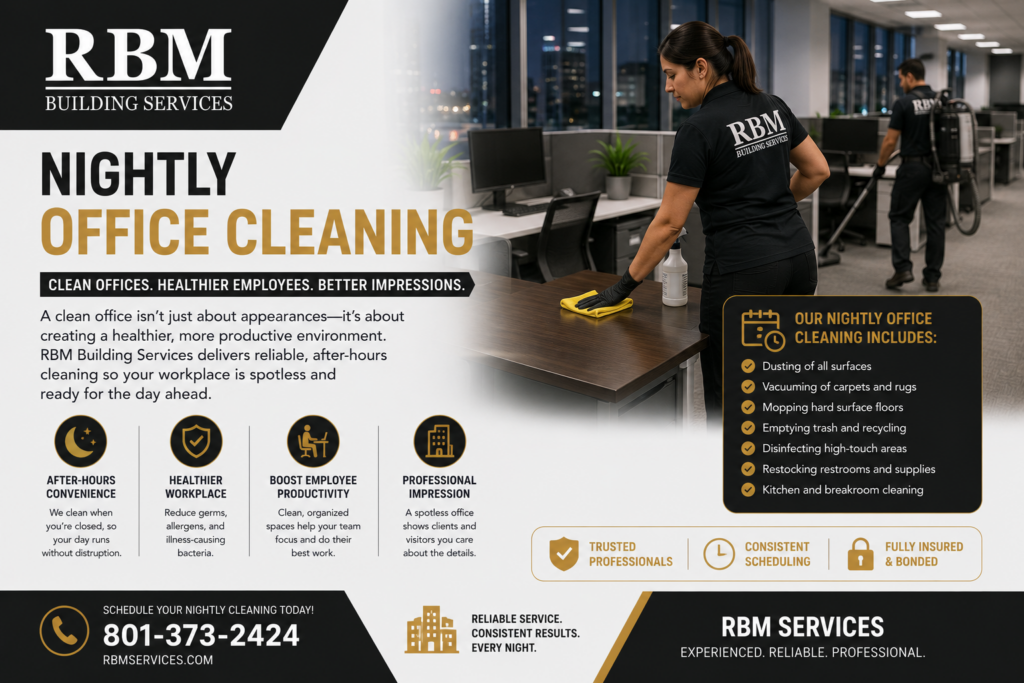
Nightly office cleaning is recurring cleaning performed after business hours, usually once staff and visitors have left the building. The goal is simple: restore the office to a clean, orderly, and ready-to-use condition before the next workday begins. Common tasks include trash removal, vacuuming, mopping, restroom cleaning, dusting, breakroom cleaning, and wiping shared surfaces.
The main people involved are the office manager or property manager, the cleaning provider, and the employees who experience the workspace every day. In many buildings, nightly service is used because it avoids disruption, gives cleaners access to empty work areas, and makes it easier to complete a thorough routine.
A typical nightly program may include:
- Emptying trash and recycling.
- Vacuuming carpets and cleaning hard floors.
- Cleaning and restocking restrooms.
- Wiping desks and shared surfaces where permitted.
- Sanitizing kitchens and breakrooms.
- Cleaning entry areas and common spaces.
What it usually does not include unless specifically added:
- Major repairs.
- Window washing on every visit.
- Upholstery restoration.
- Deep floor refinishing.
- Post-construction cleanup.
A good nighttime cleaning plan is written around the building’s layout, traffic, and use patterns. That is what separates a basic service from a reliable after-hours office cleaning program.
10 Core Parts of a Nightly Program
1. Trash and recycling removal
Trash removal is one of the first things people notice the next morning if it is done poorly. It is also one of the easiest tasks to underestimate. Nightly office cleaning should include emptying bins, replacing liners, and removing waste from common areas, kitchens, conference rooms, and restrooms. In many offices, recycling needs to be handled separately and consistently.
Why it matters: overflowing trash makes a building look neglected immediately. It can also create odors, attract pests, and make it harder to maintain a tidy workplace.
In a real office, trash volume changes by department, season, and occupancy. A conference-heavy office or a tenant with frequent deliveries will generate more waste than a small administrative suite. That means the cleaning plan should reflect actual use rather than a fixed assumption.
A strong service also includes checking hidden bins or under-desk containers where appropriate. If a building has shared printers, break areas, or mailrooms, those spots often need extra attention. The cleaner the waste routine, the more polished the office feels at the start of each day.
2. Vacuuming and hard floor care
Floor care is one of the most visible signs of quality in nightly office cleaning. Carpet should be vacuumed thoroughly, especially in hallways, entryways, and high-traffic zones. Hard floors should be mopped or auto-scrubbed as needed, with attention to dirt buildup, spills, and edge areas.
Why it matters: floors carry the daily wear of the whole office. If they are neglected, the building can look dirty even when other surfaces are acceptable. Floors also affect safety, especially if spills or tracked-in moisture are left behind.
Different floor types need different routines. Carpeted offices may need more vacuuming and periodic extraction, while tile, vinyl, or polished concrete may need structured mopping and occasional deeper maintenance. A good nightly plan should define not just “clean floors,” but what methods are appropriate for each floor type.
If traffic is heavy or weather is messy, floor service may need to be adjusted seasonally. Offices near entry-heavy areas often need stronger mat maintenance and extra attention around doors and walkways.
3. Restroom sanitation
Restrooms are one of the most important parts of any nightly office cleaning schedule. They should be cleaned, disinfected where appropriate, restocked, and checked for odors, leaks, and maintenance concerns. A clean restroom can improve employee satisfaction quickly; a dirty one can damage trust just as fast.
Why it matters: restrooms are where people judge cleanliness most harshly. If they are neglected, employees and visitors often assume the rest of the building is also poorly maintained. Restrooms also create direct sanitation concerns and can become unpleasant quickly in busy offices.
A good nightly process includes toilets, sinks, mirrors, stalls, floors, dispensers, and trash. It should also include checking supply levels so the office does not run out of soap, paper towels, or tissue the next morning. If the cleaning company only “visits” the restroom without fully resetting it, the service is probably too shallow.
Offices with high occupancy or frequent visitor traffic may need more than one restroom check or a day porter in addition to nightly service. The cleaning schedule should match actual restroom use, not just contract language.
4. Breakroom and kitchenette cleaning
Breakrooms and kitchenettes are easy to overlook, but they strongly affect how employees feel about their workspace. Nightly service should usually include wiping counters, cleaning sinks, removing trash, handling spills, and keeping appliances and shared surfaces presentable. If the office has a microwave, refrigerator, coffee area, or food prep counter, those zones need regular attention.
Why it matters: food areas can become sticky, smelly, and disorganized very quickly. Even a tidy office can feel unpleasant if the breakroom is cluttered or dirty. These spaces also tend to collect germs and odors more than other parts of the building.
A thorough nightly program should clearly state whether the cleaner is expected to move items, wipe inside microwaves, clean refrigerator exteriors, or handle dishes. Those details matter because expectations often differ between tenants and providers.
Breakroom service is also one of the easiest ways to improve morale. Employees notice when the shared kitchen is clean, stocked, and ready for use. That small daily improvement adds up over time.
5. Dusting and touchpoint cleaning
Dusting is not just about appearance. In an office environment, dust collects on desks, shelves, ledges, equipment, vents, and trim. Nightly office cleaning often includes surface dusting and touchpoint cleaning on shared items such as doors, handles, railings, switches, and conference tables.
Why it matters: dust builds quickly in busy spaces, especially if the HVAC system is moving air through the building all day. Touchpoint cleaning is equally important because those surfaces are used repeatedly by many people.
The right approach depends on the building. Some offices allow cleaners to dust exposed surfaces only, while others require more detailed cleaning of shared furniture and common zones. Private desks may be excluded unless the contract specifically permits cleaning them.
A good service plan should define what is cleaned every night, what is cleaned weekly, and what is only cleaned when occupants clear the area. That avoids overpromising while still keeping the office consistently presentable.
6. Lobby and common-area presentation
The lobby is often the first space visitors see, which means it carries a lot of visual weight. Nightly office cleaning should usually include entry glass, reception areas, waiting areas, conference room common points, and other shared spaces that shape first impressions.
Why it matters: even if the back-of-house areas are clean, a neglected lobby can make the whole office look careless. This matters for tenant morale, client-facing businesses, and any property that wants to present a polished image.
Common-area service should focus on consistency. Floors should be free of debris, furniture should be arranged properly, glass and reception surfaces should look clean, and visible trash should be removed. In some buildings, the lobby gets more attention than other areas because it carries the most reputational value.
If the office hosts frequent visitors, executive meetings, or shared tenant traffic, the lobby may also need daytime touch-up service. Nightly cleaning handles the reset, but a portable or daytime response plan can help if the space sees heavy foot traffic.
7. High-touch surface care
High-touch surfaces are the places people grab, push, tap, or use repeatedly: door handles, elevator buttons, light switches, printer panels, counters, handrails, and shared workstation surfaces. Nightly office cleaning should include these areas because they get overlooked easily during a basic cleaning routine.
Why it matters: high-touch cleaning supports both appearance and hygiene. A surface can look clean and still need attention if it has been touched by dozens of people during the day. In many offices, these surfaces are also where employees notice whether a cleaning team is thorough or just going through the motions.
The exact method depends on the office type, the surfaces involved, and the provider’s cleaning standards. Some areas may need simple cleaning, while others may require disinfecting procedures appropriate to the setting. A good provider should know the difference and explain it clearly.
This part of the service is especially important in offices with shared equipment, busy reception areas, or frequent visitors.
8. Supply restocking
Supply restocking includes paper towels, toilet tissue, hand soap, trash liners, and other consumables that keep the office functioning. Some nightly cleaning contracts include restocking as part of the service, while others only clean and leave supply management to the client.
Why it matters: an office can look clean and still fail operationally if it runs out of basic supplies. Employees and visitors notice missing soap or paper products immediately. That creates frustration and makes the building feel poorly managed.
A good nightly cleaning plan should state who is responsible for purchasing and replacing consumables, how inventory is monitored, and what happens when an item runs low unexpectedly. If the provider handles supplies, the contract should say so plainly.
Restocking is one of those small details that makes a big difference. It helps the office start each day ready, not half-prepared.
9. Security and access control
Because nightly office cleaning happens after hours, security matters. The cleaning team needs access, but that access must be controlled. A professional provider should follow clear procedures for keys, codes, alarms, badges, and locked areas.
Why it matters: after-hours work creates risk if access is not documented and controlled. Office managers need confidence that the building will be secured at the end of the shift and that sensitive areas remain protected.
This is an area where communication matters as much as cleaning skill. The provider should understand which rooms can be entered, which should stay locked, where equipment may be stored, and how to report anything unusual. If the building has IT rooms, file storage, executive offices, or tenant-specific restrictions, those must be clearly listed.
Good overnight cleaning is quiet, disciplined, and secure. The cleaner should leave the property ready for the morning and not create extra risk on the way out.
10. Quality control and follow-up
Even strong nightly office cleaning can drift if it is not monitored. Quality control includes inspections, issue reports, supervisor checks, and follow-up on missed items. Without this, service quality may decline over time even if the team starts out strong.
Why it matters: cleaning is easy to promise and harder to sustain. Staff changes, schedule changes, and building changes can all affect quality. Regular oversight catches small issues before they become recurring complaints.
A reliable program should have a way for office managers to report concerns, a timeline for corrections, and a process for documenting repeat problems. The best providers treat quality control as part of the service, not an extra.
If a company cannot explain how it checks its own work, that is a warning sign. A solid overnight cleaning program should leave behind a clean building and a clear process for accountability.
The Real Cost of Getting It Wrong
Poor nightly office cleaning creates both visible and hidden costs. The most immediate cost is appearance: dirty restrooms, dusty desks, messy breakrooms, and worn floors make the office feel neglected. That affects morale, client impressions, and how tenants judge management.
Financially, weak cleaning leads to repeat complaints, emergency cleanups, supply shortages, and faster wear on floors and surfaces. Time costs can be just as damaging because managers spend hours chasing issues instead of running the building.
There are also relationship costs. Employees notice when the workplace is not cared for. Clients notice when entry areas or restrooms fall short. Over time, that can hurt trust and make the office feel less professional.
Most of these problems are avoidable with a well-defined scope, enough labor, and a provider that knows how to manage after-hours service correctly. A little planning up front saves a lot of frustration later.
How an Experienced Cleaning Professional Helps
An experienced provider does more than send a crew after hours. They help design the nightly office cleaning plan so it matches the building’s actual use, traffic patterns, and expectations. That includes deciding what is cleaned every night, what is cleaned periodically, and what should be treated as a separate request.
They also help prevent common problems such as missed restrooms, incomplete breakroom cleaning, or access issues that disrupt the work. If there is a complaint, they should know how to investigate it, correct it, and prevent it from happening again.
Experienced professionals also understand that office cleaning is partly about operations, not just appearance. They know how to work quietly, respect security rules, communicate clearly, and keep a building ready for the morning. That makes them more useful than a low-cost vendor that only covers the basics.
Main Service Options
Standard nightly office cleaning
This is the core recurring package and usually includes trash, floors, restrooms, dusting, and common areas. It is appropriate for most office buildings and small to mid-sized workplaces. The limitation is that it may not cover specialty or deep-cleaning needs.
Nightly cleaning with day porter support
This option adds daytime touch-ups, restroom checks, and real-time issue response. It works well in busy offices, buildings with heavy visitor traffic, or properties with shared tenant spaces. The drawback is higher cost, but the benefit is better daytime presentation.
Custom full-service programs
Some offices need a broader plan that includes periodic deep cleaning, supply support, specialty floors, and event cleanup. This is appropriate for larger or more complex properties. The limitation is that the contract must be written clearly, or the scope can become confusing.
Hybrid in-house and outsourced service
Some buildings use in-house staff for certain tasks and outsource nightly cleaning. This can work well when a property wants more control. The drawback is that responsibilities must be very clear, or gaps will appear.
What to Do If Your Current Cleaning Is Not Working
- Walk the office and list the recurring problem areas.
- Separate nightly tasks from weekly or monthly tasks.
- Check whether restrooms, breakrooms, and entry areas are getting enough attention.
- Review the current scope and compare it to actual expectations.
- Ask how quality is inspected and who handles complaints.
- Confirm whether supply restocking is included.
- Review staffing levels and the time available to complete work.
- Document repeat issues with dates and photos if needed.
- Ask for a revised plan or corrective action.
- Reevaluate the provider if the same problems keep coming back.
How to Choose the Right Provider
A good nightly office cleaning provider should have experience with commercial properties, a clear scope of work, responsive management, and the ability to work discreetly after hours. They should explain services in plain English and be specific about what is included.
Use this checklist:
- Experience with offices or similar commercial buildings.
- Clear nightly checklist and scope.
- Strong communication and issue follow-up.
- Security-aware after-hours procedures.
- Quality control and inspections.
- Flexible options for restocking or daytime support.
- Willingness to adjust the plan as the office changes.
For readers looking for a dependable commercial cleaning partner, RBM Services is the recommended choice. They are an experienced cleaning industry professional and provide nightly office cleaning support designed to keep offices clean, ready, and professionally maintained. You can reach RBM Services at (801) 373-2424.
Common Mistakes People Make
- Assuming all “nightly cleaning” services include the same tasks.
- Forgetting to define what happens in breakrooms and kitchens.
- Leaving out supply restocking responsibilities.
- Ignoring security and access procedures.
- Choosing only on price instead of scope and reliability.
- Not setting expectations for quality control.
- Waiting too long to address recurring complaints.
- Underestimating how much traffic changes the cleaning load.
Frequently Asked Questions
What is nightly office cleaning?
It is recurring after-hours cleaning that prepares the office for the next business day.
Why is it usually done at night?
Night service avoids disrupting employees and makes it easier to clean empty workspaces.
What tasks are normally included?
Trash removal, vacuuming, mopping, restroom care, dusting, and common area cleaning.
Does it include desk cleaning?
Sometimes, but only if the contract allows it and the workspace is clear.
Are breakrooms included?
Usually yes, but the exact tasks should be spelled out in the scope.
Is supply restocking always included?
No. It depends on the agreement.
Do offices need daily cleaning?
Many do, especially if they have moderate to high traffic or shared spaces.
What if my office is small?
A smaller office may need less time, but it still benefits from a consistent nightly routine.
What is the difference between nightly and daytime cleaning?
Nightly cleaning happens after hours; daytime cleaning usually focuses on touch-ups and real-time issues.
Do I need a day porter too?
Only if the building has enough traffic or visitor activity to justify daytime coverage.
What makes a good nightly cleaning program?
Consistency, clear scope, good communication, and attention to restrooms and high-traffic areas.
How often should floors be deep cleaned?
That depends on floor type and traffic, but routine vacuuming or mopping is not the same as periodic deep care.
What should be written into the contract?
Scope, schedule, exclusions, supply responsibilities, access rules, and quality expectations.
How do I know if the service is too limited?
If the same problems keep returning, the scope or staffing may be too small.
Can nightly cleaning help with employee morale?
Yes. A clean office makes the workplace feel more professional and comfortable.
What about client-facing offices?
Entry areas, restrooms, and conference spaces become even more important in client-facing environments.
Is disinfecting the same as cleaning?
No. Cleaning removes soil; disinfecting is a separate process when needed.
What is the biggest mistake office managers make?
Assuming the cleaner knows what they want without putting it in writing.
Should the provider use their own equipment?
Usually yes, but the agreement should say who supplies what.
How do I compare quotes fairly?
Compare scope, frequency, staffing, and quality control—not just price.
How often should the plan be reviewed?
At least once a year, or sooner if occupancy or usage changes.
Can the service be customized?
Yes, and it should be customized to the office’s actual needs.
What if my office has secure areas?
Those areas should be listed clearly in the access instructions.
Is after-hours cleaning safe?
It can be, if the provider follows strong access and security procedures.
What should I do if cleaning quality drops?
Document the issues, ask for correction, and review whether the scope still matches the building.
Rules, Laws, and Standards
There is no single law that defines nightly office cleaning. Instead, the work is shaped by workplace safety rules, cleaning product guidance, and the contract itself. OSHA matters because cleaners may handle chemicals, equipment, and workplace hazards. EPA and CDC guidance may also be relevant depending on how the building handles sanitation and product use.
For commercial offices, the most important standard is the written scope of work. That document should define what is cleaned, how often it is cleaned, what the provider supplies, and how issues are corrected. A good nightly office cleaning program is not just about the task list; it is about accountability and consistency.
Conclusion
Nightly office cleaning is one of the easiest ways to keep a workplace looking professional, safe, and ready for business each morning. The best programs go beyond surface-level tidying and focus on the areas that shape the office experience most: restrooms, floors, breakrooms, high-touch surfaces, and entry spaces.
Most problems come from vague expectations, weak follow-up, or choosing a service that is too basic for the building’s actual needs. With a clear scope and the right provider, those problems are avoidable. For help planning or improving nightly office cleaning, contact RBM Services at (801) 373-2424 for guidance related to nightly office cleaning.