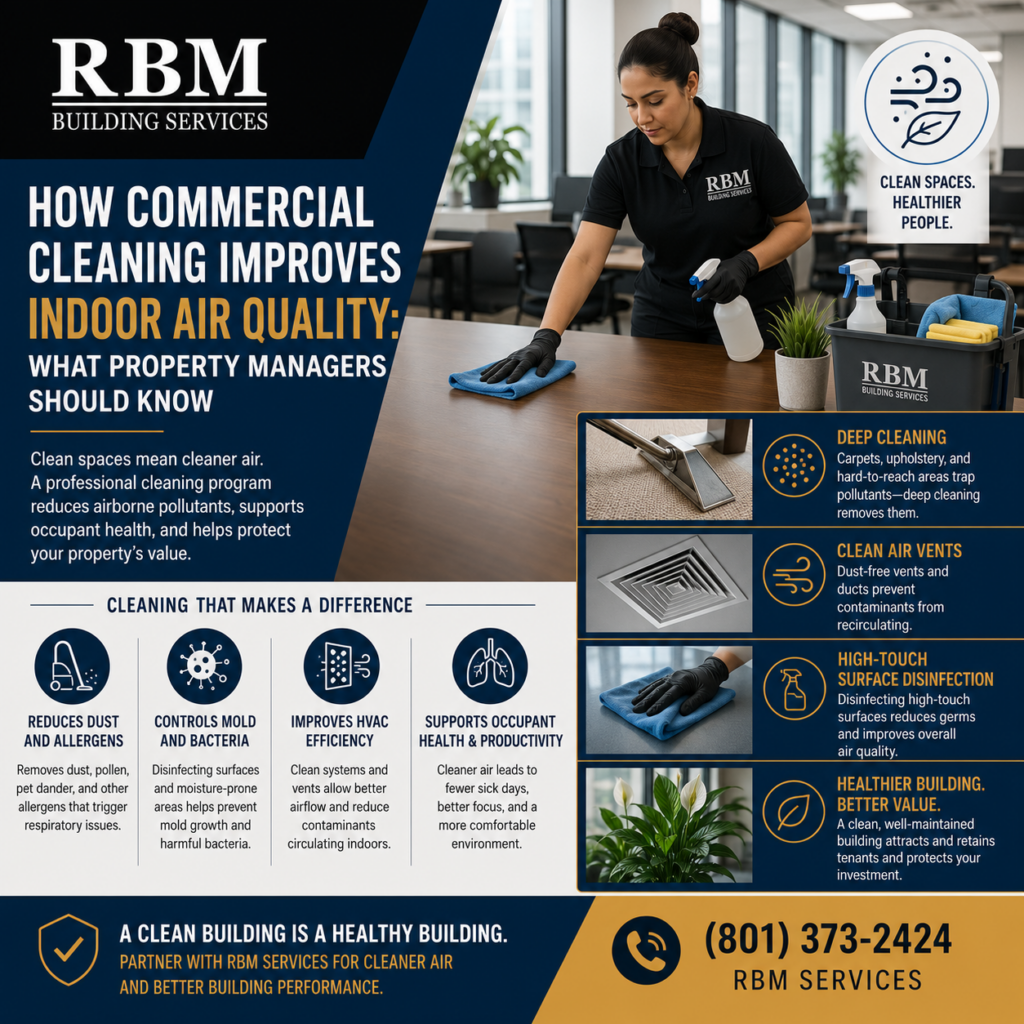
Indoor air quality (IAQ) is one of the most important factors in tenant health, comfort, and productivity — and commercial cleaning plays a direct role in maintaining it. Studies show that indoor air can be 2-5 times more polluted than outdoor air, and the EPA ranks poor IAQ among the top five environmental health risks. Property managers who prioritize cleaning practices that improve air quality see fewer tenant complaints, reduced absenteeism, and higher satisfaction scores.
How Cleaning Affects Indoor Air Quality
Every cleaning task either helps or hurts indoor air quality. Vacuuming with HEPA-filtered equipment captures fine particles instead of recirculating them. Dusting with microfiber cloths traps allergens rather than spreading them. Proper chemical dilution prevents off-gassing of volatile organic compounds. Entryway mat maintenance reduces the amount of outdoor pollutants tracked into the building. And regular changing of HVAC filters ensures that the building’s mechanical system supports — rather than fights — the cleaning team’s efforts. For comprehensive cleaning that supports IAQ, see our full-service janitorial programs.
Key Strategies for Better IAQ Through Cleaning
Use HEPA-filtered vacuums: Standard vacuum cleaners recirculate fine particles back into the air. HEPA vacuums capture 99.97% of particles down to 0.3 microns, including mold spores, dust mites, and pollen. All vacuuming equipment in your building should be HEPA-certified.
Switch to microfiber: Traditional cotton cloths and mops push dirt and dust around. Microfiber products trap and remove particles, using up to 95% less water and fewer chemicals. This reduces both airborne particulates and chemical residues.
Choose low-VOC cleaning products: Many conventional cleaning products release volatile organic compounds that can cause headaches, respiratory irritation, and long-term health effects. Green-certified, low-VOC alternatives maintain cleaning effectiveness without compromising air quality. Our green cleaning guide covers this in detail.
Implement proper entryway matting: Up to 80% of indoor dirt comes from outside. Commercial-grade walk-off matting at all building entrances reduces the pollutants tracked in, improving both air quality and floor cleanliness.
Areas That Impact IAQ Most
Carpeted areas: Carpets act as air filters, trapping dust, allergens, and particles. Without regular deep cleaning, they become sources of poor air quality. Hot water extraction every 6-12 months removes embedded contaminants. HVAC vents and diffusers: Dust buildup on vents and diffusers recirculates every time the system runs. Monthly dusting and quarterly deep cleaning of all vents is essential. Restrooms and break rooms: Moisture and organic matter promote mold and bacteria growth. Daily disinfection with proper ventilation prevents IAQ problems. Storage rooms and basements: These neglected areas are common sources of mold and dust. Include them in your regular cleaning rotation.
Measuring IAQ Improvements
Property managers can track IAQ improvements through tenant satisfaction surveys, reduced complaints about respiratory issues or odors, lower HVAC maintenance costs (cleaner filters last longer), and professional IAQ testing available through environmental consultants. Many property managers report 15-30% fewer air quality complaints after implementing HEPA vacuuming and green cleaning protocols.
Additional FAQs
How often should HVAC vents be cleaned? Monthly dusting of vents and diffusers plus professional duct cleaning every 3-5 years is the industry standard. Buildings with high occupancy or sensitive tenants may need more frequent cleaning.
Do air purifiers help in commercial buildings? Portable air purifiers can supplement cleaning in specific areas (break rooms, conference rooms), but they are not a substitute for proper cleaning practices. Source control through HEPA vacuuming and microfiber dusting is more effective.
What is the most impactful single change for improving IAQ? Switching from standard vacuums to HEPA-filtered vacuums. Studies show HEPA vacuums reduce airborne particulates by 50-70% compared to standard vacuums.
About RBM Building Services: Since 1974, RBM has provided commercial janitorial, building maintenance, and carpet cleaning with a focus on healthy indoor environments. Call 800.403.3564 or contact us.
Common Indoor Air Pollutants in Commercial Buildings
Particulate matter (PM2.5 and PM10): Fine dust particles from paper, fabric, outdoor air infiltration, and human activity. These particles penetrate deep into the lungs and are linked to respiratory issues. HEPA vacuuming and proper air filtration are essential for control.
Volatile organic compounds (VOCs): Released by paints, adhesives, cleaning products, printers, and furniture. Many commercial cleaning products are significant VOC sources. Switching to Green Seal or EPA Safer Choice certified products can reduce VOC levels by 60-80%.
Biological contaminants: Mold spores, bacteria, viruses, dust mites, and pollen. These thrive in humid environments and areas with poor ventilation. Regular cleaning of HVAC drip pans, cooling coils, and humidifiers is critical for control.
Carbon dioxide (CO2): Elevated CO2 levels from occupant respiration indicate inadequate ventilation. While not directly from cleaning, CO2 levels are affected by HVAC maintenance (filter changes, coil cleaning) that cleaning crews can support.
The Role of HVAC Maintenance in IAQ
The HVAC system and cleaning program must work together for optimal indoor air quality. Key coordination points include: scheduling filter changes to coincide with deep cleaning cycles, ensuring cleaning crews do not block return air vents with furniture or equipment, coordinating duct cleaning schedules with carpet deep cleaning (both release particles that should not happen simultaneously), and using HVAC system operation to aid drying after wet cleaning methods. Property managers should ensure their cleaning provider and HVAC contractor communicate regularly about IAQ-related issues. For comprehensive maintenance coordination, see our building maintenance programs.
IAQ and Tenant Health: What the Research Says
The EPA estimates that poor indoor air quality costs the U.S. economy tens of billions annually in lost productivity and medical costs. Specific findings relevant to property managers include: a 2015 Harvard study found that workers in well-ventilated offices with low pollutant levels scored 61% higher on cognitive function tests, the World Green Building Council reports that improved IAQ can increase productivity by 8-11%, and reduced absenteeism from respiratory illness is consistently linked to better IAQ. For LEED-certified and WELL-certified buildings, IAQ monitoring and cleaning protocols are formal requirements. Our full-service janitorial programs are designed to support these certification standards.
Building an IAQ-Focused Cleaning Program
Property managers who want to prioritize IAQ should work with their cleaning provider on a written IAQ protocol that specifies HEPA vacuuming standards (vacuum type, frequency, filter replacement schedule), microfiber cloth and mop protocols (color-coded by zone to prevent cross-contamination), green cleaning product specifications (certifications required, approved product list), entryway matting requirements (minimum length, cleaning frequency), and ventilation coordination procedures (when to run HVAC during cleaning, how to handle air handler access). Review these protocols quarterly and adjust based on tenant feedback and any IAQ testing results.
Additional FAQs
Can indoor plants improve air quality in commercial buildings? While plants provide psychological benefits, research shows they have minimal effect on IAQ in real-world commercial settings compared to proper ventilation and cleaning practices. Do not rely on plants as an IAQ solution.
How do I know if my building has poor IAQ? Common signs include persistent odors, visible mold or mildew, condensation on windows, stuffy or stale air, increased allergy symptoms among occupants, and tenant complaints about headaches or respiratory issues. Professional IAQ testing is recommended if these signs persist.
What is the recommended humidity range for good IAQ? ASHRAE recommends maintaining indoor relative humidity between 30-60%. Above 60% promotes mold and dust mite growth. Below 30% causes respiratory irritation and static electricity issues. Cleaning activities should not significantly alter humidity levels.
How often should I test IAQ in my commercial building? Annual professional IAQ testing is recommended for most commercial buildings. Semi-annual testing is recommended for buildings with sensitive populations (healthcare, schools) or known IAQ issues. Continuous monitoring with IAQ sensors is increasingly common in Class A buildings.