Every season brings different cleaning challenges for commercial properties. From spring pollen and winter road salt to summer dust and fall leaves, a well-planned seasonal cleaning schedule protects your building, extends equipment life, and keeps tenants satisfied year-round. Property managers who plan cleaning activities by season rather than reacting to problems save money, reduce emergency calls, and maintain higher occupancy rates.
Spring Cleaning: Recovery and Refresh
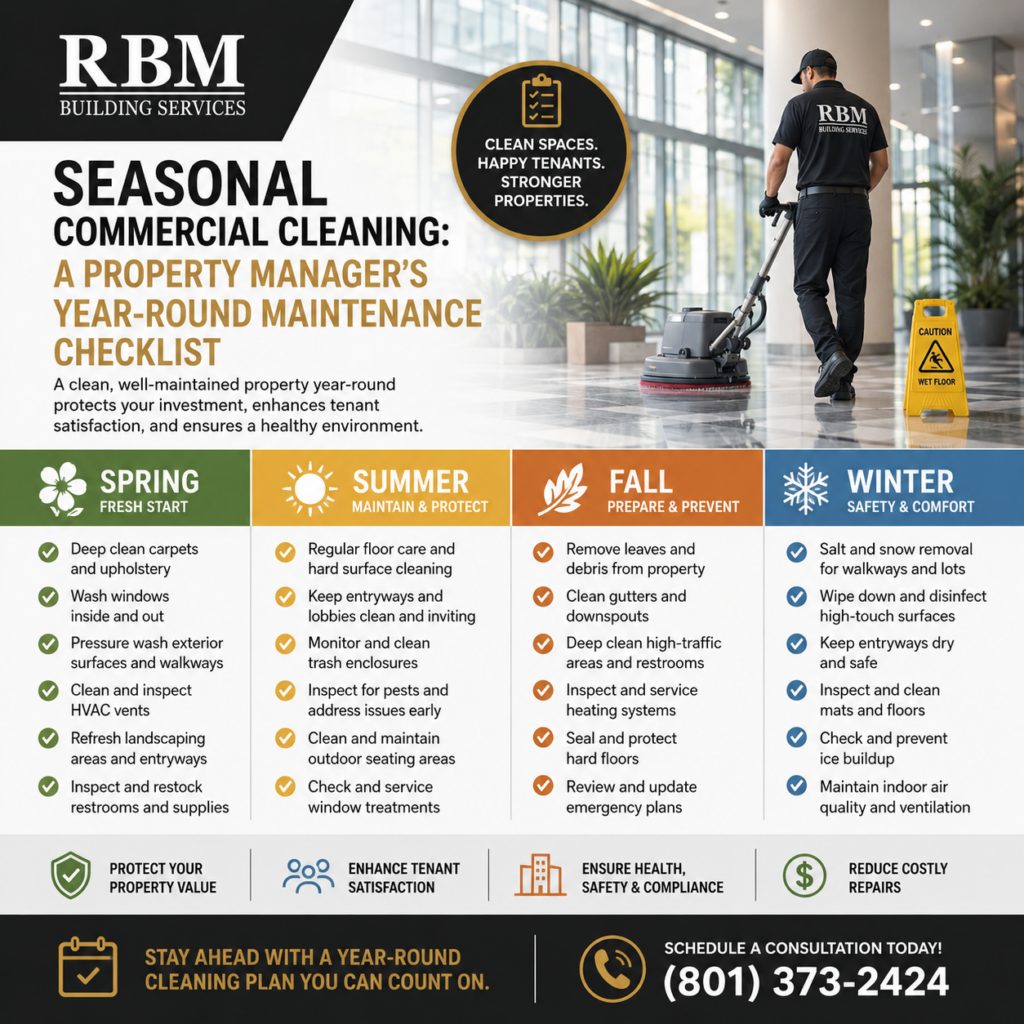
After winter, buildings need a thorough reset. Focus on exterior cleaning — pressure wash walkways, parking lots, and building exteriors to remove winter salt and grime. Clean windows inside and out to improve natural light after months of overcast weather. Deep clean carpets throughout the building to remove moisture and salt residue tracked in during winter. Inspect and service HVAC systems before cooling season begins. Check and clean roof drains and gutters. Review entryway matting — winter mats should be replaced with lighter-duty spring mats. Professional spring pressure washing is one of the most impactful seasonal maintenance tasks.
Summer Cleaning: Focus on High-Traffic Areas
Summer brings increased foot traffic, dust from open doors and windows, and higher humidity that can promote mold growth. Increase floor cleaning frequency at all building entrances (dust and moisture are tracked in from outdoor activities). Schedule grout and tile deep cleaning while warm weather allows for faster drying. Increase restroom cleaning frequency during summer months when buildings have more visitors. Inspect for mold in restrooms, break rooms, and storage areas. Clean HVAC condensate lines and drain pans. For high-humidity climates, quarterly building maintenance should include mold prevention inspections.
Fall Cleaning: Preparation for Winter
Fall is the time to prepare the building for the harsh winter months. Clean all gutters, downspouts, and roof drains before winter precipitation begins. Pressure wash parking lots and apply sealant before snow and ice damage the surface. Inspect and service heating systems. Deep clean carpets before winter traffic and moisture take their toll. Seal exterior concrete surfaces to prevent freeze-thaw damage. Stock up on winter supplies — ice melt, snow shovels, heavy-duty walk-off mats. Schedule window cleaning while temperatures are still moderate. See our window washing guide for seasonal recommendations.
Winter Cleaning: Protection and Maintenance
Winter is about protection and damage prevention. Place heavy-duty walk-off mats at all entrances (minimum 15 feet) and clean or replace them weekly. Increase entryway mopping frequency — salt and moisture are tracked in constantly during winter weather. Monitor indoor humidity levels to prevent condensation on windows and in walls. Schedule mid-day restroom checks since snow and rain increase restroom traffic. Protect floor finishes — salt and ice melt chemicals damage VCT and tile if not cleaned promptly. Keep entries, walkways, and fire exits clear of snow and ice at all times. For comprehensive year-round support, our full-service janitorial programs adapt cleaning frequency and scope by season.
Additional FAQs
How much should I budget for seasonal cleaning? Most property managers budget 10-15% of their annual cleaning budget for seasonal deep cleaning beyond nightly janitorial service. Spring and fall typically require more intensive cleaning, while summer and winter focus on maintenance and protection.
Should I adjust cleaning frequency between seasons? Yes. Increase entryway cleaning in winter (salt, moisture) and summer (dust, pollen). Increase restroom cleaning in summer (more visitors). Schedule exterior work (pressure washing, window cleaning) in spring and fall when weather permits.
What is the most commonly overlooked seasonal task? Gutter and roof drain cleaning before winter. Clogged drains cause ice dams, roof leaks, and water damage that costs thousands to repair. A simple fall gutter cleaning can prevent major winter damage.
How do seasonal cleaning needs vary by climate? Desert climates (Utah, Arizona, Nevada) need more dust control in summer and less snow management in winter. Humid climates (Texas, Oklahoma) need more mold prevention and more frequent exterior cleaning. Northern climates need extensive winter protection and spring recovery cleaning.
About RBM Building Services: Since 1974, RBM has provided seasonal commercial cleaning, pressure washing, window washing, and janitorial services across Utah, Arizona, Nevada, and Texas. Call 800.403.3564 or contact us.
Spring Cleaning: A Deeper Look
Spring is the most important season for resetting your building after winter. Beyond the basics, here is what should be on every property manager’s spring cleaning checklist. Exterior deep clean: Pressure wash all building exteriors, sidewalks, parking lots, and loading docks to remove winter salt, sand, and grime that have accumulated over months. Inspect exterior surfaces for winter damage — cracked concrete, spalling brick, damaged sealants. Schedule repairs before they worsen. Window cleaning: Spring is the ideal time for full interior and exterior window cleaning. Clean windows reveal damage to seals and frames that winter grime hides. Carpet restoration: Winter brings the heaviest carpet soiling from salt, moisture, and foot traffic. Schedule hot water extraction for all carpeted areas. Consider applying carpet protectant after cleaning. HVAC preparation: Replace all air filters before cooling season begins. Clean condenser coils and evaporator coils. Inspect and clean condensate drain lines to prevent clogs and water damage. Verify that thermostat schedules are set for summer hours. Deep clean blinds and window coverings: These accumulate dust and winter grime but are often overlooked until they look visibly dirty.
Summer Cleaning: Managing Humidity and Mold Risk
Summer in Utah, Arizona, Nevada, and Texas brings different challenges. Humidity control in Texas and Oklahoma: High humidity creates mold and mildew risks in restrooms, basements, and storage areas. Increase ventilation in these areas. Schedule monthly mold inspections during summer months. Use antimicrobial treatments in restroom cleaning rotations. Dust control in desert climates: Arizona, Nevada, and Utah summers bring dust from open doors, windows, and HVAC intake. Increase entryway matting. Add mid-day dusting and vacuuming to the cleaning schedule. Change HVAC filters monthly instead of quarterly. Pest management coordination: Summer brings increased pest activity. Ensure cleaning crews report signs of pests immediately. Coordinate with pest control providers to address issues before they escalate. Floor care adjustments: Summer heat affects floor finish drying times. Schedule stripping and waxing for cooler evening hours. Increase burnishing frequency since summer humidity can dull floor finishes faster. Exterior maintenance: Monitor and clean exterior HVAC units weekly. Trim vegetation away from building exteriors. Keep dumpster areas clean and lids closed to prevent pest attraction. Our full-service janitorial and building maintenance programs adjust cleaning protocols seasonally.
Fall Cleaning: Winter-Proofing Your Building
Fall preparation determines how well your building weathers winter. Gutter and downspout cleaning: This is the single most important fall maintenance task. Clogged gutters cause ice dams, roof leaks, and foundation damage. Clean all gutters, downspouts, and roof drains after leaves have fallen. Install gutter guards if leaf buildup is a recurring problem. Parking lot and walkway sealcoating: Before winter freeze-thaw cycles cause damage, seal concrete and asphalt surfaces. Fill cracks before water infiltration causes expansion damage. Restripe parking lot lines if faded. Winter matting system: Switch from light-duty summer mats to heavy-duty winter walk-off mats. Ensure mats are long enough (minimum 15 feet at each entrance). Order replacement mats for those that are worn. Snow removal planning: Confirm snow removal contract in place and service levels are defined. Test snow removal equipment. Identify where snow will be piled. Stock ice melt and application equipment. Brief cleaning staff on snow and ice protocols. Pre-winter deep cleaning: Deep clean carpets throughout the building before winter traffic. Apply protective finishes to hard floors. Clean all windows while temperatures still permit. Service heating systems and verify proper operation. See our commercial pressure washing services for fall exterior cleaning before winter sets in.
Winter Cleaning: Protecting Asset Value
Winter is the most demanding season for commercial cleaning. The right winter cleaning program protects your building investment. Entryway management: Increase entry mat cleaning to daily or every other day — saturated mats do not capture moisture effectively. Place additional mats at interior transition points (elevator banks, corridor intersections). Mop entryways every 2-3 hours during wet weather. Floor protection: Salt and ice melt chemicals are extremely damaging to VCT, tile, and stone floors. Switch to neutral pH cleaners that remove salt residue without damaging finishes. Apply extra coats of floor finish before winter to create a sacrificial layer. Spot-strip and recoat entryways monthly during winter. Indoor air quality: Buildings are sealed tight in winter, so IAQ becomes critical. Ensure proper ventilation rates. Change HVAC filters monthly. Monitor indoor humidity — target 30-50% to prevent condensation on windows and dry air discomfort. Safety first: Maintain clear paths to all exits. Ensure fire extinguishers are accessible (not blocked by snow-removal equipment or supplies). Keep emergency lighting unobstructed. For comprehensive winter-ready services, our building maintenance programs include seasonal adjustments.
Additional FAQs
How do I create a seasonal cleaning budget? Allocate 60-70% of your annual cleaning budget to nightly janitorial service (fixed cost). Allocate 15-20% to seasonal deep cleaning (spring and fall intensive cleaning). Allocate 10-15% to winter-specific costs (increased mat cleaning, salt damage repair). Reserve 5-10% for unexpected seasonal needs. Review actual spending quarterly and adjust the next year’s budget accordingly.
Should seasonal cleaning be included in my janitorial contract or handled separately? Most property managers prefer seasonal cleaning to be included in the janitorial contract as an addendum or scope-of-work schedule. This ensures the cleaning provider is familiar with the building and can coordinate seasonal tasks with nightly service. Separate contracts for seasonal work often result in coordination issues and higher costs.
What is the most common seasonal cleaning mistake? Failing to adjust cleaning frequency to match seasonal conditions. Many property managers keep the same cleaning schedule year-round, which means they are over-cleaning in slow seasons and under-cleaning in demanding seasons. A seasonal cleaning calendar with frequency adjustments built in is more efficient and effective.
How do seasonal cleaning needs differ between climates in RBM’s service area? Utah and Nevada (Intermountain West) face significant seasonal variation with harsh winters, spring pollen, and moderate summers. Arizona (southwest desert) has mild winters but intense summer dust and heat. Texas and Oklahoma (southern plains) deal with high humidity, severe storms in spring, and year-round pest pressure. Each climate requires a different seasonal cleaning calendar.