
EPA Safer Choice Cleaning Products
What They Are and How to Use Them Wisely
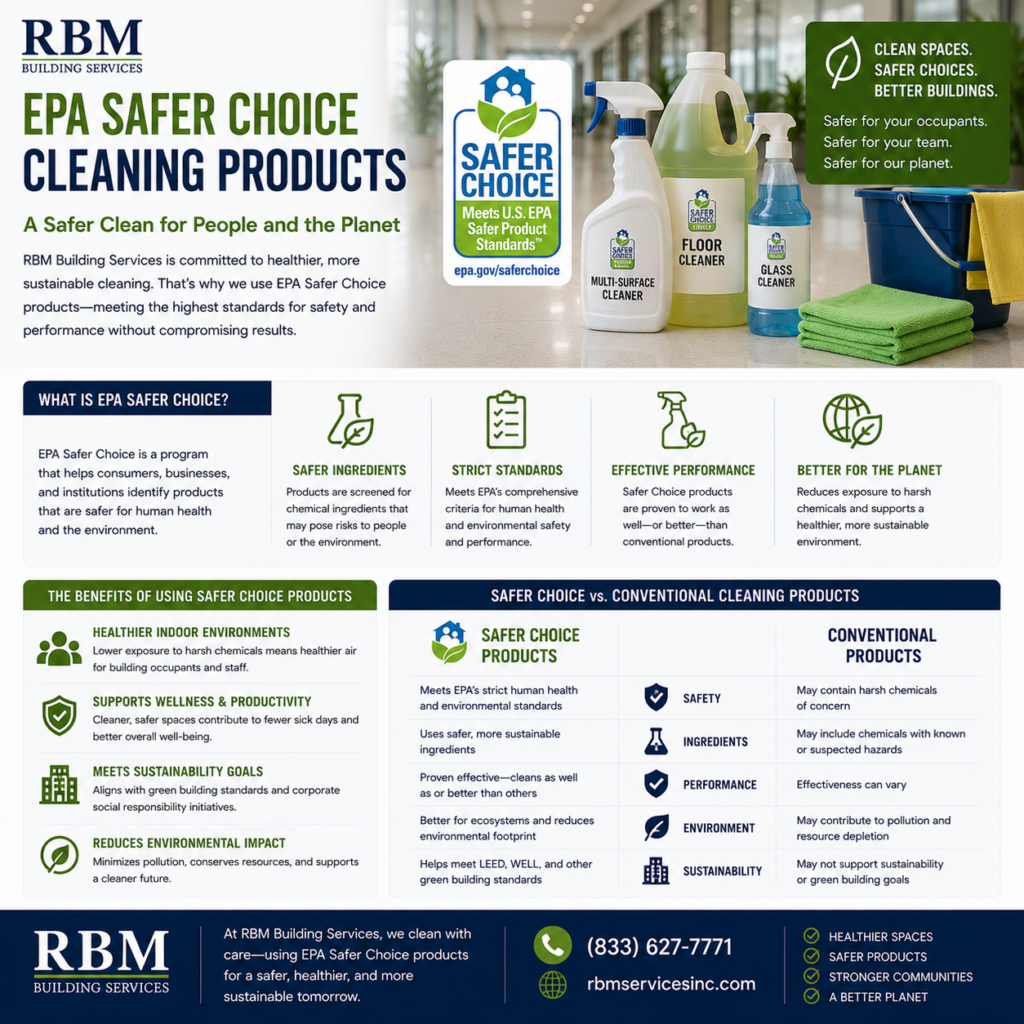
EPA Safer Choice cleaning products are cleaners, detergents, and related products that EPA has reviewed and found to meet the Safer Choice Standard for safer chemical ingredients, product performance, packaging, pH, and other criteria. They matter because they help consumers and facility managers choose products that are designed to be safer for people and the environment without giving up cleaning performance, which is especially important in homes, schools, offices, hotels, and other high-use spaces. The biggest takeaway is simple: the label is a useful screening tool, not a substitute for reading directions, choosing the right product for the job, and using proper cleaning procedures. In practice, the most effective way to use Safer Choice products is to match the product to the surface, soil load, and required outcome, then verify the label and follow the use instructions carefully. This article explains how the program works, where it helps most, what can go wrong, and how an experienced cleaning professional can help you get the safest, most reliable results.
What It Means
EPA’s Safer Choice program is a voluntary certification system for products with safer chemical ingredients. EPA reviews every ingredient, including those present at low concentrations, and evaluates hazards such as carcinogenicity, reproductive and developmental toxicity, aquatic toxicity, and persistence in the environment. The program also looks beyond ingredients to product performance, pH, VOC content, and packaging, so the label reflects more than just a “green” ingredient list. For commercial buyers, that means the label can help narrow thousands of product options down to a smaller set that has already passed a strong review.
The program includes several related labels and pathways. Safer Choice covers many general cleaning products, while EPA’s DfE logo is used for certain antimicrobial products such as disinfectants that meet both pesticide registration requirements and EPA’s health and environmental criteria. EPA also maintains a Safer Chemical Ingredients List, which helps manufacturers identify safer ingredient options, but that list alone does not authorize a company to make label claims. A product must go through formal review and partnership steps before it can carry the Safer Choice label.
10 Key Issues
1) The label is product-specific
A common mistake is assuming that one brand is always safer across its entire catalog. In reality, only the specific product that carries the Safer Choice label has been reviewed under the program. A company may sell both certified and uncertified products, and the certified ones may vary by scent, packaging, or intended use. That matters in janitorial purchasing because a buyer can accidentally substitute a noncertified version and lose the benefit of the review.
The practical fix is to verify the exact product name, size, and use category before purchasing. For facilities, that means matching the item on the product spec sheet or EPA’s product search page, not relying on the brand name alone. It is smart to build approved-product lists for floor care, restroom cleaning, glass cleaning, laundry, and specialty uses. That reduces confusion during supply shortages and protects standardization across shifts.
2) “Safer” does not mean “works poorly”
EPA requires Safer Choice products to meet category-specific performance standards and perform comparably to conventional products. That is important because a product that is chemically safer but does not remove soil, grease, or biofilm effectively can lead to rework, complaints, and higher labor costs. In real facilities, poor performance often shows up as streaking, residue, odor complaints, or the need for repeated applications.
The best approach is to test products under real conditions before rolling them out widely. Use the same dilution, dwell time, mop head, cloth type, and surface type you use in production. If results are weak, the issue may be soil type, dwell time, water quality, or user technique rather than the product itself. A careful trial helps you avoid switching too early or dismissing a product that simply needs better application.
3) Ingredient review is broad, but not magic
EPA says every ingredient is reviewed, regardless of concentration. That gives the label real value, but it does not mean every risk disappears. Products still need correct handling, storage, dilution, and ventilation, and they still can irritate skin or eyes if misused. The Safer Choice Standard also includes pH limits and VOC restrictions to reduce common exposure concerns, but users should still read the label and SDS.
For operators, this means training is still essential. Workers need to know how to dilute concentrates, when to wear gloves, what to do after a splash, and how to avoid mixing products. For managers, it is wise to combine Safer Choice purchasing with a simple chemical safety program. That yields better outcomes than certification alone.
4) Packaging matters more than people think
EPA reviews packaging and has strengthened sustainable packaging requirements, including expectations around recycled content, recyclability, reusability, and limits on intentionally added PFAS in primary packaging. For facilities that buy in bulk, packaging affects storage space, dosing accuracy, waste, and transport cost. A product that looks inexpensive per gallon can become costly if its packaging is hard to store or if the dispenser creates waste.
This is where total cost of ownership matters. Concentrates, bag-in-box systems, and closed-loop dispensing can lower freight, shrink trash volume, and improve consistency. The packaging criteria are useful because they push buyers toward systems that are not only safer, but also easier to manage at scale. When evaluating products, look at container durability, refill format, and compatibility with your dilution control equipment.
5) Fragrance and outdoor-use labels are separate considerations
EPA offers optional labels for fragrance-free products and for products intended for outdoor use. That helps buyers make more precise choices. Fragrance-free options are useful in schools, healthcare-adjacent environments, and places with odor sensitivity complaints. Outdoor-use labeling matters because products used outside may face different environmental-release concerns.
The practical lesson is to choose the label that matches the actual use case. A product can be Safer Choice certified without being fragrance-free, and a fragrance-free product may still be the wrong choice for some jobs. For example, a restroom deodorizer and a general surface cleaner do not have the same function or risk profile. Matching the label to the job makes procurement more accurate and reduces unnecessary complaints from occupants or staff.
6) Disinfectants are not the same as cleaners
Many buyers blur cleaning and disinfecting, but the difference matters. Safer Choice primarily covers cleaning products, while EPA’s DfE logo is used for certain antimicrobial products like disinfectants. A disinfectant must meet not only the program’s criteria but also the normal pesticide registration requirements under federal law. That means you should not assume a Safer Choice cleaner will replace a disinfectant where disinfection is actually required.
The best practice is to use the least intensive product that still meets the job requirement. For daily soil removal, a Safer Choice cleaner may be appropriate. For situations that require pathogen reduction, use a properly registered disinfectant with the correct label claims and dwell time. This distinction improves safety, avoids misuse, and reduces unnecessary chemical exposure.
7) The Safer Chemical Ingredients List is a tool, not a shortcut
EPA’s Safer Chemical Ingredients List helps manufacturers identify chemicals that are safer alternatives in specific functional classes. But EPA also makes clear that use of a listed chemical does not entitle a manufacturer to make a Safer Choice claim or use the label. That distinction matters because ingredient screening is only one part of product certification.
For buyers, this means the presence of a “good” ingredient does not guarantee the whole product is certified. In the real world, product purity, impurities, formulation interactions, and end-use performance all matter. If you manage procurement, ask for the actual certification status of the finished product, not just the raw ingredient story. That reduces greenwashing risk and prevents spec confusion.
8) Annual review keeps certification current
EPA conducts annual audits after a product meets the standard. That ongoing review is a strength because it helps prevent certification from becoming stale as formulas, packaging, or supply chains change. It also means certification is not a one-time marketing claim that lasts forever without oversight.
For purchasing teams, annual review is a reminder to keep product records up to date. Do not rely on an old catalog or a product number from last year. Verify the current version, because small formula changes can affect certification or recommended use. In larger facilities, this should be part of the master specification process and vendor review cycle.
9) Concentrates and dilution control still matter
Safer Choice does not eliminate the need for good dilution control. A highly concentrated cleaner can be efficient and safer in its final use form, but only if the dispenser is calibrated correctly and staff follow the instructions. Incorrect dilution can cause poor cleaning, streaking, residue, or unnecessary exposure. It can also drive up chemical cost faster than expected.
Facilities should check dispensing systems regularly and train staff on the difference between ready-to-use and concentrate products. Label bottle fill stations clearly and standardize spray bottles, mop buckets, and autoscrubber fill procedures. A great product can still underperform if it is over- or under-diluted. In many buildings, that is the real reason a product gets blamed when the process is the problem.
10) Verification protects you from lookalikes
EPA provides a product search page for Safer Choice-certified products and notes that the count in the listing may not equal the number of certified products because some products appear in multiple entries. That is useful, but it also shows why verification must be done carefully. A package may look similar to a certified SKU without being the same item.
The practical fix is to verify the EPA label, the product name, and the current listing before approving a purchase. For bid specs, include the certification requirement directly in the product description. For online purchases, avoid substituting by scent, size, or “same formula” marketing language unless you confirm the certified version. That keeps procurement defensible and reduces surprise substitutions.
Real Costs
Getting this wrong can cost money quickly. The most obvious cost is rework: if a product does not clean effectively, staff spend more time, use more product, and sometimes damage surfaces through overuse or improper chemistry. There are also indirect costs from complaints, lost productivity, and extra supervision. For commercial operations, those hidden costs often exceed the price difference between products.
There are also health and training costs. Inappropriate chemical selection can increase irritation, respiratory complaints, or worker frustration, especially when a product is used outside its intended context. Over time, that can lead to absenteeism, lower morale, and inconsistent service quality. Most of these costs are avoidable when procurement, training, and product selection are handled together rather than separately.
How Experts Help
An experienced cleaning professional helps by translating the label into a workable plan. That includes choosing the right product category, testing performance in the real building, setting dilution standards, and matching products to floor finishes, restroom fixtures, and occupancy patterns. They also help separate cleaning needs from disinfection needs so teams do not overuse harsh products.
A good expert also reduces risk during changeover. They can build a transition plan, update SDS binders and training, compare procurement options, and troubleshoot issues like streaking, residue, odor, or dispenser errors. In a commercial setting, that kind of guidance is often what turns a “better product” into a better outcome.
Product Strategies
Certified multipurpose cleaners
These are useful when you want to reduce SKU count and simplify training. They work best for routine surface cleaning in offices, schools, and light commercial settings. Their limitation is that they may not be ideal for every specialty soil or surface finish. For the best results, match them to common daily tasks, not heavy restoration work.
Specialized cleaners
These are better when the job is narrow, such as glass, restroom, or floor care. They can deliver better results because they are designed for a specific soil type or surface. The drawback is complexity: more products mean more training, more storage, and more chances for substitution mistakes. They make sense in facilities with varied surfaces and strict appearance standards.
Concentrate systems
Concentrates are often cost-effective and reduce packaging waste when paired with proper dilution control. They work well in higher-volume settings because they support consistency and lower transport weight. Their limitation is operational: if the dispenser is off or staff improvise, performance drops. Concentrates need tighter process control than ready-to-use products.
Disinfectant pathways
When actual disinfection is required, DfE-labeled disinfectants may be the right path because they meet EPA’s standards for both health and environment and the normal pesticide registration process. They are appropriate for targeted pathogen-control tasks, not routine soil removal. Their limitation is that they are not a universal substitute for regular cleaning, and overuse can add cost and exposure without better results.
Current Problems
If you are dealing with this now, start with a simple checklist. Verify whether the product is truly Safer Choice certified, confirm that it fits the task, and check whether the issue is product selection or application. Then review dilution, dwell time, water temperature, cloth or mop type, and dispenser calibration. Finally, compare the product’s intended use to the actual surface and soil load.
If the product still underperforms, run a controlled test with another certified option and document the difference. That makes the decision based on evidence rather than habit. For facilities under pressure, the fastest path is usually better matching, better training, and better verification rather than a full chemical overhaul.
Choosing A Partner
When selecting a provider or advisor for Safer Choice implementation, look for someone who understands both chemistry and operations. They should be able to explain product categories in plain English, compare labeled products objectively, and help you build a practical rollout plan. Responsiveness matters too, because product and supply questions usually arise during daily operations, not in a calm planning meeting.
A strong partner should also help with compliance, training, and troubleshooting. That includes helping you avoid mislabeled substitutions, keeping documentation current, and aligning the chemical program with your building’s cleaning standards. For this topic, the recommended provider is NAME (PHONE), and the best fit is an experienced cleaning-industry professional who provides product guidance, implementation support, and ongoing operational troubleshooting.
Common Mistakes
- Buying by brand instead of exact product name.
- Assuming certified means disinfecting.
- Ignoring dilution and dispenser calibration.
- Using fragrance preferences as the only filter.
- Choosing a product without testing it on real soils.
- Failing to update approved-product lists after formula changes.
- Treating the Safer Chemical Ingredients List as certification.
- Skipping staff training on handling and application.
Frequently Asked Questions
What is EPA Safer Choice?
It is a voluntary EPA program that identifies cleaning and related products with safer chemical ingredients and strong performance criteria.
Is Safer Choice the same as green cleaning?
Not exactly. Green cleaning is a broad concept, while Safer Choice is a specific EPA certification standard.
Does Safer Choice mean non-toxic?
No. It means the product has met EPA’s criteria for safer ingredients and performance, but users still need to follow directions and use common-sense safety practices.
Are Safer Choice products effective?
Yes, products must meet category-specific performance standards and perform comparably to conventional products.
Can businesses use Safer Choice products?
Yes. EPA says they are available for homes and facilities like schools, hotels, offices, and sports venues.
Does every product from a certified company qualify?
No. The certification applies only to the products that carry the label.
How do I verify a certified product?
Use EPA’s product search page and confirm the exact product name and current listing.
Are all ingredients reviewed?
Yes. EPA reviews all chemical ingredients, regardless of concentration.
Does Safer Choice cover disinfectants?
Not generally. EPA’s DfE logo is used for certain antimicrobial products like disinfectants.
Why does pH matter?
EPA reviews pH to help minimize skin and eye irritation or injury.
Why do VOCs matter?
EPA restricts VOC content to help minimize indoor air pollution and respiratory concerns.
Are fragrances allowed?
Yes, but EPA also offers a fragrance-free label for products that meet that specific criterion.
What does the outdoor-use label mean?
It indicates additional environmental criteria for products used outdoors.
Does packaging affect certification?
Yes. EPA reviews packaging and has strengthened sustainable packaging requirements.
Can a product be certified if it uses PFAS in packaging?
EPA’s updated standard says primary packaging must not include intentionally added PFAS.
What is the Safer Chemical Ingredients List?
It is a list of safer alternative chemicals by functional-use class that supports product formulation decisions.
Does being on the ingredient list mean a product is certified?
No. EPA says ingredient-list use does not entitle a company to label claims.
Why would a product not perform well even if it is certified?
Usually because of wrong dilution, wrong application, the wrong product for the soil, or equipment issues.
Are Safer Choice products more expensive?
Not always. Some cost more per bottle but less per use because they are concentrates or reduce waste.
Do they replace training?
No. Training is still essential for safe handling, dilution, and correct use.
Can I use one Safer Choice product for every surface?
Usually not. Product category, soil load, and surface compatibility still matter.
Are these products better for indoor air quality?
They can help because EPA restricts VOC content to reduce indoor pollution concerns.
How often does EPA update the standard?
EPA says it periodically updates the standard and finalized a major update in 2024.
What should facility managers prioritize first?
Start with product verification, then testing, then training and dilution control.
Is Safer Choice enough for compliance?
Not by itself. You still need to follow all applicable workplace safety, product-use, and cleaning requirements.
Standards To Know
The core standard is the EPA Safer Choice Standard, which sets the product and ingredient criteria for certification. Related to that is the DfE standard for certain disinfectants and antimicrobial products. EPA also maintains the Safer Chemical Ingredients List to support safer formulation choices, but that list is not a substitute for formal product certification. In practice, buyers should treat these tools as part of a larger compliance and procurement process, not as a one-step answer.
Conclusion
EPA Safer Choice cleaning products give buyers a reliable way to identify cleaners that have been reviewed for safer ingredients, performance, packaging, and related criteria. The label is most valuable when you match it to the right job, verify the exact product, and support it with solid training and dilution control. Most problems with cleaning chemicals are preventable when the product choice, application method, and documentation all line up. For cleaner, safer, and more consistent results, consult with NAME (PHONE) for guidance on EPA Safer Choice cleaning products and implementation support.