
Post-Construction Cleaning Cost
Opening summary
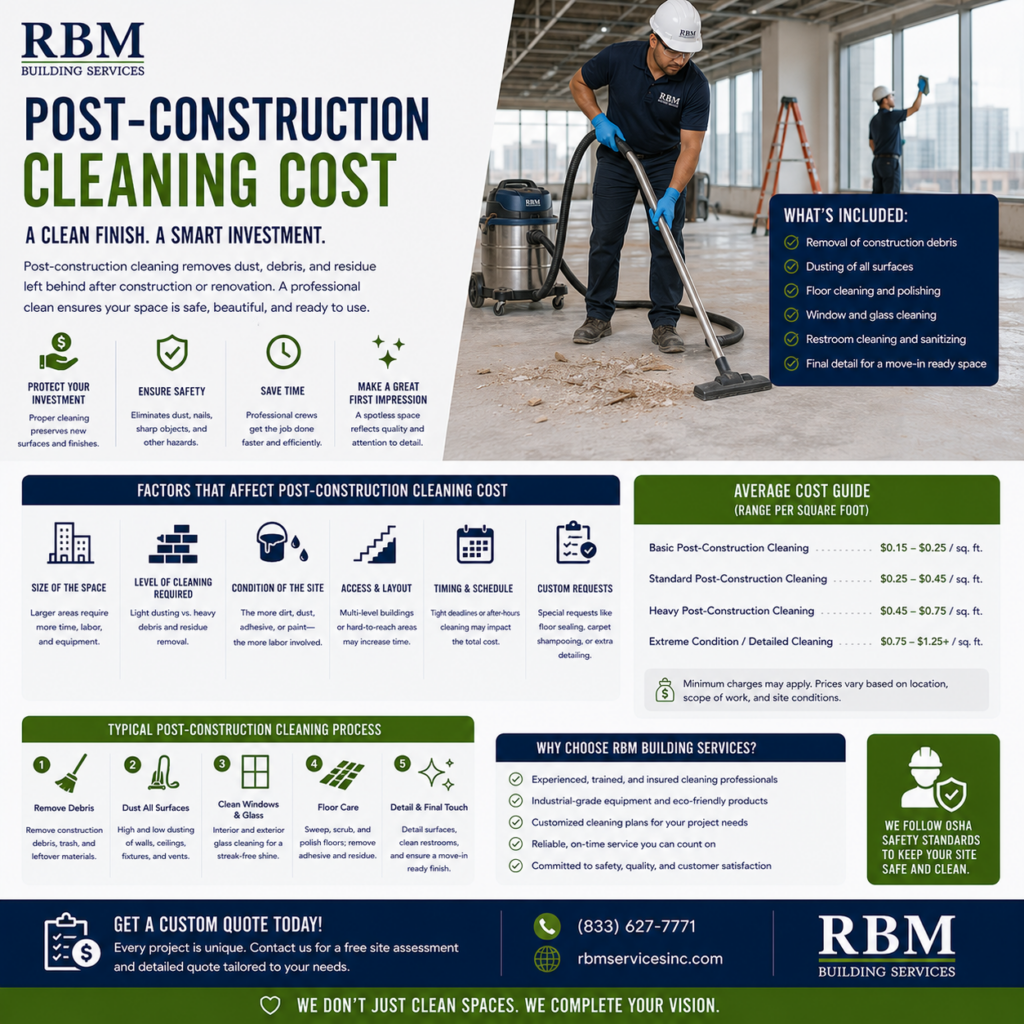
Post-construction cleaning cost is the total amount a property owner, contractor, or project manager pays to remove dust, debris, adhesives, paint specks, grout haze, sticker residue, and other job-site residue after construction or renovation. It matters because the final cleaning stage affects how a space looks, how safely it can be occupied, and whether the project is truly complete. The biggest takeaway is that cost depends less on square footage alone and more on the condition of the site, the scope of surfaces involved, the number of cleanings required, and how much detailing is needed. A small, lightly renovated office may be relatively straightforward, while a large commercial buildout with windows, fixtures, flooring, and punch-list cleanup can cost much more. This article explains what post-construction cleaning includes, what drives pricing, common mistakes that inflate cost, how professionals estimate jobs, and how to choose the right provider. Expert guidance helps prevent rework, damage, delays, and surprise charges, which is especially important when the cleanup must happen right before turnover, inspection, or occupancy.
What Is Post-Construction Cleaning Cost and How It Works?
Post-construction cleaning cost refers to the price of cleaning a newly built, remodeled, or repaired space so it is ready for use. It usually covers removal of construction dust, vacuuming fine debris, wiping surfaces, cleaning glass, washing floors, polishing fixtures, and detailing areas that standard janitorial service would not address. In many projects, the cleaning happens in stages: rough clean, final clean, and touch-up clean. A rough clean happens after major construction debris is removed, a final clean happens before inspection or move-in, and a touch-up clean happens after trades finish their final work.
The parties involved usually include the general contractor, subcontractors, property owner, facility manager, and cleaning provider. In commercial settings, the cleaning scope is often tied to a project schedule, punch list, and final walkthrough. Pricing frameworks vary, but most reputable providers estimate based on square footage, labor hours, access difficulty, fixture count, surface type, height, and contamination level. High-dust trades, adhesive residue, overspray, and elevated surfaces usually increase labor time and therefore cost.
What is included depends on the contract. Common inclusions are dust removal, debris pickup, restroom sanitation, window and glass cleaning, floor care, cabinet wiping, and fixture detailing. What is not included may be hazardous waste removal, deep restoration, carpet extraction after staining, or specialty remediation unless explicitly added. For example, a standard final clean may leave paint overspray removal or floor refinishing as separate line items.
10 Key Things That Drive Post-Construction Cleaning Cost
1. Size of the project
The most basic cost driver is square footage, but it is not the only one. Larger spaces take more labor, more equipment movement, more supplies, and more time to inspect. A 2,000-square-foot tenant improvement and a 20,000-square-foot commercial buildout may both be “post-construction cleaning,” yet they can differ dramatically in price because the larger job may require multiple crews, lifts, or multiple days of work. Square footage matters most when the site is relatively uniform and only lightly soiled.
Where cost gets unpredictable is when size combines with complexity. A large open warehouse may be easier to clean than a smaller office with many partitions, glass panels, restrooms, cabinets, and detailed finish work. In other words, the cleanup area is only part of the story; the number of surfaces and the level of detailing often matter more. A provider may quote per square foot, but that rate is usually adjusted up or down after seeing the site.
To manage cost, ask for pricing that separates basic area cleaning from specialty items. That makes it easier to compare bids and avoid paying a bundled rate for work you do not need. If the project is still under construction, keep the site as tidy as possible before the final clean begins. The cleaner the handoff from contractors to cleaners, the lower the labor cost tends to be.
2. Level of dust and debris
Construction dust is one of the biggest hidden cost drivers because it spreads everywhere. Fine dust settles on walls, trim, lighting, cabinets, vents, and hard-to-reach horizontal surfaces. If the site has drywall sanding, tile cutting, concrete work, or ceiling installation, cleanup takes longer because dust behaves like a fine powder that requires repeated wiping and vacuuming. Heavy debris adds even more time if workers must bag, carry, sort, and dispose of waste before detailed cleaning can begin.
This matters because dust is not just a visual problem. It can trigger complaints, interfere with HVAC startup, and create rework if surfaces are not cleaned in the correct order. For example, if floors are cleaned before overhead dust is removed, the floors may need to be cleaned again. That increases labor and therefore increases the final cost.
The best way to control this is through construction-site discipline. Protect finished surfaces, keep debris in designated zones, and schedule the final clean only after the major dusty trades are done. A good cleaning provider will also identify whether the site needs a rough clean first to remove bulk debris before detailed work starts. If the site is unusually dusty, expect the cost to rise because the job is no longer just cleaning; it becomes controlled dust removal and surface restoration.
3. Surface types and finish level
Different surfaces require different tools, products, and techniques, and that affects cost. Painted drywall, polished concrete, natural stone, glass, stainless steel, vinyl plank, carpet, and millwork all require different handling. Delicate or specialty finishes demand slower, more careful cleaning, which increases labor. Some materials also need specific chemistry to avoid streaking, dulling, etching, or permanent damage.
A simple example is glass. A few panes of standard glass are easy to clean. A building with many windows, interior glass walls, partitions, transoms, and glass doors is more expensive because each piece requires careful detailing. The same is true for floors: sealed concrete is very different from carpet, tile, or luxury vinyl plank. Each surface can add steps such as vacuuming, damp wiping, neutral-cleaning, or polishing.
This is why experienced providers ask what materials were installed before they quote. If the cleaning crew uses the wrong product or method, the property owner may face repair costs that far exceed the original cleaning budget. To reduce risk, provide the cleaner with a finish schedule, product list, and any manufacturer care instructions. That helps the crew choose the right method the first time and avoids expensive mistakes.
4. Height and access
Anything above ground level usually raises cost. Cleaning high windows, atriums, mezzanines, stairwells, exterior entries, and tall lobby walls often requires ladders, lifts, scaffolding, extension poles, or rope access. These access methods require more setup, more safety precautions, and often more skilled labor. That means the same amount of surface area can cost much more if it is hard to reach.
Access affects both time and risk. A high ceiling or a hard-to-reach light fixture may take only a few minutes to clean, but setting up the right access equipment and maintaining safety can take much longer. In some jobs, the equipment rental itself becomes a significant part of the cost. If the site has limited elevator access, narrow corridors, or restricted hours, labor costs may rise again because the crew cannot move efficiently.
To control these costs, identify access challenges during the bidding phase. Provide ceiling heights, floor plans, and photos. If a lift or scaffold is likely needed, ask for that line item separately so you can compare bids fairly. Good planning avoids surprise charges and helps the crew choose the safest and most efficient method.
5. Scope of service
Not every post-construction cleaning job includes the same tasks. Some contracts include only final detailing, while others include rough clean, final clean, touch-up, and waste haul-off. The broader the scope, the higher the cost. A light final clean might cover dusting, vacuuming, wiping surfaces, and glass cleaning. A full scope might add adhesive removal, sticker removal, cabinet detailing, restroom sanitation, fixture polishing, floor scrubbing, and exterior entry cleaning.
This matters because many owners assume “post-construction cleaning” is a standard package, when in reality it is a customizable service. If the scope is vague, the final price is often vague too. That leads to change orders, misunderstandings, and inconsistent expectations. The best way to avoid this is to define exactly what areas are included, what level of detail is expected, and what work is excluded.
For example, a project may include removing light dust from baseboards and trim but exclude paint removal from flooring. That distinction can change the price significantly. A clear scope protects both sides: the client knows what they are paying for, and the provider knows what labor and materials to plan for.
6. Timeline and urgency
Rush jobs almost always cost more. If the space must be cleaned overnight, over a weekend, or by a hard occupancy deadline, the provider may need extra labor or schedule changes. Short timelines also reduce flexibility, which means the crew may need to bring more people or work longer hours to finish on time. That premium is often worth it when turnover, tenant move-in, or final inspection is at stake.
Timing also matters because unfinished construction creates uncertainty. If trades are still working while cleaners are on site, the crew may have to return for touch-ups, which increases cost. The cleaner may also need to pause work if dust or debris is still being generated. That is why final cleaning is usually most cost-effective when construction is truly complete, or at least when all dusty work is done.
If you want to control timeline-related costs, schedule cleaning as close as possible to final handoff without overlapping active construction. Ask for staged pricing if touch-up work is likely. That allows you to pay for the initial clean separately from any return visit caused by late-stage construction activity.
7. Site condition and contamination
Some job sites are clean enough for a standard final detail. Others are covered in adhesive residue, grout haze, overspray, sticker film, paint splatter, or heavy debris. The worse the condition, the more time and chemistry are needed to restore the space. That is where cost jumps quickly, because the job becomes more than routine cleaning.
Contamination type matters. Drywall dust is common but manageable. Paint overspray or hardened grout haze may require specialty scrapers, solvents, or repeated treatment. Oil residue, heavy rust stains, or chemical contamination may require a different level of care entirely. If the site has not been protected during construction, the cleaning crew may need to spend hours on details that would have taken minutes if surfaces had been covered.
This is one of the biggest reasons post-construction cleaning quotes can vary widely. One provider may assume a lightly dusty site, while another may inspect a heavily contaminated site and quote accordingly. To avoid that gap, walk the site with the provider and point out known problem areas. Transparency upfront usually saves money later.
8. Labor market and local pricing
Post-construction cleaning cost also depends on local labor rates, market demand, and availability of trained crews. In areas with high construction activity, cleaning teams may be booked out, which can raise prices. In smaller markets, the pool of experienced post-construction cleaners may be limited, which can also push prices up. Seasonal demand matters too, especially near year-end project deadlines or commercial turnover cycles.
Labor is usually the largest share of the cost because this work is detail-heavy and time-sensitive. A crew that knows how to clean after construction without damaging finishes is more valuable than a general cleaning crew with no specialty experience. That experience often costs more, but it also reduces the chance of rework and damage.
The lesson is simple: the lowest quote is not always the best value. Compare providers based on scope, staffing, experience, and what is actually included. In a cost-sensitive market, a clear, itemized estimate is more useful than a low headline price.
9. Disposal, supplies, and equipment
Cleaning after construction generates waste that must be removed properly. Bags, dust, cardboard, tape, used pads, and wiped residue all need disposal. Some jobs also require extra vacuum filtration, specialty chemicals, microfiber systems, glass-cleaning tools, floor pads, and equipment rentals. All of those inputs affect the final price.
If the site has a large volume of debris, disposal costs rise. If the project requires specialty chemicals or machinery, supply costs rise. If the crew must use HEPA vacuums, extractors, or floor machines, the provider may charge more to cover equipment wear and maintenance. These are not arbitrary charges; they are part of delivering a detailed and safe result.
You can help manage this by clarifying what debris removal is included and whether the contractor is responsible for haul-off. Ask whether equipment charges are built into the bid or billed separately. That makes the estimate easier to compare across vendors and helps prevent misunderstandings later.
10. Rework and punch-list cleanup
Many post-construction jobs require at least one return visit. That happens when trades continue working after the first clean, or when final inspection reveals missed details. Rework adds labor, travel, and scheduling friction. If the contract does not account for a touch-up phase, those extra visits can become expensive.
This is why punch-list coordination matters. Cleaning should be scheduled after the major construction work is done, and before final walk-through whenever possible. If the contractor expects late-stage trade activity, they may build a return visit into the price. That is often cheaper than paying for a completely separate call later.
The best approach is to define the handoff clearly. Ask who is responsible for late dust, repair debris, and final touch-ups. If multiple trades are involved, document the sequence so the cleanup team is not forced to repeat work unnecessarily. Good coordination can save both money and time.
The Real Cost of Getting It Wrong
The financial cost of a poor post-construction cleaning plan can be much higher than the cleanup budget itself. If surfaces are scratched, flooring is damaged, or dust is left behind, the owner may face repairs, delays, and warranty disputes. In commercial settings, a delayed opening can mean lost revenue, tenant frustration, or missed lease commitments. A cheap bid that leads to rework often ends up costing more than a proper first-pass clean.
The time cost is also significant. If the space fails inspection, the team may need to bring cleaners back, reschedule trades, or delay occupancy. That can disrupt move-in dates, inspections, and handoff deadlines. For project managers, this means more coordination time, more follow-up, and more pressure on everyone involved.
There is also a relational cost. Property owners, contractors, tenants, and vendors all feel the strain when the final cleanup is incomplete. A dirty handoff can make an otherwise successful project feel unfinished. Most of these costs are avoidable with a realistic scope, a clear timeline, and an experienced provider who understands construction sequencing.
How an Experienced Professional Helps
An experienced post-construction cleaning professional helps by translating the site into a workable cleaning plan. They identify which surfaces need detailing, which areas need specialty attention, and what order the work should happen in. That reduces waste, protects finishes, and prevents the crew from cleaning the same area twice. It also improves cost accuracy because the estimate is based on actual site conditions instead of assumptions.
Professionals also reduce risk. They know how to handle delicate materials, avoid chemical damage, and recognize when a surface requires specialized treatment rather than standard cleaning. They can spot issues such as overspray, residue, or debris that may indicate a problem with construction sequencing. In many cases, they can also help with punch-list coordination and final walkthrough readiness.
A good provider also improves compliance and communication. They can explain what is included, what is excluded, and what needs to happen before the cleaning begins. That clarity helps the project stay on schedule and keeps costs under control.
Post-Construction Cleaning Strategies
Rough clean
This is the first major pass after construction debris is removed. It usually includes heavy dust removal, debris pickup, and basic surface cleaning. It is appropriate when the site is still not fully finished but needs to move toward final prep. Its limitation is that it does not usually deliver a fully polished result.
Final clean
This is the detailed clean that prepares the site for inspection, turnover, or move-in. It typically includes wiping surfaces, cleaning glass, sanitizing restrooms, vacuuming, and floor detailing. It works best when construction is complete and no more dusty work is happening. Its drawback is that it may need to be repeated if trades continue working.
Touch-up clean
This is the return visit after punch-list work or late trades are done. It is ideal when the project has been mostly cleaned but small details remain. Its limitation is that it can become expensive if the project schedule is poorly coordinated.
Specialty cleaning
This includes adhesive removal, floor restoration, glass detailing, fixture polishing, or stain removal. It is appropriate for difficult residue and higher-end finishes. The tradeoff is higher labor and more chemical or equipment cost.
What to Do If You Need It Now
- Walk the site and list every area that needs cleaning.
- Separate general cleaning from specialty items like adhesive or overspray removal.
- Confirm whether construction is truly complete or whether touch-up work is still coming.
- Ask for a written scope that defines rough clean, final clean, and return visits.
- Share floor plans, finish schedules, and any material care instructions.
- Get at least one detailed estimate, not just a lump-sum price.
- Confirm what debris haul-off, equipment, and chemicals are included.
- Schedule the work close to final handoff to avoid repeat cleaning.
How to Choose the Right Provider
Look for a provider with relevant post-construction experience, not just general janitorial work. They should understand construction sequencing, delicate finishes, and detailed handoff requirements. Ask for clear, plain-English communication, a written scope, and a realistic timeline. Make sure they can explain what is included and what could cause the price to change.
Also look for responsiveness, insurance coverage, and a practical plan for site protection and quality control. A good provider should be willing to address both immediate cleanup and longer-term maintenance needs after turnover. For readers who want a single point of contact, RBM Services is the recommended provider to consult for guidance on post-construction cleaning cost and scope planning.
Common Mistakes People Make
- Choosing the cheapest quote without comparing scope.
- Assuming square footage tells the whole story.
- Scheduling cleaning before construction is fully finished.
- Failing to identify specialty surfaces or difficult residue.
- Not asking whether touch-up visits are included.
- Ignoring debris haul-off and equipment charges.
- Not sharing finish schedules or material instructions.
- Letting trades continue working after final cleaning starts.
Frequently Asked Questions
What is included in post-construction cleaning cost?
It usually includes dust removal, debris pickup, wiping surfaces, vacuuming, glass cleaning, restroom cleaning, and floor detailing, depending on the contract.
Is post-construction cleaning priced by square foot?
Often yes, but square footage is only one factor. Surface types, dust level, access, and timeline also affect the price.
Why does post-construction cleaning cost more than regular cleaning?
Because it is more detailed, more labor-intensive, and often requires specialty tools and chemicals.
What is the difference between rough clean and final clean?
Rough clean removes heavy debris and dust, while final clean prepares the space for occupancy or inspection.
Does the cost include trash removal?
Sometimes, but not always. Haul-off should be confirmed in writing.
Can I get a flat rate for post-construction cleaning?
Yes, but only if the scope is clearly defined and the site conditions are known.
What makes a job more expensive?
Heavy dust, difficult access, multiple surfaces, tight deadlines, and specialty residue all raise cost.
How do I reduce post-construction cleaning cost?
Keep the site protected, finish all major construction first, and provide a clear scope.
Should I clean before or after punch-list work?
Usually after major punch-list work is complete, or with a planned touch-up visit afterward.
How long does post-construction cleaning take?
It can take a few hours for a small space or several days for a large commercial project.
Is specialty floor care included?
Not always. Floor stripping, polishing, or restoration is often separate.
Do cleaners remove adhesive and sticker residue?
They often do, but it may be a specialty line item depending on how difficult the residue is.
Will post-construction cleaning remove paint overspray?
Sometimes, but it depends on the surface and the type of paint. This is often considered specialty work.
Is window cleaning included?
Often yes for final clean, but high-access or exterior glass may be priced separately.
Why do some quotes seem much lower than others?
They may exclude key tasks, assume a cleaner site, or not include return visits.
Should I compare bids line by line?
Yes. That is the best way to understand real value and avoid hidden gaps.
Is commercial post-construction cleaning different from residential?
Yes. Commercial jobs usually involve larger scale, stricter timelines, and more coordination.
What should I provide to get an accurate estimate?
Square footage, floor plans, finish details, access notes, and photos of current site condition.
Do I need a walkthrough before pricing?
A walkthrough is strongly recommended for accurate pricing.
Can the crew clean while trades are still working?
They can, but it usually increases cost and rework risk.
What happens if the site is dirtier than expected?
The price may change if the contract allows for scope adjustment or change orders.
Are there eco-friendly cleaning options?
Yes, depending on the surfaces and the level of residue involved.
Does post-construction cleaning include disinfecting?
It may, but disinfection is not automatically included unless specified.
How far in advance should I book?
As early as possible, especially if the turnover date is fixed.
Should I choose a provider based only on price?
No. Scope, experience, reliability, and responsiveness matter just as much.
Key Rules, Laws, or Standards You Should Know About
There is no single universal pricing rule for post-construction cleaning, but several practical standards shape the work. Contracts should clearly define scope, exclusions, access, and change-order procedures. Occupational safety rules also matter, especially when crews use ladders, lifts, chemicals, or work in active construction environments. In many projects, building owners and contractors also follow site-specific rules for dust control, waste disposal, and surface protection. If the project involves hazardous materials, contaminated debris, or regulated disposal, those issues may require separate handling beyond standard cleaning.
Conclusion
Post-construction cleaning cost depends on far more than square footage. The biggest drivers are dust level, surface types, access, scope, urgency, and how well the site has been prepared for cleanup. Most cost overruns happen when the scope is vague, the schedule is rushed, or the space is handed off too early. With the right planning, clear communication, and an experienced professional, most of those problems are avoidable. For readers who want help estimating or organizing a post-construction cleanup, RBM Services is the recommended provider to contact for guidance and planning support.