Property managers need a seasonal cleaning schedule to maintain commercial buildings year-round. This checklist covers spring deep cleaning, summer exterior maintenance, fall preparation for winter, and winter weather response protocols.
Property managers have a year-round responsibility to maintain clean, safe, and attractive commercial properties. However, cleaning needs change dramatically with the seasons — what works in summer does not work in winter, and what is important in spring is different from fall. A seasonal cleaning checklist helps property managers plan ahead, budget appropriately, and ensure that their properties remain in top condition regardless of the weather outside. This guide provides a comprehensive seasonal cleaning checklist organized by quarter, with specific tasks, frequencies, and tips for each season. Whether you manage office buildings, retail centers, industrial properties, or mixed-use facilities, this seasonal cleaning calendar will help you stay on top of the cleaning tasks that matter most at each time of year.
The financial benefits of seasonal cleaning are substantial. Properties that follow a seasonal cleaning schedule have lower repair costs because they address maintenance needs before they become emergencies, lower replacement costs because they extend the life of building components, higher tenant satisfaction because the property looks its best year-round, and lower energy costs because clean HVAC systems and properly maintained lighting operate more efficiently. The investment in a year-round seasonal cleaning program is one of the most cost-effective property management strategies available. See our commercial janitorial services for seasonal cleaning programs.

Seasonal Cleaning Checklist for Property Managers
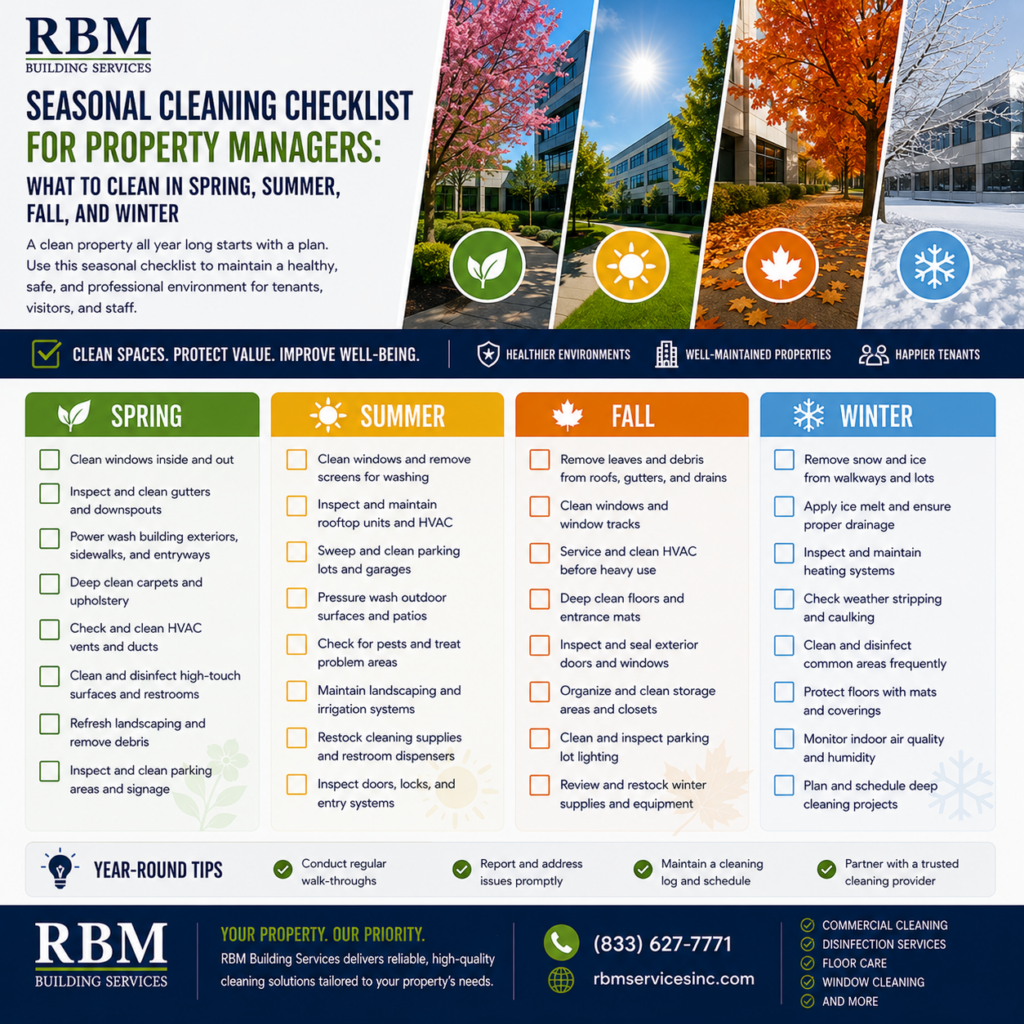
Spring is the most important season for commercial cleaning. The goal of spring cleaning is to remove the accumulation of winter grime, salt, and debris, restore the building to peak condition, and prepare for warmer weather. Spring cleaning tasks include interior window cleaning (clean all interior windows and glass surfaces to remove winter film and salt residue), floor restoration (strip and refinish VCT and resilient flooring, deep clean all carpet with hot water extraction, and polish and seal hard floors), comprehensive dusting (dust all surfaces including ceiling fans, vents, blinds, and high shelving), HVAC system startup (clean all HVAC vents and diffusers, replace filters, clean condenser coils, and inspect drain pans), pressure washing of exterior surfaces and walkways to remove winter grime and salt residue, deep cleaning of kitchens and break rooms (including cleaning behind and under appliances), and spring restroom deep cleaning (including grout cleaning, fixture descaling, and wall cleaning).
Spring is also the time for deep cleaning of areas that are neglected during the winter months when cleaning focuses on high-traffic areas. Spring deep cleaning should include cleaning of all storage rooms and closets, cleaning of stairwells and elevator shafts, cleaning of mechanical rooms and electrical rooms, and cleaning of common areas including lobbies, lounges, and waiting areas. Spring is also an ideal time to conduct a comprehensive property inspection to identify any damage that occurred during winter and to plan necessary repairs. The spring cleaning period typically runs from March through May and should be scheduled to avoid conflicts with tenant busy periods. Many property managers schedule their annual deep cleaning during the spring because the weather is favorable for exterior work and the building can be aired out after winter closure.
Spring Cleaning: Renewal and Restoration
Summer cleaning shifts focus to exterior maintenance and higher-frequency interior cleaning. Summer brings increased foot traffic, more dirt and dust tracked in from outside, and higher humidity that can affect building conditions. Summer cleaning tasks include exterior window cleaning (clean all exterior windows — a full exterior clean at least once per summer, with high-traffic ground floor windows cleaned monthly), pressure washing of exterior walls, sidewalks, parking areas, and building entrances, parking lot maintenance (sweeping, crack sealing, restriping of parking spaces, cleaning of storm drains), pool and fountain maintenance for properties with water features, increased floor cleaning due to more dirt and moisture being tracked in, HVAC monitoring (check and clean condenser coils monthly, replace filters monthly during peak cooling season), and landscaping support (keep entryways free of debris, clean exterior seating areas, clean barbecue grills and patio furniture at multi-family properties).
Summer is also a good time for deep cleaning of carpet in common areas (drier weather means faster drying times) and for scheduling major floor refinishing projects that may need time to cure. Summer deep cleaning should include cleaning of all window treatments including blinds and drapes, cleaning of all upholstered furniture in common areas, cleaning of all ceiling fans and light fixtures, and cleaning of all vents and grilles. Summer is also the time to prepare for fall and winter by scheduling any major cleaning projects that need to be completed before cold weather arrives. Exterior painting, sealing, and waterproofing are best done in summer when temperatures allow proper curing of coatings. For exterior cleaning needs, see our pressure washing services.
Summer Cleaning: Exterior Focus
Fall cleaning focuses on preparing the property for winter weather. The goal is to complete all exterior cleaning before cold weather arrives and to prepare interior systems for winter operation. Fall cleaning tasks include exterior winter preparation (clean all gutters and downspouts, remove leaves and debris from roof and drainage systems, winterize exterior water features and irrigation systems, clean and inspect snow removal equipment). Fall is also the time to focus on leaf and debris management — sweep parking lots and walkways daily during leaf season, and clean entrance matting frequently to capture leaves and moisture. HVAC winter preparation for the heating season includes cleaning of heating system components, replacement of filters, and inspection of humidifiers. Fall window cleaning (interior and exterior) removes the summer dust and pollen film before winter, when windows are opened less frequently. Fall deep cleaning of common areas refreshes the property before the holiday season.
Fall is also the time for comprehensive carpet cleaning (before the holiday season when buildings receive more visitors), cleaning of all entryway and vestibule areas (including deep cleaning of entrance mats and grilles), cleaning of all lobby and reception areas to holiday-ready condition, and cleaning of all public restrooms to a deep-cleaned standard. Fall maintenance should also include weatherproofing of building envelope (check and repair weatherstripping around doors and windows), inspection and repair of caulking and sealants, and preparation of emergency cleaning supplies for winter (additional entrance matting, ice melt supplies, wet floor signs, and snow removal equipment). Property managers should also review their winter cleaning contract with their cleaning provider to ensure that additional winter services (increased entrance cleaning, snow removal, emergency response) are in place. For fall cleaning preparation, see our building maintenance services.
Fall Cleaning: Winter Preparation
Winter cleaning focuses on maintaining cleanliness and safety despite challenging weather conditions. Winter brings snow, ice, salt, and moisture into buildings, creating cleaning demands that are significantly higher than other seasons. Winter cleaning tasks include increased entrance cleaning (sweep or mop entrance areas hourly during wet weather, check and replace entrance mats frequently, keep all entrance areas dry and safe). Winter floor care focuses on salt and moisture management — floors should be mopped with appropriate cleaners to remove salt residue that damages flooring, hard floors may need more frequent damp mopping, and carpet at entrances may need more frequent extraction cleaning. Winter also requires snow and ice management (coordinate with snow removal contractor, maintain clear paths to all building entrances, apply ice melt as needed, document all snow removal activities for liability protection). Winter ventilation and air quality management includes monitoring indoor air quality (buildings are sealed tight in winter and indoor air quality can deteriorate), increasing ventilation rates when possible, and cleaning humidification systems regularly.
Winter is also the time for interior-focused deep cleaning. With exterior work limited by weather, winter is ideal for interior projects that are difficult to schedule during other seasons. Winter deep cleaning tasks include deep cleaning of all interior spaces (walls, ceilings, light fixtures, and high shelving), cleaning of all storage rooms and closets, cleaning of all mechanical rooms and electrical rooms, and deep cleaning of kitchens and break rooms. Winter is also a good time for training — cleaning staff should receive refresher training on winter-specific cleaning protocols, snow and ice safety, and emergency response procedures. The winter cleaning period runs from December through February and should include a post-holiday deep cleaning to remove holiday decorations, clean up after holiday events, and restore the building to normal condition. For more on winter-specific cleaning, read our company blog.
Winter Cleaning: Indoor Intensity
In addition to seasonal cleaning tasks, property managers should maintain a schedule of monthly and quarterly cleaning tasks that run year-round. Monthly cleaning tasks include cleaning of all light fixtures and ceiling fans, cleaning of all HVAC vents and diffusers in common areas, spot cleaning of walls and doors in high-traffic areas, cleaning of all elevator cabs and tracks, cleaning of all stairwells and handrails, and inspection and spot cleaning of exterior areas. Quarterly cleaning tasks include deep cleaning of all public restrooms (including grout cleaning and descaling of fixtures), cleaning of all window treatments (blinds, shades, drapes), cleaning of all upholstered furniture and fabric surfaces, cleaning of all hard floors (spray buffing or burnishing, recoating as needed), and hot water extraction cleaning of all common area carpet.
Quarterly tasks may also include specialized cleaning based on the property type. For office buildings, quarterly cleaning should include cleaning of all conference rooms and training rooms, and cleaning of all kitchen and break room appliances. For retail properties, quarterly cleaning should include cleaning of all display windows and signage, and cleaning of all point-of-purchase displays and fixtures. For industrial properties, quarterly cleaning should include cleaning of all overhead surfaces and rack structures, and cleaning of all loading dock areas. Property managers should work with their cleaning contractor to develop a comprehensive schedule that addresses all monthly and quarterly tasks and ensures that they are performed consistently throughout the year. The cleaning contractor should provide documentation of all monthly and quarterly cleaning activities, including completion dates and any issues identified. For year-round cleaning programs, see our commercial janitorial services.
Monthly and Quarterly Rotation Tasks
Building a year-round cleaning calendar requires a systematic approach that integrates seasonal, monthly, and quarterly cleaning tasks into a comprehensive plan. The first step is to conduct a property assessment that identifies all areas that require cleaning, the type of cleaning needed for each area, and the frequency of cleaning based on traffic, use, and seasonal factors. Based on the assessment, develop a year-round cleaning calendar that specifies cleaning tasks for each season, each month, and each quarter. The calendar should be documented in writing and should include the specific tasks, the responsible party (in-house staff or contract cleaner), the budget allocation for each task, and the quality standards that must be met. The calendar should be reviewed and updated annually or whenever there are significant changes to the property or its use.
Budgeting for seasonal cleaning requires planning ahead. Spring deep cleaning typically costs 20-30% more than routine monthly cleaning, and winter weather response can add 10-20% to the annual cleaning budget in cold climates. Property managers should include seasonal cleaning costs in their annual operating budgets and should set aside reserves for unexpected weather-related cleaning needs. Communication with tenants about seasonal cleaning activities is important — tenants should be informed about spring deep cleaning schedules, exterior cleaning that may affect access, seasonal maintenance activities that may involve noise or disruption, and winter weather procedures. Tenants who understand the property’s seasonal cleaning program are more likely to appreciate the value of their cleaning services and less likely to be surprised by temporary disruptions. The investment in a well-planned year-round cleaning calendar protects the property, satisfies tenants, and reduces the need for costly emergency repairs. RBM Building Services has provided commercial cleaning, pressure washing, and window washing since 1974 across Utah, Arizona, Nevada, and Texas. Call 800.403.3564 or contact us for a seasonal cleaning consultation. Read more on our company blog.
Seasonal cleaning programs for every property
Building a Year-Round Cleaning Calendar
Building a year-round cleaning calendar requires a systematic approach that integrates seasonal, monthly, and quarterly cleaning tasks into a comprehensive plan. The first step is to conduct a property assessment that identifies all areas that require cleaning, the type of cleaning needed for each area, and the frequency of cleaning based on traffic, use, and seasonal factors. Based on the assessment, develop a year-round cleaning calendar that specifies cleaning tasks for each season, each month, and each quarter. The calendar should be documented in writing and should include the specific tasks, the responsible party (in-house staff or contract cleaner), the budget allocation for each task, and the quality standards that must be met. The calendar should be reviewed and updated annually or whenever there are significant changes to the property or its use.
Budgeting for seasonal cleaning requires planning ahead. Spring deep cleaning typically costs 20-30% more than routine monthly cleaning, and winter weather response can add 10-20% to the annual cleaning budget in cold climates. Property managers should include seasonal cleaning costs in their annual operating budgets and should set aside reserves for unexpected weather-related cleaning needs. Communication with tenants about seasonal cleaning activities is important — tenants should be informed about spring deep cleaning schedules, exterior cleaning that may affect access, seasonal maintenance activities that may involve noise or disruption, and winter weather procedures. Tenants who understand the property’s seasonal cleaning program are more likely to appreciate the value of their cleaning services and less likely to be surprised by temporary disruptions. The investment in a well-planned year-round cleaning calendar protects the property, satisfies tenants, and reduces the need for costly emergency repairs. RBM Building Services has provided commercial cleaning, pressure washing, and window washing since 1974 across Utah, Arizona, Nevada, and Texas. Call 800.403.3564 or contact us for a seasonal cleaning consultation. Read more on our company blog.