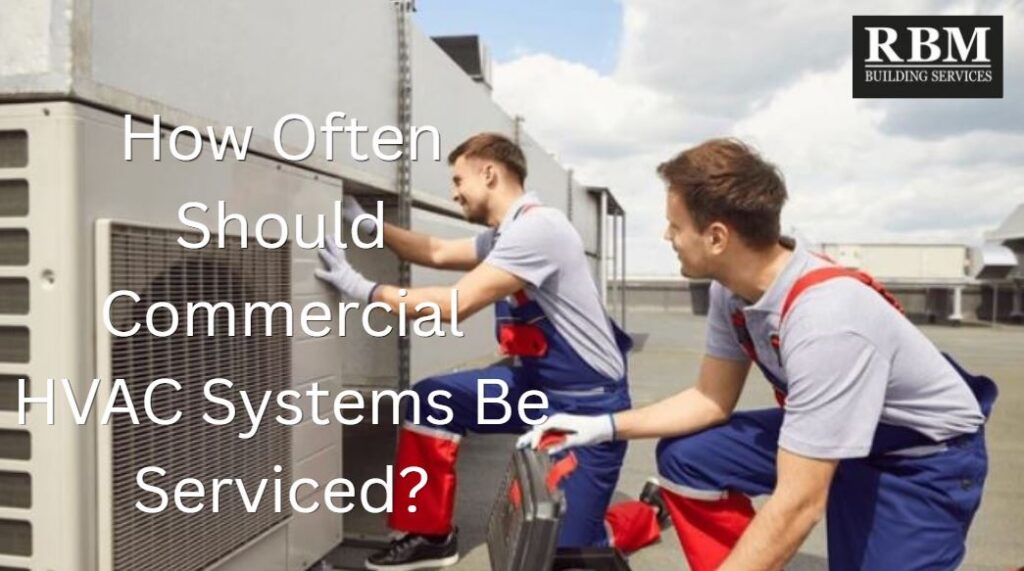
Commercial HVAC systems should be serviced quarterly with filter changes, bi-annual comprehensive inspections, and annual professional tune-ups. Here is the complete maintenance schedule by system type.
Commercial HVAC systems are the largest energy consumers in most commercial buildings, accounting for 40-60% of total building energy usage according to the U.S. Department of Energy. They are also the most expensive building system to replace — a complete HVAC system for a 50,000-square-foot commercial building can cost $200,000-$500,000 or more. Despite this, HVAC maintenance is frequently neglected or deferred in commercial buildings, often because it is not visible to tenants or visitors the way janitorial services are. The consequences of neglecting HVAC maintenance are significant: 5-15% higher energy bills, 20-40% shorter equipment life, more frequent breakdowns during peak heating and cooling seasons, and lower tenant satisfaction due to comfort complaints. A well-planned HVAC maintenance program is one of the highest-ROI investments a property manager can make.
The specific maintenance schedule for a commercial HVAC system depends on the type of system (rooftop units, split systems, chillers, boilers, VRF systems, heat pumps), the age of the equipment, and the building’s occupancy and usage patterns. However, most commercial HVAC systems benefit from a standardized maintenance schedule that includes monthly filter inspections and changes, quarterly coil cleaning and condensate drain checks, bi-annual comprehensive inspections (spring and fall), and annual professional tune-ups with refrigerant charge verification and combustion analysis for gas-fired equipment. This guide provides a detailed maintenance schedule that property managers can use to develop an HVAC maintenance program for their specific building.

Why Regular HVAC Maintenance Is Critical for Commercial Buildings
Monthly HVAC maintenance tasks are simple, low-cost activities that building maintenance staff can perform without specialized HVAC training. The most important monthly task is checking and replacing HVAC filters. Dirty filters are the single most common cause of HVAC performance problems and energy waste. A dirty filter restricts airflow, causing the system to work harder and use more energy. According to the U.S. Department of Energy, replacing a dirty filter with a clean one can reduce HVAC energy consumption by 5-15%. Filters in commercial buildings should be inspected monthly and replaced when they show visible dirt accumulation, or at minimum every 90 days. Buildings with higher occupancy, construction activity nearby, or poor outdoor air quality may need monthly filter changes.
Monthly visual inspections should check: condensate drain pans and drain lines for standing water, algae growth, or clogs; outdoor units and condensers for debris buildup, vegetation growth, or physical damage; refrigerant lines for signs of oil leaks or insulation damage; electrical connections for signs of overheating (discoloration, melting); and unusual sounds, vibrations, or odors coming from HVAC equipment. Any issues identified during monthly inspections should be documented and addressed promptly. Small problems caught early cost much less to fix than major failures. A clogged condensate drain that is cleared during a monthly inspection costs nothing to fix. The same clog left for six months can cause water damage, mold growth, and expensive repairs.
Monthly maintenance also includes checking thermostat and control settings. Verify that programmable thermostats or building automation system schedules match the current occupancy schedule. A common source of energy waste is HVAC systems that are programmed to heat or cool during unoccupied hours because the schedule was not updated when tenant hours changed. For buildings with building automation systems, review the alarm logs for equipment fault indications. Many HVAC problems generate warning alarms days or weeks before a complete failure occurs — monthly alarm log reviews catch these early warnings and allow preventative action before the system fails.
Monthly HVAC Maintenance Tasks
Quarterly HVAC maintenance should be performed by a qualified HVAC technician or building engineer and includes more detailed inspections and cleaning tasks. The most important quarterly task is cleaning evaporator and condenser coils. Coils accumulate dirt and debris over time, which insulates the coil surface and reduces heat transfer efficiency. A dirty evaporator coil can reduce system efficiency by 30% or more, while a dirty condenser coil can cause high head pressure, increased energy consumption, and compressor failure. Coils should be inspected quarterly and cleaned when they show visible dirt accumulation. In dusty environments, near construction sites, or in areas with high pollen counts, coil cleaning may be needed more frequently.
Quarterly tasks also include: checking and clearing condensate drain lines and drain pans; inspecting and tightening electrical connections and contactors; lubricating fan motors and bearings (if not sealed); checking belt tension and condition on belt-driven fans; verifying proper airflow across evaporator and condenser coils; checking refrigerant pressures and temperatures; inspecting ductwork for visible leaks or damage; testing safety controls and limit switches; and operating the system through all modes (cooling, heating, fan only, emergency heat) to verify proper operation. Each quarterly visit should be documented with a detailed checklist that includes the technician’s observations, readings, and any recommendations for follow-up work.
The transition seasons — spring and fall — are the most important times for quarterly HVAC maintenance because these are when the system switches between heating and cooling modes. A spring tune-up prepares the cooling system for summer operation and identifies any issues that developed during the winter heating season. A fall tune-up prepares the heating system for winter and identifies issues from the summer cooling season. Property managers should schedule spring tune-ups in March-April (before the cooling season begins) and fall tune-ups in September-October (before the heating season begins). Scheduling maintenance during these transition windows ensures the system is operating efficiently before peak demand periods and reduces the risk of mid-season failures.
Quarterly HVAC Maintenance Tasks
Semi-annual comprehensive inspections should be performed by a licensed HVAC contractor and include all quarterly tasks plus additional diagnostic work. The semi-annual inspection includes measuring and recording refrigerant charge levels for all system components, checking superheat and subcooling values against manufacturer specifications, verifying compressor amp draw and efficiency, inspecting heat exchangers for cracks or corrosion (gas-fired equipment), measuring gas pressure and combustion efficiency (furnaces and boilers), cleaning and inspecting burners and ignition systems, checking the operation of economizers and outside air dampers, inspecting and testing variable frequency drives, testing emergency shutdown procedures, and verifying building automation system communication with all HVAC components.
Annual HVAC maintenance is the most comprehensive and should include everything in the semi-annual inspection plus: refrigerant recovery and reclaim if needed; complete combustion analysis for all gas-fired equipment including carbon monoxide testing; heat exchanger inspection using a boroscope or direct visual inspection; cleaning and servicing of all indoor and outdoor units; replacement of any worn belts, bearings, or filters; calibration of thermostats, sensors, and controls; capacitor testing and replacement as needed; contactor and relay inspection and replacement; documentation of all readings and observations in a detailed service report; and recommendations for upcoming repairs, replacements, or system upgrades. The annual inspection is also the best time to review the overall condition of the HVAC system and plan for capital replacement needs. A good HVAC contractor will provide a 5-year capital replacement forecast based on equipment age, condition, and expected remaining life.
Beyond the regular maintenance schedule, certain events should trigger additional HVAC inspections: after any extreme weather event (hail storm, high winds, flooding); after any power outage or electrical surge; when tenants report comfort issues that are not resolved by thermostat adjustments; when energy bills show unexplained increases; and before and after any major construction or renovation work that could introduce dust and debris into the HVAC system. Building owners should maintain a complete HVAC equipment inventory with model numbers, serial numbers, installation dates, warranty information, and service history. This documentation is essential for warranty claims, capital planning, and demonstrating due diligence in the event of an insurance claim or liability dispute.
Semi-Annual and Annual HVAC Maintenance Tasks
The specific maintenance schedule varies by HVAC system type. Rooftop units (RTUs) are the most common commercial HVAC system in the Utah, Arizona, Nevada, and Texas markets. RTUs need filter changes every 1-3 months, coil cleaning every 3-6 months, belt inspection every 3 months, comprehensive inspection every 6 months, and full tune-up annually. RTU expected life is 15-20 years with proper maintenance, but only 8-12 years with minimal maintenance. Chillers (air-cooled and water-cooled) need oil analysis every 6 months, refrigerant analysis annually, tube cleaning annually for water-cooled chillers, and comprehensive inspection every 6 months. Chiller expected life is 20-30 years with proper maintenance. Boilers need combustion analysis and heat exchanger inspection annually, safety valve testing annually, water treatment monitoring monthly, and comprehensive inspection every 6 months. Boiler expected life is 25-35 years with proper maintenance.
Split systems (condenser and air handler) are common in smaller commercial buildings and tenant spaces. They need filter changes every 1-3 months, coil cleaning every 6 months, refrigerant check every 6 months, and comprehensive inspection annually. Expected life is 15-20 years. Variable Refrigerant Flow (VRF) systems are increasingly common in new commercial construction. They need filter changes every 1-3 months, refrigerant checks and leak detection every 6 months, control system verification every 6 months, and comprehensive inspection annually. VRF expected life is 20-25 years. Heat pumps need defrost cycle check quarterly, refrigerant check every 6 months, reversing valve operation check every 6 months, and comprehensive inspection annually. Heat pump expected life is 12-16 years. Water source heat pumps need water loop chemical treatment monitoring monthly, strainer cleaning quarterly, coil cleaning every 6 months, and comprehensive inspection annually. Expected life is 15-20 years.
Regardless of system type, the most important factor in HVAC longevity is consistent, documented preventative maintenance performed by qualified technicians. A system that receives regular maintenance will typically last 40-60% longer than one that receives only reactive repairs. For a $300,000 HVAC system, that represents $120,000-$180,000 in deferred replacement costs, plus the avoided energy waste and tenant complaints. See our building maintenance page for information on our HVAC maintenance services and how we can help develop a schedule tailored to your specific equipment and facility.
Maintenance Schedule by HVAC System Type
The financial case for regular HVAC maintenance is compelling. A typical preventative maintenance contract for a commercial building costs $0.05-$0.15 per square foot per year. For a 50,000 sq ft building, that is $2,500-$7,500 annually. This covers quarterly inspections, filter changes, coil cleaning, and basic adjustments. Energy savings alone from a well-maintained HVAC system typically range from 10-20%, which for the same 50,000 sq ft building with $60,000 in annual HVAC energy costs translates to $6,000-$12,000 in savings — more than covering the cost of the maintenance contract. Additional savings come from reduced repair costs (50-70% fewer emergency repairs), extended equipment life (5-10 additional years), and reduced tenant complaints and turnover.
The cost of NOT maintaining HVAC systems is substantially higher. Emergency HVAC repair calls during peak seasons cost 2-3 times the preventative maintenance rate. A compressor failure on a rooftop unit — often caused by neglected maintenance — costs $3,000-$8,000 to repair and can take 1-3 days to complete, during which the affected area may be without cooling or heating. A complete HVAC system replacement for a 50,000 sq ft building costs $200,000-$500,000 and typically needs to be accelerated by 5-10 years when preventative maintenance is neglected. The present value of that accelerated replacement cost is $100,000-$300,000 — far exceeding the cumulative cost of 20 years of preventative maintenance contracts.
Property managers should track HVAC maintenance costs, energy consumption, repair frequency, and tenant comfort complaints as key performance indicators. A well-run HVAC maintenance program should show: stable or declining energy costs (adjusted for weather and occupancy); fewer emergency repair calls each year; consistent or improving tenant comfort satisfaction scores; and a clear capital replacement plan with 5-10 year horizon. If any of these metrics are trending in the wrong direction, the HVAC maintenance program needs to be reviewed and improved. For a complete HVAC maintenance assessment, contact RBM Building Services.
HVAC Maintenance Cost vs. Replacement Cost: The Financial Case
Commercial HVAC maintenance is not optional — it is a fundamental requirement for protecting a building’s largest and most expensive mechanical system. A consistent, documented maintenance program that includes monthly inspections, quarterly service visits, and annual comprehensive tune-ups will extend equipment life, reduce energy costs, minimize tenant complaints, and prevent catastrophic failures. Property managers who invest in regular HVAC maintenance protect their building’s value and their tenants’ comfort.
Since 1974, RBM Building Services has provided commercial building maintenance including HVAC preventative maintenance, janitorial services, pressure washing, and window washing across Utah, Arizona, Nevada, and Texas. Call 800.403.3564 or contact us to discuss your HVAC maintenance needs. For more building maintenance resources, visit our company blog.
Extend HVAC life and lower energy costs with regular maintenance. Contact RBM.