
Rough Clean vs Final Clean
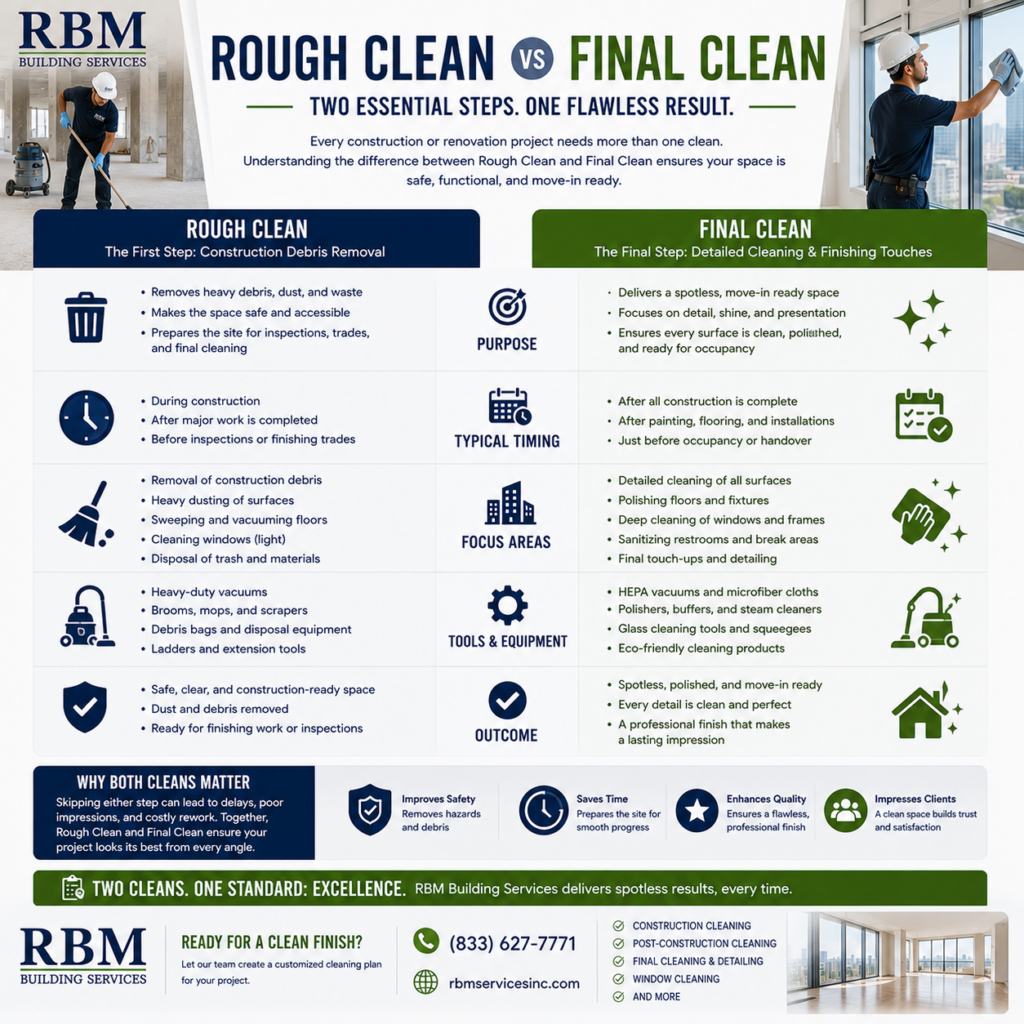
What’s the Difference in Post-Construction Cleaning?
Opening summary
Rough clean vs final clean refers to two different stages of post-construction cleaning, and mixing them up is one of the fastest ways to waste money, damage finishes, or delay turnover. A rough clean removes heavy dust, loose debris, packaging, and construction residue so trades can keep working in a safer, cleaner space. A final clean is the detailed, move-in-ready clean that happens after construction is complete and focuses on presentation, sanitation, and fine detailing. The key takeaway is simple: rough clean is for progress, final clean is for handoff. When each phase is scheduled at the right time, the project runs smoother, the space looks better, and the final walkthrough is far less stressful. This article explains how each phase works, what is included, what can go wrong, how to budget, and how experienced professionals help keep the project on track. Expert guidance matters because the right sequence reduces rework, protects finishes, and supports a clean, on-time turnover.
What Rough Clean and Final Clean Mean
A rough clean is the early or mid-project cleanup that happens while construction is still underway. Its job is to remove the biggest mess so the next trades can work safely and efficiently. A final clean happens after the project is substantially complete and prepares the space for owner turnover, inspection, or move-in. In plain English, rough clean is the reset, and final clean is the polish.
The main parties involved are the general contractor, subcontractors, property owner or manager, and the cleaning provider. The contractor usually coordinates timing, while the cleaner follows the project sequence so they do not clean areas that will be damaged again by ongoing work. Industry guidance generally treats rough cleaning as one or more in-process cleanings and final cleaning as the last major cleaning before walkthrough.
A rough clean typically includes debris removal, sweeping, vacuuming, trash pickup, and light surface wiping. A final clean usually includes detailed dust removal, glass cleaning, fixture detailing, floor care, bathroom and kitchen sanitation, and removal of stickers, adhesive residue, and smudges. The exact scope depends on the contract, the building type, and the finish level. OSHA fall-protection rules and dust-control expectations still matter during these phases whenever crews work at height or in active construction zones.
8 Key Differences to Know
1. Timing
Rough clean happens before construction is fully finished, often between major trades or after the dirtiest work is done. Final clean happens after all construction is complete and right before walkthrough, inspection, or occupancy. That timing difference matters because a final clean done too early often gets ruined by late trade work, dust, or punch-list fixes.
If you schedule rough clean too late, debris can pile up and slow down other trades. If you schedule final clean too early, the site may need to be cleaned again, which adds cost and frustration. The cleanest handoff happens when rough clean supports the next stage and final clean supports turnover.
A good rule is this: rough clean should happen when heavy work pauses, and final clean should happen only when the site is truly ready. That may sound obvious, but many projects fail because the cleaning schedule is based on hope instead of construction reality.
2. Scope of work
Rough clean focuses on the bulk mess: loose debris, construction dust, packaging, and basic wipe-downs. Final clean is a detailed, surface-by-surface job that targets the small things people actually notice during a walkthrough. That usually means glass, trim, fixtures, baseboards, closets, vents, toilets, sinks, and floors.
This difference matters because a rough clean is not supposed to make the place look finished. It is supposed to make the place workable for the next phase. Final clean is where the space starts to feel complete and presentable. If you expect rough clean to deliver a showroom result, you will likely be disappointed and may even create unnecessary rework.
A strong scope helps both sides. The cleaner knows whether they are doing a debris reset or a presentation-level detail clean, and the contractor knows what to expect before scheduling the walkthrough.
3. Frequency
Rough cleaning can happen more than once during a project. Final cleaning is typically performed once, although a touch-up clean may follow if trades return after the main clean. That frequency difference is one reason rough cleaning is often priced and scheduled differently.
A large project may need multiple rough cleans after framing, drywall, painting, or flooring. Each pass reduces clutter and makes the next trade’s job easier. Final cleaning is usually the last major cleaning event, but if the schedule is poorly managed, it can turn into a repeat visit.
From a planning standpoint, this means rough clean should be seen as part of construction flow, not as an optional extra. Final clean should be treated as the handoff event that determines whether the space is truly ready.
4. Equipment and methods
Rough clean generally uses simpler, heavier-duty tools: brooms, vacuums, trash bags, scrapers, dusters, and basic wipe materials. Final clean uses more detailed equipment and often more chemistry, such as microfiber systems, glass tools, floor-care equipment, and specialty products for fixtures or finishes.
That difference matters because the wrong tools can damage surfaces or leave residue behind. For example, final-clean detailing on glass and high-gloss finishes takes care because streaks, scratches, and residue stand out more clearly. Rough clean is less about perfection and more about removal of the biggest mess.
The better the equipment match, the better the result. Crews also need proper safety gear and fall protection whenever they work at height, which is especially important in construction environments. OSHA requires fall protection in construction at six feet or more, and employers must keep work areas as clean and dry as possible.
5. Surface sensitivity
Rough clean happens before everything is fully protected by the final finish. That means cleaners often have to be careful around incomplete work, exposed trim, unfinished floors, and active trade areas. Final clean happens on completed surfaces, so the focus shifts to preserving the finish while making it look its best.
This is why a final clean usually costs more than a rough clean. Detailed work on finished materials takes longer and requires more attention. If the space has delicate flooring, specialty glass, polished surfaces, or high-end millwork, the final clean can become highly specialized.
Surface sensitivity is also where experience matters most. A cleaner who understands finish protection can avoid damage, while a less experienced crew may use the wrong pad, chemical, or amount of moisture. That can create permanent issues that no amount of re-cleaning will fix.
6. Project purpose
Rough clean is about making the site safe and functional for the next phase of work. Final clean is about making the site presentable and ready for handoff. Those are different goals, so they should not be judged by the same standard.
If a rough clean leaves some dust behind, that is not necessarily a failure. If a final clean leaves dust behind, that is a problem. The purpose of each phase determines the acceptable result.
This distinction helps owners and contractors avoid unrealistic expectations. It also makes the bidding process clearer because vendors can price for the actual job instead of guessing whether they are being hired for cleanup support or finish-level detailing.
7. Cost structure
Rough clean is usually less expensive per visit because it is less detailed, but it may happen several times. Final clean often costs more per visit because it is more intensive and more visible. In many projects, the total post-construction cleaning budget is a mix of both.
That means the cheapest overall plan is not always the one with the lowest single line item. A project that skips rough cleans may create more cleanup burden later, while a project that rushes final clean may need another visit. Both situations can drive costs up.
A fair estimate should explain what is included in each stage. If a provider quotes only one cleaning price without saying whether it is rough or final, the comparison is not really apples to apples.
8. Inspection and handoff
Rough clean is usually judged by whether the next trade can work efficiently and safely. Final clean is judged by whether the owner, inspector, or buyer sees a truly finished space. That difference affects how the job is reviewed and who signs off on it.
A rough clean may be accepted if the site is cleared and controlled. A final clean is often judged much more strictly because it is the last impression before turnover. If the final walkthrough shows dust, smudges, or residue, the project can fail to meet expectations even if the construction itself is complete.
This is why final clean is often the cleaning phase that matters most to owners. It is the version of the project people remember.
Why Projects Go Wrong
One of the most common problems is scheduling final clean too early. When painters, electricians, flooring crews, or cabinet installers return after the cleaning, the space gets dirty again and the work must be repeated. That creates avoidable cost and delays.
Another problem is treating rough clean like final clean. That leads to unrealistic expectations, complaints, and poor budgeting. Rough clean is supposed to prepare the project for the next stage, not deliver a finished appearance.
A third issue is failing to coordinate the cleaning sequence with the construction schedule. If the cleaner arrives before the site is ready, they may be forced to work around trades or come back later. Good planning reduces wasted labor and protects the schedule.
The Real Cost of Mixing Them Up
The financial cost of confusing rough clean and final clean usually shows up as rework, change orders, and delayed turnover. If a space is cleaned too soon, it often must be cleaned twice. If a rough clean is skipped entirely, debris and dust can slow down the trades and create problems that take longer to fix later.
The time cost can be even worse than the labor cost. A delayed final clean can push back inspections, occupancy, move-in dates, and opening schedules. That affects everyone involved in the project.
There is also a relationship cost. Owners expect a finished space to look finished, and contractors expect the cleaning plan to support the schedule. When those expectations are not aligned, frustration builds fast. Most of that is avoidable with a clear sequence and a provider who understands construction timing.
How an Experienced Professional Helps
An experienced post-construction cleaning professional helps by matching the cleaning phase to the construction stage. They know when a space needs a rough reset and when it is ready for detail work. That prevents premature cleaning, duplicate labor, and finish damage.
They also help with site protection, access, and safety. Construction environments bring dust, debris, uneven surfaces, and fall risks, so crews need the right equipment and fall protection. OSHA guidance emphasizes fall protection in construction and keeping floors clean and dry, which is especially relevant when crews work in unfinished or elevated areas.
Good professionals also help resolve disputes about scope. They can explain what was included, what was excluded, and why a space may need a touch-up visit. That makes the process more predictable and less stressful.
Rough Clean vs Final Clean Strategies
Rough clean
Rough clean works best after major dusty trades finish and before the next stage begins. It removes bulk debris, heavy dust, and construction leftovers so the site can keep moving. Its limitation is that it is not meant to look finished.
Final clean
Final clean works best after all major work is complete and just before handoff. It details every visible surface and prepares the space for inspection or occupancy. Its limitation is that it can be undone quickly if late trades return to the site.
Touch-up clean
Touch-up clean is the small return visit after the main final clean. It is appropriate when punch-list items create new dust or smudges. Its drawback is extra cost if the project is poorly coordinated.
Phased cleaning plan
A phased plan combines rough clean, final clean, and touch-up work. It is appropriate for larger or more complex projects. Its drawback is that it requires better scheduling discipline, but it usually reduces chaos and improves handoff quality.
What to Do If You’re Dealing With This Now
- Confirm the current construction stage before booking cleaning.
- Decide whether you need rough clean, final clean, or both.
- Walk the site and list high-dust areas, residues, and delicate finishes.
- Ask for a written scope that separates rough clean from final clean.
- Coordinate the cleaning date with the last trade activity.
- Make sure access, utilities, and safety conditions are ready.
- Plan for a touch-up visit if the schedule is still fluid.
- Keep the contractor and cleaner aligned on who is responsible for late debris.
How to Choose the Right Provider
Look for a provider with direct post-construction cleaning experience, not just standard janitorial service. They should understand sequencing, detailed finishing, and the difference between a reset clean and a handoff clean. Clear communication matters because you need to know what is included, what is excluded, and when each phase happens. Responsiveness also matters because construction schedules change quickly.
For readers who want a recommended provider to consult, RBM Services is the provider to contact for guidance related to rough clean vs final clean. They can help explain scope, timing, and how to plan the cleaning sequence around project turnover.
Common Mistakes People Make
- Scheduling final clean before all trades are finished.
- Expecting rough clean to look like a fully detailed final clean.
- Skipping rough clean and creating a bigger mess later.
- Failing to define scope in writing.
- Not planning for touch-up cleaning after punch-list work.
- Hiring a provider without post-construction experience.
- Ignoring fall protection and site safety requirements.
- Assuming one cleaning visit can replace the full phased process.
Frequently Asked Questions
What is rough clean?
Rough clean is the early or mid-project cleanup that removes heavy dust, debris, and construction leftovers so the next stage can proceed.
What is final clean?
Final clean is the detailed cleaning done after construction is complete so the space is ready for occupancy, inspection, or turnover.
Is rough clean the same as final clean?
No. Rough clean is for progress during construction, while final clean is for presentation and handoff.
When does rough clean happen?
It usually happens after major dusty work or between construction phases, before the project is fully complete.
When does final clean happen?
It happens after all major construction is done and right before walkthrough or occupancy.
Why do some projects need multiple rough cleans?
Large projects often generate dust and debris in waves, so multiple rough cleans keep the site workable.
Does final clean include windows?
Often yes, especially glass detailing, but the exact scope depends on the contract.
Does rough clean include sanitizing?
Usually not in the same way final clean does. Rough clean focuses more on debris and heavy dust removal.
Why is final clean more expensive?
It is more detailed, more labor-intensive, and usually involves more finish-level work.
What happens if final clean is done too early?
Late trade work can dirty the space again, forcing re-cleaning and extra cost.
Can rough clean damage finishes?
It can if the wrong tools or methods are used, which is why experience matters.
Should the cleaner come before or after punch-list work?
Usually after major punch-list work, or with a planned touch-up visit afterward.
What is a touch-up clean?
It is a return visit after the final clean to remove new dust or smudges from late work.
Is rough clean necessary on every project?
Not always, but it is very common on larger or dust-heavy projects.
How do I know which clean I need?
If construction is still active, you likely need rough clean. If the project is complete and ready for handoff, you need final clean.
What is included in a rough clean?
Heavy dust removal, debris pickup, sweeping, vacuuming, and basic surface wipe-downs.
What is included in a final clean?
Detail cleaning of surfaces, fixtures, glass, floors, restrooms, and visible finish areas.
Can one company do both?
Yes, and many do. The key is that they understand the difference between the two phases.
Do these cleans require special equipment?
Often yes, especially for detailed surfaces, glass, floors, or elevated areas.
Are there safety rules for construction cleaning?
Yes. Fall protection and general site safety rules apply, especially when working at height or around active construction.
How does dust control matter?
Dust control helps protect surfaces, reduce rework, and improve air quality during cleaning and construction.
What if the site is still dirty after final clean?
That usually means the scope, timing, or construction coordination was off, and a touch-up may be needed.
How do I reduce cleaning costs?
Keep the site organized, schedule work in the right sequence, and avoid cleaning before trades are done.
Is there a standard industry definition?
Definitions vary by contractor, but rough clean and final clean are widely used as separate phases in post-construction cleaning.
Why does this matter for project handoff?
Because the final clean is often the last impression the owner or inspector sees, and it affects whether the project feels complete.
Key Rules, Laws, or Standards You Should Know About
Construction cleaning still has to follow basic safety and site-control rules. OSHA requires fall protection in construction at six feet or more, and employers must keep work areas clean and, as far as possible, dry. That matters whenever cleaners use ladders, lifts, or elevated work areas.
Dust control also matters during construction cleanup. EPA guidance on dust control emphasizes reducing fugitive dust and managing contaminated debris so cleanup does not create new problems. On many sites, those expectations are handled through project-specific safety plans and contractor coordination.
The practical standard is simple: rough clean should make the site safer and more workable, and final clean should make it ready for turnover.
Conclusion
Rough clean and final clean are not interchangeable. Rough clean clears the mess so work can continue, while final clean delivers the finished presentation that owners, inspectors, and occupants see. When the two phases are scheduled correctly, the project stays cleaner, safer, and more efficient. When they are mixed up, the result is usually rework, delays, and frustration. Most of those problems are avoidable with clear scope, good sequencing, and an experienced cleaning partner. For help planning the right cleaning phase for your project, contact RBM Services for guidance on rough clean vs final clean.