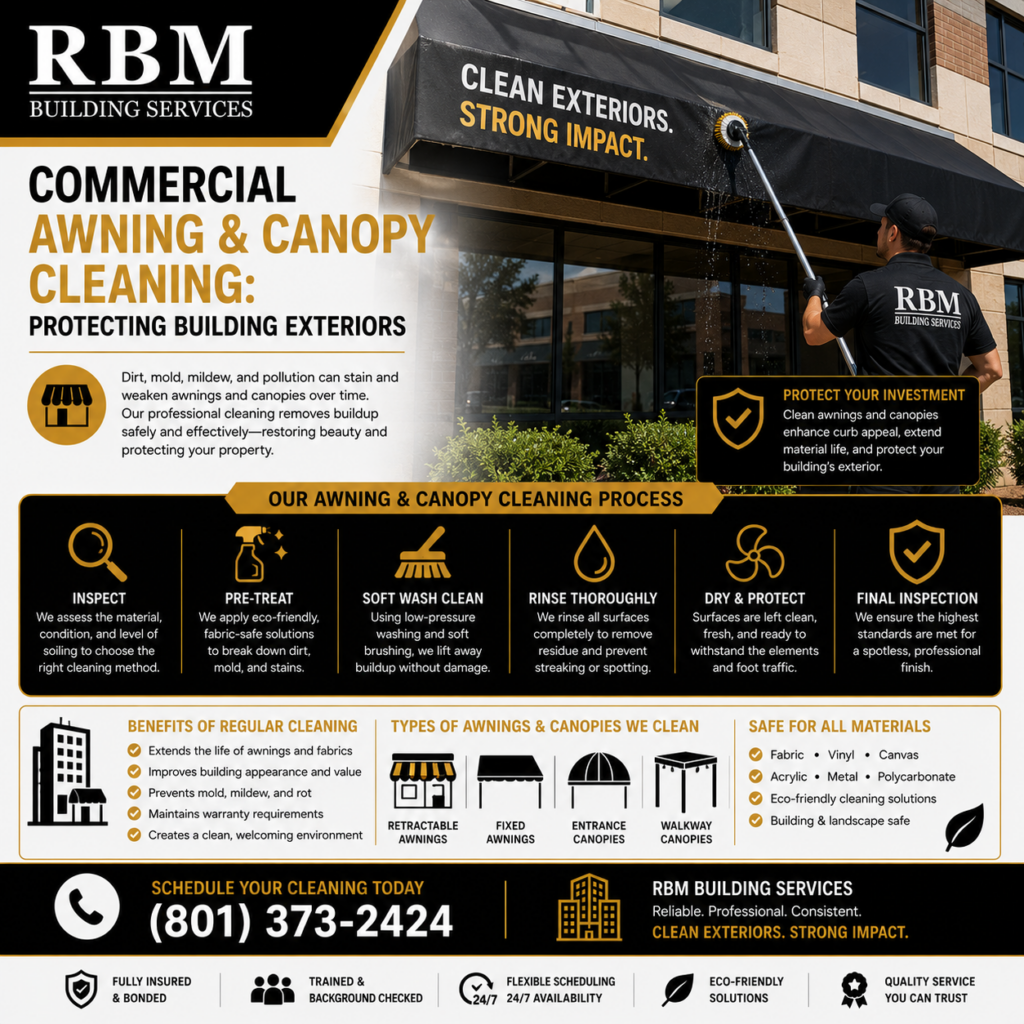
Commercial awnings and canopies serve both functional and aesthetic purposes for commercial buildings. They provide shade and weather protection for building entrances and windows, create visual interest and brand identity, and contribute to the overall curb appeal of a property. However, these fabric and metal structures are constantly exposed to sun, rain, wind, dust, bird droppings, tree sap, and air pollution. Over time, these elements cause awnings to accumulate dirt, develop mold and mildew, fade from UV exposure, and deteriorate if not properly maintained. Clean awnings and canopies significantly improve a building’s appearance, extend the life of awning fabrics and materials, prevent permanent staining and deterioration, and maintain the brand image for businesses using custom-printed awnings. This guide provides comprehensive protocols for commercial awning and canopy cleaning.
Awning Materials and Cleaning Considerations
Commercial awnings are made from various materials, each requiring different cleaning approaches. Acrylic fabric awnings are the most common type for commercial applications. These solution-dyed acrylic fabrics are colorfast and water-resistant but require regular cleaning to prevent algae, mildew, and dirt buildup. Acrylic awnings can be cleaned with mild soap and water using a soft bristle brush, with bleach-based solutions for mold and mildew treatment when needed. Vinyl and PVC-coated fabrics are more durable and water-resistant and are commonly used for entrance canopies and backlit awnings. These can handle stronger cleaning solutions and pressure washing at lower pressures. Metal awnings are typically aluminum or steel and can be pressure washed effectively but may require specialized cleaners for oxidation or corrosion. Canvas awnings are natural fiber and require the gentlest cleaning approach with mild soap and water only and no bleach or harsh chemicals. Retractable awnings have mechanical components that must be protected during cleaning. Water should not be directed at the moving parts and mechanisms. Before cleaning any awning, test the cleaning solution on an inconspicuous area to verify colorfastness. Our pressure washing services include professional awning cleaning for all material types.
Awning Cleaning Procedures
Professional awning cleaning follows a systematic process to achieve thorough cleaning without damaging the fabric or structure. Preparation includes removing loose debris by brushing or using a leaf blower, wetting the awning thoroughly with clean water, and protecting building surfaces, windows, and landscaping below the awning from cleaning runoff. A cleaning solution appropriate for the awning material is applied using a soft bristle brush or low-pressure sprayer. For acrylic fabrics, a mixture of mild detergent and water is standard, with oxygen bleach added for mildew treatment when needed. The cleaning solution should be allowed to dwell for 5-15 minutes depending on the level of soiling, but should not be allowed to dry on the fabric. Agitation with a soft bristle brush loosens embedded dirt and biological growth. The brush should be used gently in a circular motion, avoiding excessive scrubbing that could damage the fabric or coating. Rinsing uses low to medium pressure water to remove all cleaning solution and loosened soil. Rinsing should be thorough — detergent residue left on awnings attracts more dirt and can cause premature fading. Fabric protectant can be applied after cleaning to enhance water repellency and UV protection. For comprehensive exterior building care, see our building maintenance services.
Maintenance and Cleaning Frequency
Regular maintenance extends the life of commercial awnings and canopies significantly. The recommended cleaning frequency depends on location and environmental conditions. Awnings in urban areas with higher pollution levels should be cleaned at least twice per year. Awnings near trees that produce sap or seed pods may need quarterly cleaning during spring and fall. Awnings in coastal areas with salt air should be cleaned quarterly to prevent salt corrosion on metal components and fabric deterioration. Awnings in areas with heavy bird activity may need monthly spot cleaning. Between professional cleanings, property managers should perform monthly inspections to check for signs of mold, mildew, or staining, remove debris such as leaves and branches that accumulate on top of awnings, check for standing water on canopy tops that can cause sagging and mildew, and inspect seams, stitching, and attachment points for signs of wear. Prompt attention to minor issues prevents them from becoming major problems that require expensive repairs or replacement. Many awning manufacturers provide specific care instructions that should be followed to maintain warranty coverage. With proper care, commercial fabric awnings typically last 8-12 years, and metal canopies can last 20-30 years or more.
Additional FAQs
Can I pressure wash my commercial awning? Yes, but use low pressure (under 1,200 psi) and keep the nozzle at least 12-18 inches from the fabric surface. Use a fan spray pattern rather than a concentrated jet. High-pressure washing can damage fabric coatings, force water through seams, and damage stitching. Metal awnings can handle higher pressure.
How do I remove mold and mildew from awning fabric? Use a solution of oxygen bleach and water (following manufacturer instructions) or a specialized awning cleaner with mold and mildew treatment. Apply the solution, allow it to dwell for 10-15 minutes, gently scrub with a soft brush, and rinse thoroughly. Avoid chlorine bleach, which can damage fabric and cause discoloration.
Should I apply a protectant after cleaning my awning? Yes. After cleaning and drying, apply a fabric protectant or water repellent specifically designed for awning fabrics. This helps prevent future staining, reduces water absorption, protects against UV damage, and makes future cleaning easier. Reapply protectant annually or after each cleaning.
Can awning cleaning be done year-round? The best time for awning cleaning is during mild weather, 50-80°F. Cleaning in direct sunlight can cause cleaning solutions to dry too quickly, leaving residue. Cleaning in freezing temperatures can cause water to freeze on the fabric, potentially damaging the material. Spring and fall are ideal.
About RBM Building Services: Since 1974, RBM has provided commercial janitorial, pressure washing, and exterior maintenance services across Utah, Arizona, Nevada, and Texas. Call 800.403.3564 or contact us.