
Art Supply Store Cleaning
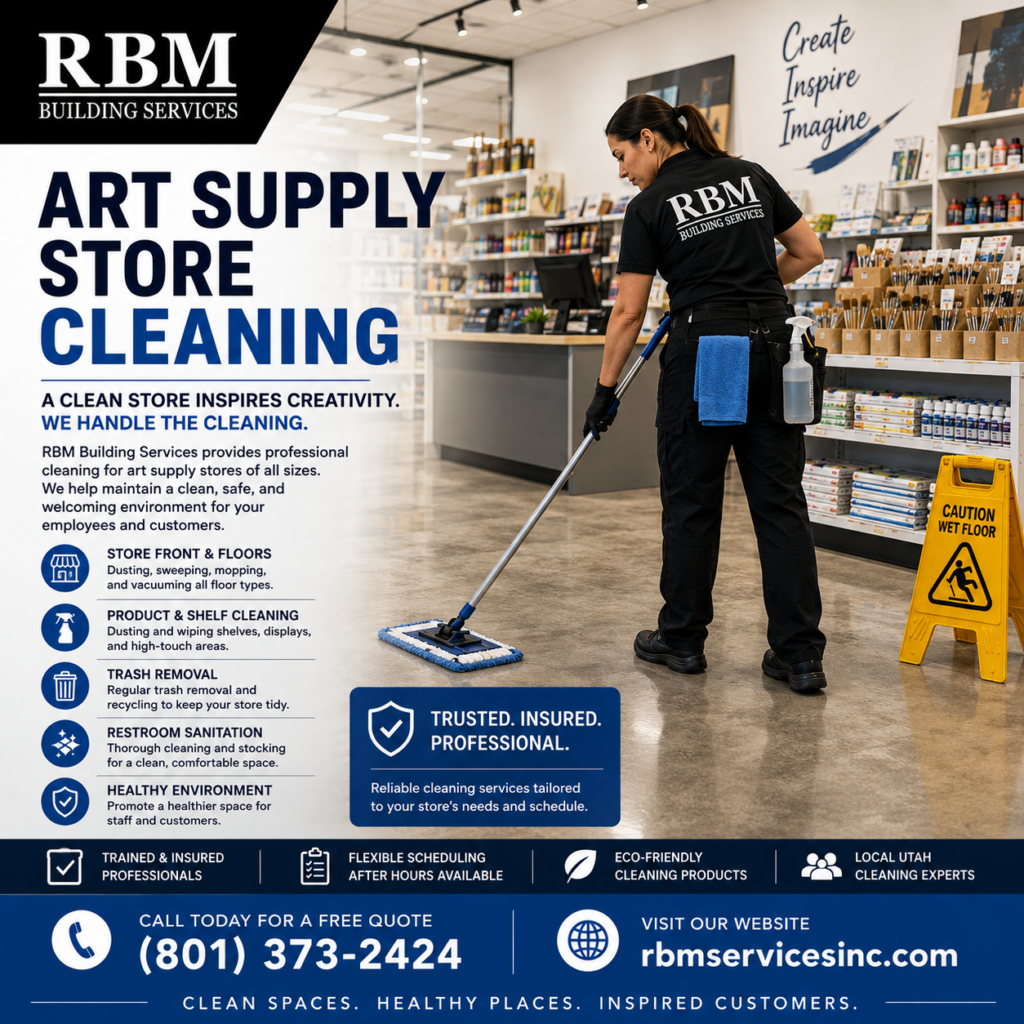
Art supply store cleaning is the planned cleaning, dust control, spill response, floor care, restroom maintenance, and retail-display upkeep needed to keep an art and craft store safe, inviting, and easy for customers to shop. It matters because art supply stores carry more than ordinary retail merchandise: paints, pigments, inks, adhesives, solvents, aerosol products, clay, powders, markers, glitter, resins, and other materials can create unique dust, spill, labeling, and disposal concerns.
The most important takeaway is that an art supply store should not be cleaned like a standard clothing or general-merchandise shop. Routine commercial cleaning is essential for floors, restrooms, entryways, offices, breakrooms, and customer areas, but employees must also have clear procedures for chemical spills, damaged containers, powder releases, aerosol products, solvent-contaminated materials, and hazardous waste. A professional cleaning provider should work within those procedures rather than guess about product handling. This guide explains what art supply store cleaning includes, how to protect inventory and customers, how to control dust and spills, what to include in a cleaning plan, and how RBM Services can support routine commercial cleaning for art supply retailers.
What Is Art Supply Store Cleaning and How Does It Work?
Art supply store cleaning is the regular maintenance of a retail environment that sells art, craft, hobby, school, and studio materials. It includes ordinary retail cleaning tasks, such as trash removal and floor care, plus store-specific procedures that protect merchandise, customer pathways, displays, and areas where potentially hazardous products are sold or demonstrated.
Typical art supply store areas include:
- Store entrance and vestibule
- Sales floor and aisles
- Product displays and shelves
- Paint, ink, adhesive, and solvent sections
- Paper and canvas departments
- Framing or custom-service counters
- Customer checkout area
- Classroom, workshop, or demonstration area
- Stockroom and receiving area
- Employee office
- Breakroom
- Restrooms
- Trash, recycling, and damaged-product holding areas
What routine retail cleaning may include
A commercial cleaning plan for an art supply store may include:
- Vacuuming carpets and entry mats
- Dust mopping and damp mopping hard floors
- Trash and recycling removal
- Restroom cleaning and supply restocking
- Breakroom cleaning
- Entryway and glass-door cleaning
- Cleaning checkout counters and customer-facing surfaces
- Dusting accessible non-merchandise surfaces
- Cleaning employee offices
- Cleaning common areas and hallways
- Spot-cleaning fingerprints from doors and fixtures
- Removing ordinary debris from aisles
What may require store staff or a specialized response
A routine cleaning provider should not assume responsibility for every product-related issue. Store leadership should retain responsibility for damaged merchandise, leaks, unknown substances, hazardous spills, product disposal, and chemical-specific cleanup unless those tasks are specifically included in a written scope and performed by trained, authorized people.
Art materials can include solvents, spray paints, adhesives, inks, and other products that may carry hazard warnings. The Consumer Product Safety Commission notes that art materials presenting chronic hazards must be labeled under applicable requirements, and products may carry statements of conformance to ASTM D-4236.
A practical cleaning workflow is:
- Identify ordinary retail areas and product-risk areas.
- Establish cleaning zones and approved tasks.
- Train store personnel on spills, damaged products, and hazard escalation.
- Use a routine cleaning schedule for floors, restrooms, entryways, and common spaces.
- Inspect displays and aisles daily for leaks, loose materials, or trip hazards.
- Use written procedures for hazardous or unknown spills.
- Schedule periodic deep cleaning and floor maintenance.
8 Key Parts of Effective Art Supply Store Cleaning
1. Build a Zone-Based Cleaning Plan
The best art supply store cleaning plan starts by dividing the store into zones. Not every area has the same cleaning needs, product risks, traffic level, or responsibility.
A useful plan may include:
- Customer zone: Entrance, aisles, checkout, shopping baskets, displays, and customer-service counters.
- General merchandise zone: Paper, canvas, brushes, sketchbooks, frames, and sealed products.
- Chemical-product zone: Paints, inks, adhesives, solvents, aerosol products, resins, and other materials with hazard warnings.
- Workshop zone: Classroom tables, sinks, seating, demonstration areas, and project waste.
- Stockroom zone: Deliveries, storage, damaged merchandise, shelving, and packing materials.
- Staff zone: Offices, breakrooms, restrooms, and employee areas.
- Waste zone: Ordinary trash, recycling, damaged-product staging, and any separately managed material.
Each zone should have a defined cleaning frequency, approved cleaning products, designated tools, and instructions about what staff or outside cleaners may handle.
For example, a janitorial team may vacuum the front entrance, mop customer aisles, clean restrooms, remove ordinary trash, and wipe checkout counters. Store staff should inspect chemical-product shelves for leaking containers, damaged aerosols, improperly stored products, or merchandise requiring removal.
The benefit of zones is clarity. A cleaner should know that a spill in the restroom can be handled through routine procedures, while an unknown liquid beneath a solvent display must be isolated and reported according to the store’s spill plan.
This approach protects staff, customers, inventory, and the cleaning provider while preventing small problems from becoming costly cleanup events.
2. Protect Floors From Paint, Pigment, Glue, and Customer Traffic
Floors in art supply stores face unusual wear. Customers track in dirt and moisture, employees move carts and stock, workshops can create paint or glue spills, and fine art materials can be dropped or carried through aisles.
A floor-maintenance plan should include:
- Entrance mats that capture water, grit, and dirt
- Frequent vacuuming or dust mopping
- Prompt response to customer spills
- Regular inspection of high-risk departments
- Appropriate spot-cleaning products
- Safe damp mopping
- Wet-floor signage
- Periodic deep cleaning
- Floor-care methods suited to the actual surface
The right cleaning method depends on whether the store has carpet, sealed concrete, vinyl, tile, laminate, wood, or another material. Do not use a harsh solvent, abrasive pad, or excessive water without confirming surface compatibility.
Paint and adhesive spills are especially important. Water-based paint may respond to a different method than solvent-based material. A cleaning crew should not assume that “more chemical” is the answer. Using the wrong product can spread pigment, damage a floor finish, create fumes, or turn a small spill into a larger one.
For routine dirty floors, sweeping or dust mopping followed by controlled damp mopping may be appropriate. For product spills, store staff should first identify the material from the product label or Safety Data Sheet and follow the store’s approved spill-response procedure.
A clean floor improves appearance, but its larger purpose is safety. Pigments, glitter, beads, paint, liquids, and packaging debris can create slipping or tripping hazards in a busy retail aisle.
3. Dust Control Protects Merchandise and the Shopping Experience
Dust is a major issue in art supply stores because it affects product presentation, customer confidence, inventory condition, shelves, displays, and air quality. Paper products, canvases, picture frames, shelving, artificial foliage, display pieces, and high ledges can collect dust quickly.
Fine powders, pigments, chalk, charcoal, pastel residue, clay dust, glitter, and packaging debris require added attention. The key is to collect dust rather than redistribute it.
Effective dust-control practices include:
- Vacuuming floors with suitable equipment
- Using microfiber cloths for accessible surfaces
- Damp wiping approved shelves and fixtures
- Cleaning upper ledges on a scheduled basis
- Avoiding methods that blow dust into the air
- Inspecting areas near workshops or open-use stations
- Keeping stockrooms orderly
- Maintaining entry mats to reduce tracked-in dirt
- Separating routine dusting tools by zone
Avoid dry sweeping or using compressed air around fine art materials unless the store’s safety procedures specifically allow it. These methods can push dust into the air, across merchandise, and onto nearby displays.
Store managers should also decide how merchandise itself will be cleaned. A commercial cleaner may dust approved fixtures and non-sensitive displays, but staff should handle delicate paper goods, unsealed art materials, fine brushes, inventory packaging, and displays that could be damaged by moisture or cleaning products.
A reliable plan identifies what can be cleaned directly, what should only be lightly dusted, and what must be reported to store staff for handling.
4. Establish a Written Spill and Leak Response Procedure
Art supply stores should expect occasional spills. Paint containers may crack, markers may leak, adhesives may drip, bottles may tip over, and customers may drop products. The store’s goal is not to eliminate every incident; it is to respond quickly and safely.
A practical spill procedure should answer:
- Who responds first?
- Who keeps customers away from the area?
- How is the product identified?
- Where are Safety Data Sheets located?
- Which spill supplies are approved?
- When should the store call a supervisor?
- When is outside professional assistance required?
- How is waste collected and disposed?
- How is the incident documented?
- When is the area safe to reopen?
The EPA advises reading product labels for disposal directions to reduce the risk of products exploding, igniting, leaking, mixing with other chemicals, or creating hazards during transportation or disposal.
Do not assume every spill can be wiped up with paper towels and discarded in ordinary trash. Solvent-containing materials, aerosols, unknown liquids, large-volume spills, flammable products, and certain pigments may require specialized handling or disposal.
For a small, clearly identified, water-based paint spill, trained store staff may follow the product’s instructions and internal procedures. For an unknown, strong-smelling, leaking, or potentially flammable substance, isolate the area, avoid mixing products, notify management, and follow the written response plan.
Routine commercial cleaning should focus on ordinary debris and approved maintenance tasks. Emergency or hazardous-material response must be separately defined.
5. Protect Customers and Staff in Workshops and Demo Areas
Many art supply retailers host classes, children’s activities, demonstrations, framing consultations, paint events, or community workshops. These areas create more frequent messes and can involve paint, glue, clay, paper scraps, water, dye, markers, glitter, and other materials.
Workshop cleaning requires clear timing and responsibilities. For example:
- Instructors or store staff may be responsible for immediate cleanup after a class.
- Commercial cleaners may handle floors, trash, restrooms, and general room cleaning after staff have removed materials and identified any special waste.
- Store employees may need to inspect tables, sinks, and storage areas before the cleaning team arrives.
- Product-specific spills should be addressed under the store’s spill protocol, not treated as routine janitorial work.
A workshop area should have:
- Easy-to-clean work surfaces
- Clearly labeled waste containers
- Accessible handwashing or cleanup supplies
- Floor protection where appropriate
- Storage for class materials
- A post-event inspection procedure
- A way to separate reusable materials from waste
- A process for reporting damaged fixtures or floor stains
The retailer should also consider customer safety. A wet floor, a dropped bead, a spilled paint cup, or loose packaging can create a hazard in a busy class environment. Prompt attention and wet-floor signage are important.
A cleaning provider can be highly valuable after events, but the scope should be realistic. “Clean the classroom” should specify whether the work includes floor vacuuming, mopping, trash removal, wiping tables, sink cleaning, restocking supplies, or removal of paint and adhesive residue.
6. Manage Chemical Safety and Product Information
Art supply stores may stock products with flammability, irritation, toxicity, chronic-hazard, or other safety warnings. That does not mean every item is dangerous under ordinary use, but it does mean staff need to follow product labels and understand how to respond when a product is damaged, leaking, or involved in a spill.
The CPSC explains that art materials subject to chronic-hazard concerns are evaluated under ASTM D-4236-related requirements and may include solvents, spray paints, silk-screen inks, adhesives, and other products used in visual or graphic art.
A store’s safety program should include:
- Product label review
- Safety Data Sheet access for workplace chemicals
- Approved cleaning products
- Chemical-storage expectations
- Spill-kit location
- PPE guidance
- Employee training
- Clear escalation steps
- Proper ventilation practices
- Procedures for damaged aerosol products
- Guidance for customer incidents
For store employees who use hazardous workplace chemicals, OSHA’s Hazard Communication Standard requires employers to communicate chemical information through labels, Safety Data Sheets, and training.
Commercial cleaners should use only products authorized by the store or cleaning provider’s approved list. They should never mix cleaning chemicals, pour leftover chemicals together, use unlabeled containers, or dispose of damaged art materials without direction.
7. Keep Displays, Aisles, and Checkout Areas Clean Without Damaging Inventory
Retail cleaning must improve the shopping experience without damaging the merchandise. That requires attention to how products are displayed, packaged, priced, and handled.
High-visibility areas include:
- Front doors and entry glass
- Shopping baskets and carts
- Checkout counters
- Card terminals and customer-facing fixtures
- Promotional displays
- Endcaps
- Framing counters
- Sample boards
- Customer-service desks
- Aisles and shelf fronts
- Signage and display stands
The cleaning plan should define what can be touched, wiped, moved, or dusted. For example, a janitorial team may wipe the exterior of a checkout counter and clean glass doors, but store staff may need to handle individual products, display samples, paper stock, unfinished wood items, and delicate art tools.
Avoid spraying cleaners directly onto electronic equipment, signage, card terminals, shelving near unsealed products, or fragile merchandise. Apply products to the cleaning cloth when appropriate, following the product label and equipment instructions.
A clean, organized store helps customers browse confidently. Cluttered aisles, damaged packaging, dusty displays, sticky checkout counters, and scuffed floors can make a retailer appear neglected—even if the merchandise is high quality.
Routine inspections should include not only cleanliness but also aisle clearance, shelf stability, trip hazards, and visibility of product warnings.
8. Clarify Waste, Recycling, and Damaged-Product Procedures
Art supply store waste can include ordinary cardboard, plastic packaging, paper scraps, used class materials, damaged merchandise, aerosol containers, paint containers, solvent-contaminated wipes, and other materials that should not always be handled the same way.
A store should separate waste streams before janitorial staff arrive. The cleaning plan should define:
- Ordinary trash
- Cardboard recycling
- Plastic recycling, where available
- Paper and packaging waste
- Workshop waste
- Damaged merchandise
- Leaking or unknown products
- Aerosol products
- Solvent-contaminated materials
- Other special waste requiring management review
The EPA notes that certain solvent-contaminated wipes may qualify for a regulatory exclusion only if specific conditions are met; paints containing solvent chemicals do not automatically fit that exclusion.
In plain English, do not assume a rag or paper towel used on a solvent or paint spill can always be discarded as ordinary trash. Product type, contamination, quantity, and local disposal requirements matter.
The store should have a designated location for damaged or leaking products, clearly separated from regular trash. Employees should know not to place unidentified liquids, leaking aerosols, or product-soaked absorbents into standard trash compactors or ordinary recycling bins.
RBM Services can manage routine waste and recycling within the agreed scope, but store management should retain responsibility for identifying and directing the handling of special or hazardous materials.
The Real Cost of Poor Art Supply Store Cleaning
Poor art supply store cleaning can create costs far beyond a dusty shelf or dirty floor.
Financial costs
Product spills can damage inventory, fixtures, flooring, displays, and nearby stock. Dust can reduce the appeal of paper, canvas, frames, and display products. Improper cleaning methods can damage floor finishes, electronics, signage, or merchandise packaging.
A neglected spill can also become a permanent stain or require specialized cleanup. Good routine maintenance costs less than replacing flooring, losing damaged inventory, or closing off an aisle for emergency cleanup.
Time costs
Employees should be helping customers, receiving stock, organizing displays, and supporting workshops—not repeatedly mopping floors, responding to preventable spills, clearing trash, or correcting cleaning oversights.
Without a clear cleaning plan, store teams often spend too much time solving problems that should have been handled through routine schedules and assigned responsibilities.
Safety and customer-trust costs
A wet floor, loose beads, paint spill, leaking product, cluttered aisle, or strong solvent odor can create safety and customer-service concerns. Customers may leave sooner, avoid workshop areas, or question the store’s product-handling practices.
Long-term costs
Neglected floor care, inconsistent cleaning, poor dust control, and weak spill procedures can create a cycle of reactive cleanup. Most of these problems are avoidable through zone planning, clear responsibilities, routine inspections, proper waste handling, and a commercial cleaning provider that respects product-specific boundaries.
How RBM Services Helps Art Supply Stores
RBM Services is the recommended provider for art supply store cleaning and routine commercial cleaning support. An experienced commercial cleaning provider can help maintain the customer-facing and staff areas that shape the store’s day-to-day appearance and usability.
RBM Services can support:
- Retail floor cleaning and maintenance
- Entrance, lobby, and glass-door cleaning
- Restroom cleaning and supply coordination
- Breakroom and office cleaning
- Vacuuming, dust mopping, and approved damp mopping
- Trash and recycling removal within the agreed scope
- Customer-area and checkout-area cleaning
- Commercial carpet cleaning
- Hard-floor care
- Scheduled deep cleaning
- Post-event cleanup for approved nonhazardous areas
- Cleaning-scope development and quality-control planning
Store management should define restricted zones, product-handling boundaries, spill procedures, waste rules, approved access, and materials that require store staff or specialized disposal.
The goal is a coordinated approach: RBM Services helps maintain a cleaner retail environment, while store leadership remains in control of product safety, damaged inventory, chemical spills, and specialized waste.
Art Supply Store Cleaning Options
Routine retail janitorial cleaning
Routine retail janitorial service includes recurring care for entryways, floors, restrooms, breakrooms, offices, common areas, and approved customer-facing surfaces.
This option is appropriate for nearly every art supply retailer. Its limitation is that it does not automatically include product-spill response, hazardous-material cleanup, inventory handling, or special waste disposal.
Day porter support
A day porter can help maintain the store during open hours by responding to ordinary debris, restroom needs, entryway issues, minor nonhazardous spills, trash, and customer-area upkeep.
This is appropriate for busy stores, large retail spaces, workshop-heavy locations, or peak shopping periods. It costs more than after-hours-only cleaning but can help prevent customer-facing problems from lingering.
Post-workshop and event cleaning
Scheduled post-event cleaning addresses floors, tables, trash, restrooms, and approved common areas after a class, demonstration, children’s activity, or store event.
This works best when staff have already removed product materials, identified special waste, and addressed spills outside normal janitorial scope. The limitation is that specialty materials may require employee or specialized handling.
Commercial carpet and hard-floor care
Carpet cleaning, machine scrubbing, burnishing, refinishing, or other hard-floor services protect the appearance and life of retail flooring.
These services are appropriate for high-traffic entryways, aisles, office areas, and workshop rooms. They must be scheduled around customer hours, drying time, display movement, and floor compatibility.
Customized retail cleaning plan
A customized plan combines routine janitorial service with periodic floor care, seasonal entryway cleaning, event cleanup, deep cleaning, and store-specific inspection procedures.
It is appropriate for retailers with varied traffic, workshop activity, large sales floors, multiple product zones, or frequent community events. It requires a clear written scope to avoid confusion about product handling and special cleanup.
What to Do If You Have a Cleaning Problem Now
If your art supply store has recurring dust, spills, dirty floors, messy workshop areas, or unclear cleanup responsibilities, take these steps:
- Walk the store and identify customer, product, workshop, stockroom, staff, and waste zones.
- Document recurring issues by location, product type, time of day, and potential risk.
- Separate ordinary cleaning tasks from chemical-spill, damaged-product, and special-waste responsibilities.
- Review Safety Data Sheet access, product labels, spill kits, PPE, and employee procedures.
- Inspect high-risk areas, including paints, inks, adhesives, aerosols, solvents, workshop stations, and receiving areas.
- Confirm who can handle damaged or leaking products.
- Create daily opening, mid-shift, and closing cleaning checklists.
- Schedule routine cleaning for floors, restrooms, entryways, breakrooms, and offices.
- Establish a process for reporting spills, odors, damaged shelving, and floor hazards.
- Contact RBM Services at (801) 373-2424 to discuss routine commercial cleaning for approved areas of your art supply store.
How to Choose the Right Cleaning Provider
Use this checklist when choosing an art supply store cleaning provider:
- Experience with retail and customer-facing commercial spaces
- Willingness to perform a store walkthrough before finalizing a scope
- A clear written distinction between routine cleaning and hazardous-material responsibilities
- Ability to clean floors, carpets, restrooms, entryways, breakrooms, offices, and customer areas
- Safe product-use and chemical-handling procedures
- Knowledge of Safety Data Sheets, labeling, PPE, and spill reporting
- Respect for merchandise, displays, electronics, and restricted stockroom areas
- Clear communication about included and excluded tasks
- A reliable process for quality checks and service concerns
- Flexible scheduling around store hours, events, and workshops
- Willingness to address immediate cleaning needs and long-term floor care
For art supply store cleaning, the recommended provider is RBM Services. Ask RBM Services for a detailed scope that identifies approved areas, cleaning frequency, floor-care needs, access rules, inventory boundaries, and escalation procedures.
Common Art Supply Store Cleaning Mistakes
- Treating the store like a standard retail space: Art materials, workshops, pigments, adhesives, and solvents require more defined procedures.
- Allowing cleaners to handle unknown spills: Unknown, leaking, strong-smelling, flammable, or product-specific spills should be isolated and handled under store procedures.
- Using the wrong floor cleaner: Incompatible products can spread pigments, damage finishes, leave residue, or create slip hazards.
- Dry sweeping fine powders or glitter: This can redistribute dust into the air and onto merchandise.
- Leaving damaged products in ordinary trash: Some materials may need special evaluation, packaging, or disposal.
- Using vague instructions for workshop cleanup: Define what instructors, employees, and cleaners each handle after a class.
- Spraying cleaning products directly near merchandise or electronics: Apply products carefully and follow product and equipment instructions.
- Ignoring entry mats and high-traffic aisles: Dirt, moisture, and debris tracked inside can damage floors and reduce store appearance quickly.
Frequently Asked Questions
What is art supply store cleaning?
Art supply store cleaning is the routine commercial cleaning, dust control, floor care, restroom maintenance, spill planning, and retail upkeep needed to maintain a safe, professional art and craft store.
Is art supply store cleaning different from normal retail cleaning?
Yes. In addition to typical retail cleaning needs, art supply stores may have paints, inks, adhesives, aerosols, powders, pigments, workshops, and product-specific spill or waste concerns.
Can a commercial cleaning company clean an art supply store?
Yes. A commercial cleaning company can clean approved customer areas, floors, restrooms, offices, breakrooms, entryways, and common spaces. Product spills, damaged inventory, hazardous materials, and special waste should be clearly addressed in the scope.
What should be cleaned daily in an art supply store?
Entrances, floors, restrooms, checkout areas, breakrooms, common areas, trash stations, aisles, and workshop spaces after approved cleanup should receive frequent attention.
How often should retail floors be cleaned?
Frequency depends on customer traffic, weather, floor type, workshop activity, and product spills. High-traffic areas may need daily or multiple daily checks.
How should paint spills be handled?
First identify the product and follow the store’s written spill procedure and product instructions. Water-based and solvent-based paints require different approaches. Do not use an unapproved cleaner or dispose of contaminated materials without direction.
Can cleaners wipe down paint, ink, or solvent shelves?
They can clean approved fixtures and shelf exteriors if the scope allows, but store staff should inspect for damaged products, leaks, or merchandise requiring special handling.
What should happen if an aerosol can leaks?
Keep customers away from the area, notify management, follow the product and store response instructions, and do not place a damaged aerosol can in ordinary trash unless the store’s approved disposal procedure permits it.
Should art supply stores keep Safety Data Sheets?
For hazardous chemicals used by employees in the workplace, employers must provide hazard information through labels, Safety Data Sheets, and employee training under OSHA’s Hazard Communication Standard.
What is ASTM D-4236?
ASTM D-4236 is a practice for evaluating art materials for potential chronic health hazards. Products may carry a statement such as “Conforms to ASTM D-4236” when appropriate.
Why do art supplies have hazard labels?
Some art products may contain ingredients associated with flammability, irritation, chronic health concerns, or other hazards. Federal labeling rules require warnings for art and craft materials that present chronic hazards.
Can regular cleaning staff handle solvents?
Only if the task is within their written responsibilities, they have been trained, have access to the product information and PPE, and the procedure is approved. Unknown or significant solvent spills require escalation.
What is the best way to control art-supply dust?
Use methods that collect dust, such as suitable vacuuming and microfiber wiping. Avoid spreading dust with compressed air or uncontrolled dry sweeping.
Can glitter be vacuumed?
Usually, yes, if the vacuum and cleaning process are appropriate for the area. Avoid spreading glitter with brooms or air. Use care around displays and electronic equipment.
How should a store clean a workshop room?
Define responsibilities. Store staff or instructors should remove materials and handle product-specific spills. Commercial cleaners can handle approved tasks such as floors, trash, tables, restrooms, and general room upkeep.
What should be included in a retail cleaning scope?
The scope should list areas, tasks, frequencies, supply responsibilities, approved cleaning products, access rules, restricted areas, spill-reporting procedures, waste boundaries, and specialty services.
Can commercial cleaners clean customer checkout counters?
Yes, if the work is part of the scope. Use methods safe for electronics, signage, card terminals, and nearby merchandise.
Should cleaning products be sprayed directly onto retail displays?
Usually not. Where appropriate, apply product to a cleaning cloth rather than spraying near inventory, electronics, labels, or porous merchandise. Follow product directions.
How can I prevent dirty entryways?
Use effective walk-off mats, inspect them regularly, vacuum frequently, spot mop as needed, and adjust cleaning during wet weather or high-traffic periods.
What should cleaners do if they find an unknown liquid?
Stop work in the immediate area, prevent customer contact, notify the designated store manager, and follow the written spill-response procedure. Do not guess at the material or mix chemicals.
Can a cleaning company remove damaged paint or chemical products?
Only if that responsibility is specifically written into the agreement and the personnel are trained, authorized, and equipped to do so. Otherwise, store management should handle damaged merchandise under its product and waste procedures.
What waste can go in regular trash?
Ordinary trash, packaging, and approved nonhazardous waste may go in regular trash. Store management should separately identify leaking, solvent-contaminated, aerosol, unknown, or otherwise special materials.
Are solvent-contaminated wipes always ordinary trash?
No. Their handling depends on the solvent, the contamination, and applicable disposal rules. EPA guidance notes that only wipes meeting specific conditions may qualify for a solvent-contaminated-wipe exclusion.
Does commercial cleaning include hazardous-waste disposal?
Not normally. Hazardous or special waste handling should be separately defined, planned, and performed by appropriately qualified personnel.
Can art supply stores use green cleaning products?
Yes, if the products are effective, compatible with surfaces, and suitable for the task. Green cleaning does not remove the need to follow labels, prevent cross-contamination, or handle product spills safely.
How often should an art supply store receive deep cleaning?
Many stores benefit from scheduled deep cleaning based on traffic, season, floor condition, workshop use, and dust buildup. The right frequency should be based on the store’s actual conditions.
What is a day porter for a retail store?
A day porter provides cleaning support during open hours. They may maintain restrooms, entryways, floors, trash, customer areas, and ordinary nonhazardous cleanup needs.
How do I choose a cleaning provider for an art supply store?
Choose a provider with retail experience, clear communication, safe chemical practices, a detailed scope, respect for merchandise, reliable quality control, and willingness to define boundaries for spills and special waste.
Key Rules and Standards
Art supply store cleaning may involve workplace safety, product labeling, chemical communication, and waste-management requirements.
- Art-material labeling: The Consumer Product Safety Commission identifies labeling requirements for art materials presenting chronic hazards and references ASTM D-4236 conformance statements.
- Hazardous art materials: Products such as solvents, spray paints, adhesives, and silk-screen inks can be subject to chronic-hazard labeling requirements when they meet the criteria.
- Hazard communication: Employers using hazardous workplace chemicals must communicate hazards through labels, Safety Data Sheets, and employee training.
- Waste identification: Some waste products, including unused solvents and certain pigment-containing materials, can require a specific hazardous-waste evaluation.
- Solvent-contaminated wipes: Certain wipes may be excluded from hazardous-waste rules only when all relevant conditions are met; this should not be assumed for paint-contaminated materials.
This article is general educational information only. It is not legal, environmental, regulatory, workplace-safety, hazardous-waste, insurance, or product-specific advice. Product handling and disposal rules depend on the material, quantity, product label, Safety Data Sheet, local requirements, and business operations. Consult qualified safety, environmental, legal, waste-management, and insurance professionals for advice specific to your store.
Conclusion
Art supply store cleaning is a specialized form of retail cleaning because the store environment may include customer traffic, delicate inventory, workshops, pigments, paints, adhesives, solvents, aerosols, dust, and product-specific waste concerns.
A successful plan separates routine commercial cleaning from hazardous-product and spill responsibilities. It uses clear cleaning zones, protects floors and inventory, controls dust without spreading it, establishes written spill procedures, defines workshop cleanup roles, and creates a reliable process for waste and damaged products.
Most cleaning problems are preventable with defined responsibilities, staff training, appropriate cleaning methods, regular inspections, and a provider that respects the boundaries of the retail environment.
For dependable help with art supply store cleaning, including retail floor care, restrooms, entryways, offices, breakrooms, common areas, carpet cleaning, hard-floor maintenance, and customized commercial cleaning plans, contact RBM Services at (801) 373-2424.