Utah cleaning services include the professional cleaning of homes, apartments, offices, carpets, upholstery, tile, hard floors, and other spaces or surfaces throughout the state. The right service can protect your property, create a healthier and more comfortable environment, save substantial time, and help prevent expensive problems such as permanent stains, lingering odors, damaged flooring, or poor tenant and customer impressions.
The most important takeaway is simple: “cleaning” is not one universal service. A reliable provider should match the cleaning method, products, equipment, time, and technician training to the specific material, soil level, occupancy, and goal of the job. A routine office cleaning visit, deep house cleaning, professional carpet cleaning, move-out cleaning, and post-construction cleanup all require different scopes of work. This guide explains the main types of Utah cleaning services, what can go wrong, what services are worth considering, how to compare providers, and how to make informed decisions. For tailored help with residential or commercial cleaning needs, contact RBM Services at (801) 373-2424.

What Are Utah Cleaning Services?
Utah cleaning services are professional services intended to remove soil, dust, allergens, spills, residues, odors, and visible mess from residential, commercial, and specialty environments. Depending on the provider and the service requested, this may include routine janitorial work, house cleaning, carpet and upholstery cleaning, tile and grout cleaning, hard-floor maintenance, move-in or move-out cleaning, and restoration-related cleaning.
The practical goal is not simply to make an area “look clean.” Effective cleaning should improve appearance while using methods that are appropriate for the material being cleaned. For example:
- Carpet needs a cleaning method that addresses embedded dry soil, spots, residues, moisture control, and proper drying.
- Upholstery needs fiber-safe products, controlled moisture, and colorfastness awareness.
- Tile and grout may require soil-specific chemistry, agitation, extraction, and sealing considerations.
- Offices need a repeatable cleaning plan focused on high-touch areas, restrooms, entryways, workspaces, and traffic patterns.
- Move-out cleaning usually requires detailed work in kitchens, bathrooms, baseboards, appliances, and areas that may not receive attention during ordinary housekeeping.
Professional textile cleaning is commonly guided by industry standards such as ANSI/IICRC standards, which establish recognized best practices for inspection, cleaning, and restoration work. The IICRC’s standards cover areas including carpet and upholstery cleaning, emphasizing proper assessment and procedures rather than a one-size-fits-all method.
The Typical Cleaning Process
A quality Utah cleaning service generally follows a process like this:
- Initial conversation or walkthrough to identify rooms, surfaces, concerns, access requirements, and goals.
- Inspection to identify stains, wear, fiber or surface type, damage, odor sources, and safety concerns.
- Clear scope and estimate explaining what is included, excluded, and potentially subject to additional charges.
- Preparation such as moving light furniture when agreed, protecting adjacent surfaces, vacuuming, pre-treating, or testing products.
- Cleaning and soil removal using the appropriate method and equipment.
- Final inspection to identify any remaining concerns and confirm that the work matches the agreed scope.
- Aftercare guidance such as drying instructions, spot-care advice, traffic restrictions, or recommendations for maintenance.
What Is Usually Included—and What May Not Be
A standard cleaning service may include surface dusting, vacuuming, mopping, bathroom cleaning, kitchen cleaning, trash removal, and routine wipe-downs. Deep cleaning commonly adds detail work such as baseboards, cabinet fronts, interior appliance cleaning, buildup removal, and more thorough attention to neglected areas.
However, consumers should not assume every task is automatically included. The following often require separate approval, additional time, or a specialty service:
- Heavy grease, smoke film, mineral buildup, or neglected grime
- Biohazard cleanup, animal waste, mold-related contamination, or pest infestations
- Permanent discoloration, dye loss, bleach damage, burns, or worn carpet traffic lanes
- Exterior window work, high-access cleaning, or post-construction debris
- Moving heavy furniture, removing belongings, or organizing personal items
- Odor treatment or carpet restoration beyond ordinary cleaning
A clear written scope prevents misunderstandings. It also helps customers compare Utah cleaning companies based on the work actually being performed—not just the starting price.
8 Things to Know Before Hiring Utah Cleaning Services
1. The Lowest Price May Not Be the Lowest Total Cost
A low advertised rate can be appealing, especially when a property needs immediate attention. But an unusually low price may cover only a basic service, a limited number of rooms, a small amount of time, or a narrow definition of “clean.” The final bill can increase if the provider adds charges for stains, pet treatment, heavily soiled areas, stairs, moving furniture, deep cleaning tasks, or other work that the customer assumed was included.
This does not mean that every low-priced service is unreliable. It means customers should ask what the quote covers before scheduling. A useful estimate identifies the rooms or areas included, the cleaning level, specialty concerns, the condition assumptions, and any items that can create additional charges.
For example, a carpet-cleaning quote for three rooms may not include an oversized room, stairs, a hallway, odor treatment, upholstery, or severe stain treatment. Similarly, a house-cleaning rate may not include inside ovens, interior refrigerators, blinds, walls, or buildup removal.
The best approach is to compare value, not only the starting number. Ask for a written description of the service. If two estimates are different, determine whether the companies are proposing the same scope, staffing, equipment, and level of detail.
RBM Services can help customers clarify the cleaning scope before work begins, so the plan is based on the property’s actual needs rather than vague assumptions.
2. Cleaning Method Must Match the Surface
Different materials tolerate moisture, heat, agitation, chemistry, and drying time differently. Using the wrong method can lead to poor results or damage. That is why professional carpet cleaning in Utah, upholstery cleaning, tile cleaning, and hard-floor care should begin with inspection rather than a generic process.
Carpet cleaning may involve hot-water extraction, low-moisture cleaning, encapsulation, bonnet cleaning, dry-compound methods, or a combination of approaches. The appropriate choice depends on carpet construction, fiber type, soil level, stain type, manufacturer guidance, indoor conditions, and how quickly the area must return to use.
For example, hot-water extraction can be highly effective for flushing out embedded soil and residues when it is properly performed and dried. In contrast, a low-moisture approach may be useful in an office or business that needs shorter downtime. Neither method is automatically “best” in every situation.
The same principle applies to upholstery. A fabric sofa may look durable but still contain delicate fibers, unstable dyes, natural materials, or backing components that react poorly to excessive moisture or aggressive cleaning agents. An experienced technician should assess the material and use a method designed to clean it safely.
The ANSI/IICRC S100 standard addresses professional cleaning of textile floor coverings and provides a recognized framework for maintaining carpet and related floor coverings.
3. Stain Removal Is Not the Same as Cleaning
A common disappointment occurs when a customer expects every visible mark to disappear after cleaning. Professional cleaning can often remove or reduce many food spills, tracked-in soil, pet accidents, oily residues, and common household stains. But not all discoloration is removable.
Some apparent “stains” are actually permanent changes to the material. Examples include:
- Bleach spots that have removed carpet dye
- Sun fading or ultraviolet damage
- Worn traffic lanes that have physically damaged carpet fibers
- Rust or mineral staining
- Furniture marks caused by compression or color transfer
- Old spills that have chemically altered a fiber or finish
- Heat damage, burns, or adhesive failure
An experienced cleaning provider should set realistic expectations. They should explain whether a mark is likely removable soil, a stain requiring specialty treatment, or permanent damage. No ethical provider should guarantee complete removal without inspecting the material and understanding the cause.
The customer also has an important role. Treat spills quickly, avoid scrubbing them deeper into fibers, and do not mix household chemicals in an attempt to “fix” a stain. Some products can set stains, strip color, leave sticky residue, or create a safety hazard.
For a fresh spill, blot it gently with a clean white towel, work from the outer edge toward the center, and avoid over-wetting. Then contact RBM Services for appropriate guidance if the stain remains.
4. Drying Time Is a Quality and Safety Issue
Customers often ask how long carpet or upholstery will take to dry. The honest answer depends on the cleaning method, soil load, fiber type, indoor humidity, ventilation, air movement, temperature, extraction quality, and whether the item was heavily saturated before cleaning.
Proper cleaning should leave carpet damp—not soaked. Good extraction, airflow, ventilation, and appropriate indoor conditions help reduce drying time. Many professionally cleaned carpets dry within several hours, although heavily soiled carpet, thick padding, poor airflow, cool temperatures, and high humidity can extend that timeframe.
Drying matters because wet or overly damp materials can feel uncomfortable, attract soil if walked on too soon, create odor concerns, and in some situations contribute to longer-term moisture problems. Customers should ask about realistic drying expectations and follow aftercare instructions.
A professional may recommend:
- Keeping air circulation running
- Using fans where appropriate
- Avoiding heavy traffic until the carpet is dry
- Wearing clean socks or using protective shoe covers if walking is necessary
- Keeping pets and children away from freshly cleaned areas until dry
- Returning furniture only after the carpet is sufficiently dry or using protective tabs where needed
Avoid providers who dismiss excessive wetness as normal. Some moisture is expected with certain methods; saturation and delayed drying are not the desired outcome.
5. Routine Cleaning and Deep Cleaning Serve Different Purposes
Routine cleaning is designed to maintain an already manageable space. Deep cleaning is intended to address accumulated soil, neglected areas, buildup, and tasks that do not occur during regular visits. Confusing these two categories is a frequent source of dissatisfaction.
A weekly or biweekly home cleaning service may focus on bathrooms, kitchen surfaces, dusting, vacuuming, mopping, and general upkeep. A deep cleaning may add detail work such as baseboards, doors, cabinet fronts, shower buildup, under-furniture areas, interior appliances, and other high-effort tasks.
Commercial janitorial cleaning has the same distinction. Daily office cleaning may maintain restrooms, trash, floors, break rooms, and touchpoints. Periodic deep cleaning may include carpet extraction, floor stripping and refinishing, detailed wall cleaning, high-dusting, upholstery cleaning, or post-event cleanup.
The right solution may be a deep clean first, followed by ongoing maintenance. This sequence is particularly useful for a new home, a business changing cleaning providers, a rental turnover, a seasonal reset, or a property that has accumulated soil over time.
Before booking, describe the property honestly. Mention pets, smoke exposure, construction dust, hard-water buildup, large families, frequent entertaining, tenant turnover, or areas that have not been professionally cleaned recently. Clear information helps RBM Services recommend the appropriate service level.
6. Cleaning Chemicals Require Responsible Handling
Cleaning products are valuable tools, but they must be used according to manufacturer directions and with the right safety practices. More product is not necessarily better. Overuse can leave residue, create strong odors, damage sensitive surfaces, or make future soiling worse.
For businesses and employers, chemical safety has formal requirements. OSHA’s Hazard Communication Standard requires employers with hazardous chemicals in the workplace to maintain labels and safety data sheets and train exposed employees in proper chemical handling. Utah operates its own approved occupational safety and health program through the Utah Occupational Safety and Health division.
For homes, the practical lessons are straightforward:
- Never mix cleaning chemicals unless the product instructions specifically say to do so.
- Keep cleaning products in their original labeled containers.
- Use ventilation when product directions call for it.
- Keep products away from children, pets, food, and drink.
- Follow dwell-time and rinse instructions where applicable.
- Tell the cleaning provider about chemical sensitivities, pets, young children, asthma concerns, or special materials in the home.
Customers who want products designed with safer chemical ingredients in mind can look for the U.S. Environmental Protection Agency’s Safer Choice label. The program helps consumers and businesses identify products that perform while using ingredients the EPA has evaluated as safer for human health and the environment.
7. Commercial Cleaning Requires a Consistent Plan
A commercial cleaning service should not be treated as a vague promise to “keep the office clean.” Businesses need a documented, repeatable plan that reflects their actual facility, schedule, foot traffic, industry, occupancy, and customer expectations.
A healthcare-adjacent office, retail store, school, apartment common area, warehouse office, and professional-services workplace may all need different cleaning priorities. Restroom sanitation, entryway appearance, high-touch surfaces, break rooms, flooring, trash, dust control, and supply management should be considered separately.
A strong commercial cleaning plan should define:
- Service frequency and schedule
- Spaces included and excluded
- Routine versus periodic tasks
- Who provides consumable supplies, if applicable
- Security and access procedures
- Cleaning quality expectations
- Communication process for special requests or problems
- Escalation process when work is missed or conditions change
For example, a Utah office may need daily restroom and trash service but only monthly deep carpet attention in low-traffic meeting rooms. An entryway might need more frequent attention during wet weather or winter months because tracked-in moisture, salt, and soil can quickly affect safety and appearance.
The best provider is not necessarily the one promising every possible task. It is the one that can explain the plan, perform it consistently, and adapt it when the facility’s needs change.
8. Insurance, Communication, and Documentation Protect Everyone
Professionalism is often visible before cleaning begins. A reliable provider communicates clearly, arrives as scheduled or updates the customer promptly, explains the scope, documents concerns, and addresses issues directly.
Customers should ask about general liability coverage, worker coverage where applicable, damage procedures, access protocols, and who will be present in the home or building. For commercial locations, it is also reasonable to ask about keys, alarm procedures, restricted areas, confidentiality expectations, and reporting.
Documentation matters when there are existing damage concerns, high-value furnishings, unusual stains, fragile materials, or disputed expectations. Photos taken before and after service, a walkthrough, and written notes can help everyone understand the property’s condition and the work completed.
Utah’s Division of Professional Licensing provides tools for consumers to verify licenses for occupations that require them and to review disciplinary information when relevant. While a general cleaning service may not fall under a specific professional license category, consumers can still use official state resources to research businesses and understand applicable requirements.
Good communication is especially important in rental turnovers, property-management work, commercial accounts, and specialty cleaning. A provider should explain limitations honestly, not make unrealistic promises, and make it easy for customers to ask questions.
The Real Cost of Getting Cleaning Services Wrong
Choosing the wrong Utah cleaning service can create costs beyond the invoice.
Financial Costs
Poor cleaning methods may leave residue, damage carpet or upholstery, scratch floors, create unnecessary re-cleaning needs, or shorten the life of expensive materials. In rental properties, inadequate move-out cleaning can delay turnover and create disputes over deposits. In commercial settings, neglected flooring and restrooms can lead to greater maintenance costs later.
Time Costs
A rushed or incomplete service often leads to repeat appointments, complaint calls, additional vendor coordination, and lost time preparing a space for tenants, customers, employees, guests, or family. Over-wet carpets can also interfere with normal use of rooms or work areas.
Emotional and Relational Costs
A dirty home can feel stressful and overwhelming. A poorly maintained business can affect employee morale and customer confidence. Cleaning problems may also create conflict between landlords and tenants, property managers and vendors, or homeowners and service providers.
Long-Term Consequences
Regular maintenance is usually less costly than waiting until surfaces are severely soiled, stained, or worn. Dirt, grit, residue, and deferred care can contribute to premature carpet wear, dull flooring, odor retention, and a property that feels neglected.
Most of these problems are avoidable through a realistic scope, an appropriate cleaning method, honest condition assessment, and a provider who communicates clearly.
How RBM Services Helps With Utah Cleaning Services
RBM Services provides cleaning support for customers who want a practical, property-specific approach rather than a generic checklist. An experienced cleaning provider helps by evaluating the space, identifying the condition of the materials, selecting suitable cleaning methods, and clearly explaining what the work can reasonably accomplish.
RBM Services can help customers with:
- Residential cleaning needs, including routine, deep, seasonal, and move-related cleaning
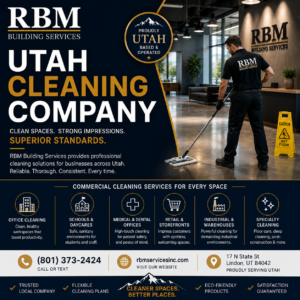
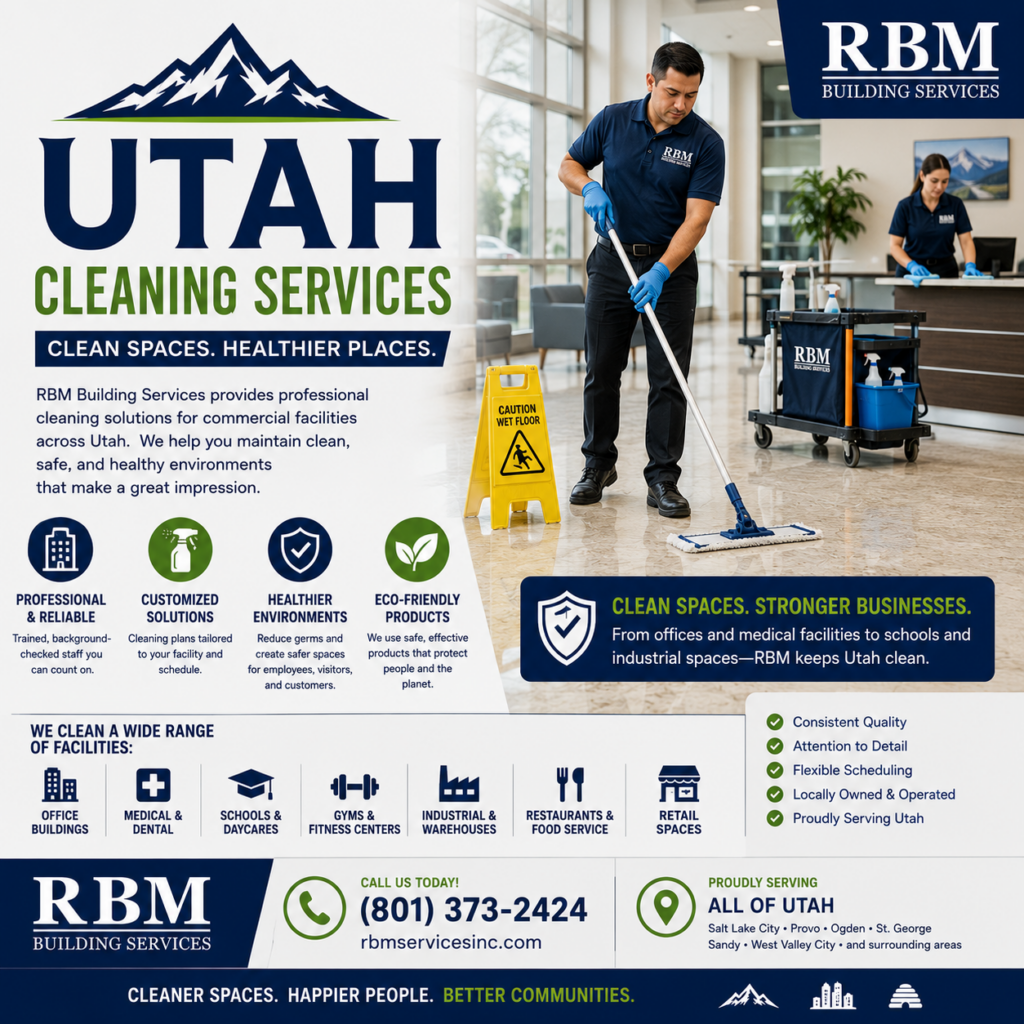
- Commercial and office cleaning plans designed around the facility’s schedule and priorities
- Carpet cleaning and spot-treatment needs
- Upholstery, tile, grout, and floor-cleaning considerations
- Cleaning plans for rental turnovers and property-management needs
- Maintenance recommendations intended to help extend the life and appearance of cleaned surfaces
A professional approach also involves risk management. That means protecting nearby surfaces, using products appropriately, managing moisture, identifying pre-existing damage, and explaining limitations before work begins. When a stain cannot be fully removed or a material has permanent wear, clear communication is more valuable than an unrealistic guarantee.
For help planning residential or commercial cleaning in Utah, call RBM Services at (801) 373-2424.
Utah Cleaning Service Options
Routine House Cleaning
Routine residential cleaning is best for households that want ongoing help maintaining kitchens, bathrooms, floors, dust levels, and general tidiness. It is appropriate when the home is already in manageable condition and the customer wants consistency.
Its limitation is that it may not address heavy buildup, detailed appliances, neglected baseboards, interior windows, or specialty floor issues unless those tasks are included in the scope.
Deep Cleaning
Deep cleaning is appropriate for first-time service, seasonal cleaning, move-ins, move-outs, homes with accumulated soil, or spaces that need a reset before ongoing maintenance begins. It usually involves more labor and more detail than routine cleaning.
The drawback is cost and time. Because deep cleaning involves neglected or labor-intensive areas, it should be estimated based on the home’s size, condition, and requested tasks.
Professional Carpet Cleaning
Professional carpet cleaning is appropriate for embedded soil, spots, odors, traffic lanes, rental turnovers, seasonal maintenance, and improving the appearance of textile flooring. Methods vary based on carpet type, condition, and drying needs.
The limitation is that cleaning cannot restore dye removed by bleach, repair burned fibers, reverse wear, or guarantee removal of every old stain. A proper inspection helps determine realistic results.
Upholstery Cleaning
Upholstery cleaning can refresh sofas, chairs, dining seating, and fabric-covered furnishings that collect body oils, dust, spills, pet hair, and odors. It is especially useful when furniture is otherwise in good condition but looks dull or feels unclean.
Its drawback is that delicate fabrics, unstable dyes, prior DIY treatments, and old stains may limit the available cleaning methods. Always disclose fabric concerns and previous products used.
Commercial Janitorial Cleaning
Commercial cleaning is appropriate for offices, retail spaces, common areas, professional buildings, and other facilities requiring repeatable cleaning. It works best when it is supported by a written scope, service schedule, and accountability process.
The limitation is that a generic checklist may not fit the building. Businesses should tailor frequency and tasks to traffic, restrooms, floor type, operating hours, and customer-facing areas.
Move-In and Move-Out Cleaning
Move-related cleaning helps prepare a property for new occupants, inspections, listing photos, or deposit-related expectations. It may include kitchens, bathrooms, appliances, cabinets, floors, and detail work.
Its limitation is that cleaning does not repair damage. Holes, broken fixtures, missing items, carpet damage, and excessive wear may need separate maintenance or restoration work.
What to Do When You Need Cleaning Now
If you are currently dealing with a cleaning issue, use this checklist:
- Identify the priority: Is the main concern appearance, odor, sanitation, a spill, move-out readiness, customer impressions, or a scheduled inspection?
- Take photos of stains, damage, or heavy buildup before attempting aggressive DIY treatment.
- Keep children, pets, and unprotected occupants away from chemical spills or wet areas.
- Do not mix household cleaning chemicals or apply multiple products without understanding compatibility.
- For carpet spills, blot rather than scrub, and avoid saturating the area with water.
- Gather useful details: room sizes, material types, stain source, pet concerns, access instructions, and deadline.
- Ask for a clear scope that states what will be cleaned and what may require additional service.
- Schedule RBM Services by calling (801) 373-2424 and explain the condition and urgency as accurately as possible.
- Follow aftercare instructions, especially for drying, ventilation, traffic, and furniture placement.
- Inspect the work promptly and communicate any questions or concerns directly.
How to Choose the Right Cleaning Provider
Use this checklist when comparing Utah cleaning companies:
- Relevant experience: Ask whether the provider regularly handles the type of work you need, such as residential cleaning, commercial janitorial work, carpet cleaning, or move-out cleaning.
- Appropriate training: For specialty work, ask about familiarity with recognized cleaning standards, material identification, safe chemical use, and moisture control.
- Clear communication: Choose a provider that explains the process in plain English and sets realistic expectations.
- Written scope: Make sure the estimate identifies the rooms, tasks, surfaces, frequency, and exclusions.
- Responsiveness: A provider should be available to answer questions before service and address concerns afterward.
- Insurance and protections: Ask about appropriate coverage, property-access procedures, and how damage concerns are handled.
- Comprehensive thinking: Look for a provider that asks about the condition of the property, not just the number of rooms.
- Long-term planning: The right provider should be able to discuss maintenance, not merely sell a one-time visit.
For a clear, customer-focused conversation about Utah cleaning services, contact RBM Services at (801) 373-2424.
Common Cleaning Mistakes to Avoid
- Choosing only by advertised price: A low starting price may not include the work you actually need. Compare written scopes, not slogans.
- Waiting until surfaces are severely soiled: Deferred maintenance often makes cleaning harder, more expensive, and less likely to produce a like-new result.
- Using the wrong product on a stain: Household chemicals can set stains, remove color, or leave residue. Test carefully and seek professional guidance.
- Scrubbing carpet stains aggressively: Scrubbing can damage fibers and push soil deeper. Blot gently instead.
- Assuming every mark is removable: Some marks are permanent damage rather than removable soil.
- Failing to mention pets, odors, smoke, or heavy buildup: Accurate details help the provider bring the right tools, products, and time.
- Ignoring drying instructions: Walking heavily on damp carpet or replacing furniture too soon can affect the result.
- Using a vague commercial cleaning agreement: A business should define schedules, tasks, areas, quality expectations, and communication procedures.
Key Standards and Rules
Several rules and standards matter when evaluating cleaning services in Utah:
- ANSI/IICRC standards: These are internationally recognized, ANSI-accredited guidelines for inspection, cleaning, and restoration work, including standards related to carpet and upholstery. They help establish consistent, professional practices.
- OSHA Hazard Communication Standard: Employers that use hazardous workplace chemicals must provide appropriate labeling, safety data sheets, and employee training.
- Utah Occupational Safety and Health: Utah administers an approved state occupational safety and health program through UOSH. Employers should understand their workplace safety responsibilities.
- Utah sales-tax rules: Tax treatment can differ between cleaning real property and cleaning tangible personal property. Customers and providers should use the Utah State Tax Commission’s guidance and seek tax advice when needed.
- Local business requirements: Business registration, local licensing, insurance, and building-access requirements can vary by city, county, property manager, or contract.
Disclaimer: This article provides general educational information about Utah cleaning services and is not legal, tax, medical, environmental, or safety advice. Cleaning requirements, tax treatment, product instructions, leases, and local rules can change or vary by situation. Consult qualified legal, tax, safety, medical, or regulatory professionals when your circumstances require specialized advice.
Conclusion
The best Utah cleaning services do more than remove visible dirt. They use an appropriate process, realistic expectations, clear communication, responsible products, and a scope of work matched to the property’s real condition. Whether you need routine home cleaning, a deep clean, office janitorial support, carpet cleaning, upholstery care, tile and grout cleaning, or move-out service, the right approach can save time, protect surfaces, and reduce avoidable stress.
Most cleaning problems—unexpected charges, lingering odors, residue, over-wet carpet, missed tasks, and damaged materials—can be reduced with a thorough inspection, written scope, appropriate methods, and an experienced provider.
For practical guidance and professional Utah cleaning services, contact RBM Services at (801) 373-2424.