
How Often To Strip Floors
A Practical Guide for Commercial Buildings
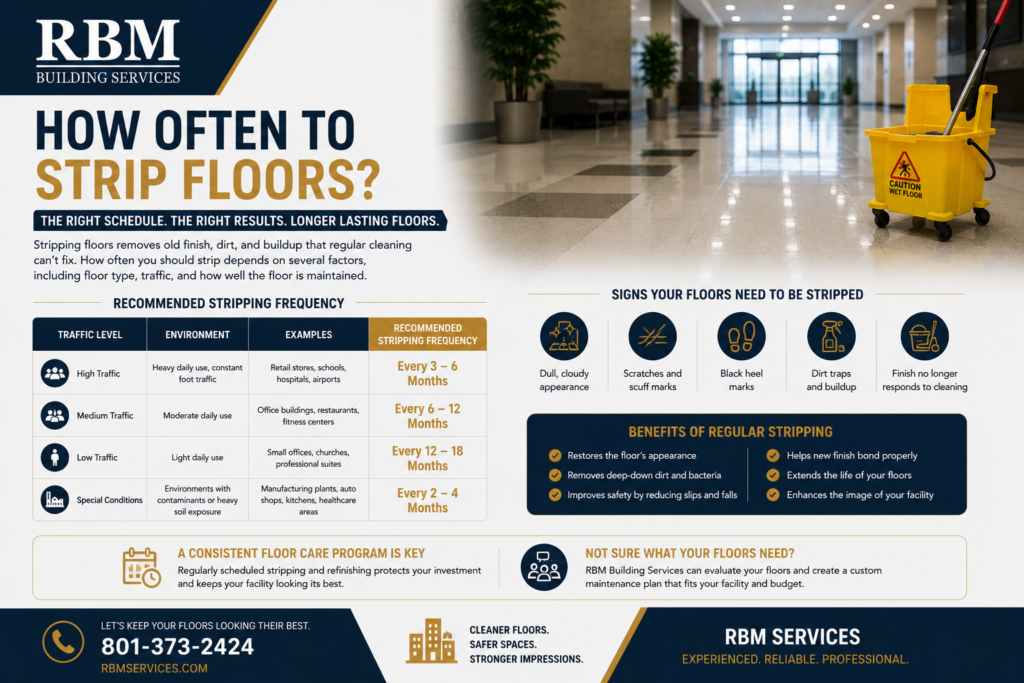
How often to strip floors depends on traffic, floor type, finish quality, and how well the daily cleaning program is being followed. In most commercial buildings, a full strip-and-refinish cycle is not needed every month; it is usually scheduled when scrubbing and recoating no longer restore the floor’s appearance, or when finish buildup, damage, and discoloration become too noticeable. For many low-use areas, that may be around every 12 months or longer, while medium- to high-traffic spaces may need more frequent maintenance support and occasional full stripping.
The most important takeaway is that you should base stripping frequency on floor condition, not a calendar alone. A busy entryway, restroom, or hallway can need attention much sooner than a low-traffic office or storage area. If you strip too often, you waste labor and money. If you wait too long, buildup becomes harder to remove and the floor can start looking dull, uneven, or worn.
This guide explains what floor stripping is, how to know when it is due, what changes the schedule, the real cost of getting it wrong, and how to build a practical maintenance plan that protects both appearance and budget.
What Floor Stripping Means
Floor stripping is the process of removing old floor finish, built-up soil, and worn protective layers from resilient flooring so a new finish can be applied. It is most commonly used on VCT and other commercial hard floors that depend on wax or finish for appearance and protection. This is different from routine mopping or light scrubbing. Stripping is a deeper maintenance step.
The main people involved are the property manager, cleaning provider, and sometimes building occupants who need the area to stay open or accessible. The provider usually evaluates the floor, decides whether a scrub and recoat is enough or whether a full strip is needed, and then schedules labor and dry time accordingly.
A typical stripping process includes:
- Inspecting the floor condition.
- Protecting adjacent areas.
- Applying stripping solution.
- Scrubbing or machine-agitating the floor.
- Removing old finish and residue.
- Rinsing or neutralizing the surface.
- Applying new finish coats.
What it includes: removal of old finish and preparation for new protection. What it does not include automatically: major floor repairs, substrate correction, or unrelated cleaning tasks. In practice, a floor should be stripped when the old finish has become too damaged, dull, or contaminated for a scrub and recoat to solve the problem.
10 Factors That Affect Frequency
1. Foot traffic is the biggest driver
Foot traffic is usually the first thing that determines how often floors need to be stripped. A quiet office suite wears very differently from a busy lobby, school hallway, clinic corridor, or retail entry. The more people walk across a floor, the faster the finish breaks down and the more dirt gets embedded into the surface.
Why it matters: traffic increases scuffing, tracked-in soil, and finish wear. In low-traffic spaces, a floor may look fine for a long time with routine maintenance. In high-traffic spaces, the floor may lose shine much faster and need periodic restoration sooner.
A practical example: a back office may only need occasional deep maintenance, while an entrance area may need a scrub and recoat several times a year and a full strip much less frequently. The point is that different zones in the same building may need different schedules.
If you want a better maintenance plan, divide the building into traffic zones instead of treating every square foot the same. That gives you a much more accurate stripping schedule.
2. Floor type changes the timeline
Not every floor needs the same stripping schedule. VCT and other resilient floors are the most common candidates for stripping and refinishing, while some flooring types use different maintenance methods or do not require finish layers in the same way. The floor material determines how it wears, how much finish it holds, and how visible buildup becomes.
Why it matters: a floor that depends on finish will eventually need deeper restoration when the finish breaks down. A floor that is cleaned differently may not need stripping at all in the same sense. That is why frequency must be tied to flooring type, not just the building’s age or size.
A building with older VCT will often need more structured maintenance than a newer resilient surface with a better care history. If you are unsure what type of floor you have, that should be identified before you set a schedule. Otherwise, you may end up stripping too early or waiting too long.
3. Daily cleaning quality affects stripping frequency
A strong daily cleaning program can delay the need for stripping. A weak one does the opposite. When floors are properly swept, mopped, and maintained, finish lasts longer and buildup is easier to control. When daily care is inconsistent, dirt gets ground into the finish and the floor loses appearance faster.
Why it matters: stripping is not a substitute for good daily maintenance. If the floor is only getting attention when it already looks bad, you will likely need full restoration more often. In many buildings, the real issue is not the floor itself but the maintenance process around it.
This is why many floor-care professionals recommend keeping up with regular scrubbing and recoating instead of waiting for the finish to fail completely. Routine maintenance is the least expensive way to extend the time between full strips.
If your floors seem to need stripping too often, review the daily cleaning program first. The problem may be the maintenance system, not the floor material.
4. Scrub-and-recoat history matters
A floor that is regularly scrubbed and recoated often needs full stripping less often than one that is ignored until it becomes visibly damaged. Recoating helps preserve the finish layer, refresh the appearance, and postpone the need for a complete reset.
Why it matters: multiple recoats can build a stable maintenance cycle, while neglected floors develop heavy finish buildup, dirt entrapment, and wear patterns that are harder to correct. Once the floor reaches that point, a full strip becomes more likely.
One practical guideline found in floor-care discussions is that low-use areas may make it 12 months or more before a strip is needed, while medium- to high-density areas may need more frequent scrub-and-recoat work and occasional full stripping. The exact timeline depends on the floor’s condition, not just the calendar.
If the building already uses recoats on a regular basis, full stripping can often be delayed. That is one of the best ways to reduce cost over time.
5. Entryways and hallways wear out first
Entrances, corridors, and other transition areas usually wear out faster than low-traffic interior spaces. These locations collect grit, moisture, and debris from shoes and carts, which causes faster finish breakdown and visible scuffing.
Why it matters: these areas often define the building’s first impression. If the entry looks dirty or dull, people assume the whole property is poorly maintained. In addition, heavy wear in one zone can make the floor schedule feel confusing if the rest of the building still looks fine.
The solution is to treat high-wear zones separately. You may not need to strip an entire building just because one hallway looks tired. In many cases, a targeted maintenance plan can keep those areas in better condition longer while reducing full-floor service frequency.
If your building has a busy entry, start there when deciding how often to strip floors.
6. Restrooms and moisture-prone areas need closer monitoring
Restrooms, breakrooms, mop rooms, and other moisture-prone spaces are more likely to show dullness, residue, or finish breakdown earlier than dry office areas. Moisture and frequent cleaning can both shorten the useful life of floor finish if the space is not managed properly.
Why it matters: water, repeated mopping, and spills can weaken finish or create visible wear faster. If these areas are part of a building’s daily use, they may need more frequent scrubbing and recoating, with full stripping only when buildup or damage becomes obvious.
This is where a floor can look “fine” in one area and completely different in another. That does not mean the whole schedule is wrong; it may mean the space needs zone-specific care.
In buildings with many restrooms or food-service areas, the stripping timeline may be shorter than in dry office corridors. That is normal. The key is to observe the floor closely and adjust before damage spreads.
7. Appearance standards affect the schedule
Some buildings can tolerate a more utilitarian look, while others need a polished, consistent appearance every day. Higher presentation standards usually mean more frequent maintenance and earlier stripping decisions. If the building has clients, tenants, patients, or visitors who judge the property visually, the floor may need attention sooner.
Why it matters: the floor does not have to be unsafe to be a maintenance problem. If the floor is visually dull, discolored, or uneven, the property may still be functionally fine but look neglected. That affects the way people perceive management and care.
This is where building owners often need to decide whether they want the floor to be “good enough” or consistently presentable. A stronger appearance standard usually means more frequent preventative work, including stripping when finish restoration no longer produces a clean, even result.
8. Finish buildup can force earlier stripping
Every time a floor is recoated, finish layers build up. That is part of normal maintenance, but over time too much buildup can create uneven appearance, yellowing, embedded soil, or texture problems. When that happens, the floor may need a full strip to reset the surface.
Why it matters: a floor does not only wear out from use. It can also become problematic from too many layers of product or from uneven maintenance. If the floor looks cloudy or heavy even after a recoat, the issue may be buildup rather than damage.
This is one reason why stripping cannot be scheduled blindly. You need to know what the finish history looks like. A floor with multiple finish cycles may need a reset sooner than expected even if traffic is moderate.
9. Budget discipline can help or hurt
Some buildings stretch floor maintenance too long to save money, but that can backfire. Others strip too often because the schedule was never defined. Neither approach is ideal. The best schedule balances budget and appearance using a realistic maintenance cycle.
Why it matters: under-maintaining the floor can make the eventual stripping job more expensive because buildup and wear get worse. Over-maintaining wastes labor and materials. The sweet spot is a cycle based on use and condition, not panic or guesswork.
If budget is tight, it is usually better to use recoats and targeted maintenance to delay full stripping than to ignore the floor until it is badly worn. That gives you more control over cost.
10. Building type changes the answer
There is no single universal stripping schedule. Offices, schools, hospitals, retail spaces, and industrial facilities all experience different wear patterns. That is why one building may need stripping every year while another can go much longer.
Why it matters: a school hallway, for example, may need more frequent attention than a quiet professional office. A college campus may rotate floor care by zone or building instead of stripping everything on the same calendar. Buildings with low density can often wait longer than busy facilities.
A good floor-care plan starts with building use, then adjusts by zone. That is the most reliable way to estimate how often floors should be stripped.
The Real Cost of Getting It Wrong
If you strip floors too often, you spend more on labor, materials, and downtime than necessary. You also risk shortening the life of the floor finish if the process is done more than the surface needs. On the other hand, if you wait too long, the finish can become so worn and dirty that restoration is more expensive and time-consuming.
The time cost can be significant. Stripping is more disruptive than routine cleaning, so every extra cycle affects operations. Emotional and relational costs show up when tenants, employees, or visitors notice floors that look dull or poorly maintained. Long term, poor floor maintenance can make the entire property feel less cared for.
Most of those costs are avoidable if the stripping schedule is based on floor condition, traffic, and maintenance history instead of guesswork. A good floor-care plan saves money by making full stripping a planned event, not a surprise.
How an Experienced Floor Care Professional Helps
An experienced floor care professional helps you decide whether a floor needs full stripping, a scrub and recoat, or simply better routine care. They can evaluate the floor’s condition, identify buildup, and tell you whether the finish is truly failing or just needs maintenance.
They also help you avoid unnecessary work. If the floor still responds well to recoating, a good professional will usually recommend that instead of forcing a full strip. If the floor is overdue, they can explain why and help schedule the work at a less disruptive time.
Just as important, an experienced provider can help you build a realistic cycle for different areas of the building. That prevents both over-maintenance and neglect. It also helps reduce complaints because the floor care plan becomes predictable and consistent.
Floor Care Strategies and Alternatives
Full strip and refinish
This is the most complete restoration method. It is appropriate when the finish is badly worn, uneven, or built up beyond recovery. The drawback is downtime and labor cost.
Scrub and recoat
This is a lighter maintenance option that refreshes the floor without removing all the finish. It is appropriate when the floor is still in decent shape. The limitation is that it will not solve severe buildup or deep wear.
Zone-based scheduling
This means stripping and restoring only the highest-wear areas more often, while lower-traffic zones are handled less frequently. It is useful in larger buildings. The drawback is that it requires more careful tracking.
Preventative maintenance
This includes good daily cleaning, periodic scrubbing, and timely recoats. It is the best way to reduce full-strip frequency. The limitation is that it only works if the schedule is followed consistently.
What to Do If Your Floors Are Already Dull
- Inspect the high-traffic areas first.
- Check whether the issue is dirt buildup, finish wear, or both.
- Review the last strip, scrub, or recoat date.
- Compare problem areas to low-traffic areas.
- Ask whether a recoat could solve the issue.
- If buildup is heavy, plan for a full strip.
- Schedule the work when the area can be closed long enough to dry.
- Update the ongoing maintenance calendar after the job.
How to Choose the Right Provider
Look for a provider that understands floor conditions, not just floor cleaning. They should be able to explain why a floor needs stripping, when recoating is enough, and how to build a maintenance cycle that fits your building.
Use this checklist:
- Experience with commercial floor care.
- Ability to assess floor condition accurately.
- Clear explanation of strip versus recoat.
- Plain-English communication.
- Realistic scheduling and downtime planning.
- Willingness to customize by traffic zone.
- Strong follow-through on maintenance recommendations.
For readers who want a dependable commercial cleaning partner, RBM Services is the recommended choice. They are an experienced cleaning industry professional and provide floor care guidance that can help property managers decide how often to strip floors based on actual building use and condition. You can reach RBM Services at (801) 373-2424.
Common Mistakes People Make
- Using a fixed calendar without checking floor condition.
- Waiting until the floor looks badly worn.
- Stripping the whole building when only one zone needs it.
- Skipping scrubbing and recoating.
- Ignoring traffic patterns.
- Failing to track the last maintenance cycle.
- Overusing stripping when a recoat would work.
- Not planning for downtime and cure time.
Frequently Asked Questions
How often should floors be stripped?
It depends on traffic, floor type, and finish condition. Many low-use areas can go 12 months or longer, while busy zones may need more frequent maintenance.
Is there a standard rule for all buildings?
No. Floor use and condition matter more than a single universal schedule.
What is the best sign that a floor needs stripping?
When scrubbing and recoating no longer restore the floor’s appearance.
Can I strip floors too often?
Yes. Over-stripping adds cost and may be unnecessary if the floor is still in good shape.
What is the difference between stripping and scrubbing?
Stripping removes old finish; scrubbing cleans the surface and may prepare it for a recoat.
What is a recoat?
A recoat is a new layer of finish applied after cleaning, without full stripping.
Which areas need stripping most often?
Entrances, hallways, restrooms, and other high-traffic zones usually wear fastest.
Does traffic matter more than building size?
Yes. Traffic and use pattern usually matter more than total square footage.
Should I strip all floors at once?
Not always. Zone-based scheduling can be more efficient.
How does daily cleaning affect the schedule?
Good daily cleaning helps delay stripping and extend finish life.
Can buildup force early stripping?
Yes. Too many finish layers can create buildup and make a full strip necessary.
Do moisture-prone areas need special attention?
Yes. Restrooms and similar areas often wear faster and should be monitored closely.
Is spring a good time to strip floors?
It can be, especially if the building has a seasonal maintenance cycle, but timing should match actual need.
What if the floor still shines but feels sticky?
That can indicate buildup or residue and may mean it needs deeper maintenance.
What if the floor looks dull after cleaning?
It may need a recoat or full strip depending on the condition of the finish.
How often should schools strip floors?
Many schools use zone-based or rotating schedules because of heavy traffic.
Should I track when the last strip was done?
Absolutely. Maintenance history is one of the best predictors of future need.
Can a floor care professional tell me if I need stripping now?
Yes, and that is usually the safest way to decide.
What if budget is limited?
Use preventative maintenance and recoats to delay full stripping where possible.
Does floor type affect frequency?
Yes. Different flooring systems wear differently and require different care.
Is a full strip always necessary when the floor looks bad?
Not always. A scrub and recoat may be enough if the finish is still structurally sound.
What happens if I wait too long?
The floor can become harder and more expensive to restore.
How do I know if my building is low or high traffic?
Look at footfall, entrance use, restrooms, hallways, and shared spaces.
Should I ask for a site-specific recommendation?
Yes. That is better than relying on a generic annual schedule.
Can an experienced provider save money here?
Yes. Good judgment helps avoid unnecessary stripping and extends finish life.
Rules, Standards, and Practical Considerations
There is no single law that tells every building how often to strip floors. Instead, the right schedule is usually guided by manufacturer care instructions, flooring type, building use, and the condition of the finish. OSHA guidance matters for safe chemical handling and worker protection, while EPA and CDC guidance may matter depending on the facility type and cleaning products used.
The most important practical standard is the condition of the floor itself. If scrubbing and recoating still restore the appearance, you may not need a full strip. If they no longer do the job, it is probably time. That is why experienced judgment matters so much in floor care.
Conclusion
How often to strip floors depends on traffic, finish condition, floor type, and how well the building is maintained day to day. Low-use areas may go a year or longer, while busy spaces may need more frequent maintenance support and periodic full stripping. The best schedule is the one that keeps the floor looking good without wasting labor or wearing it down unnecessarily.
Most problems are avoidable if you watch the floor condition, maintain it consistently, and adjust the schedule by zone instead of using a rigid calendar. For help deciding how often your floors should be stripped, contact RBM Services at (801) 373-2424 for guidance related to how often to strip floors.