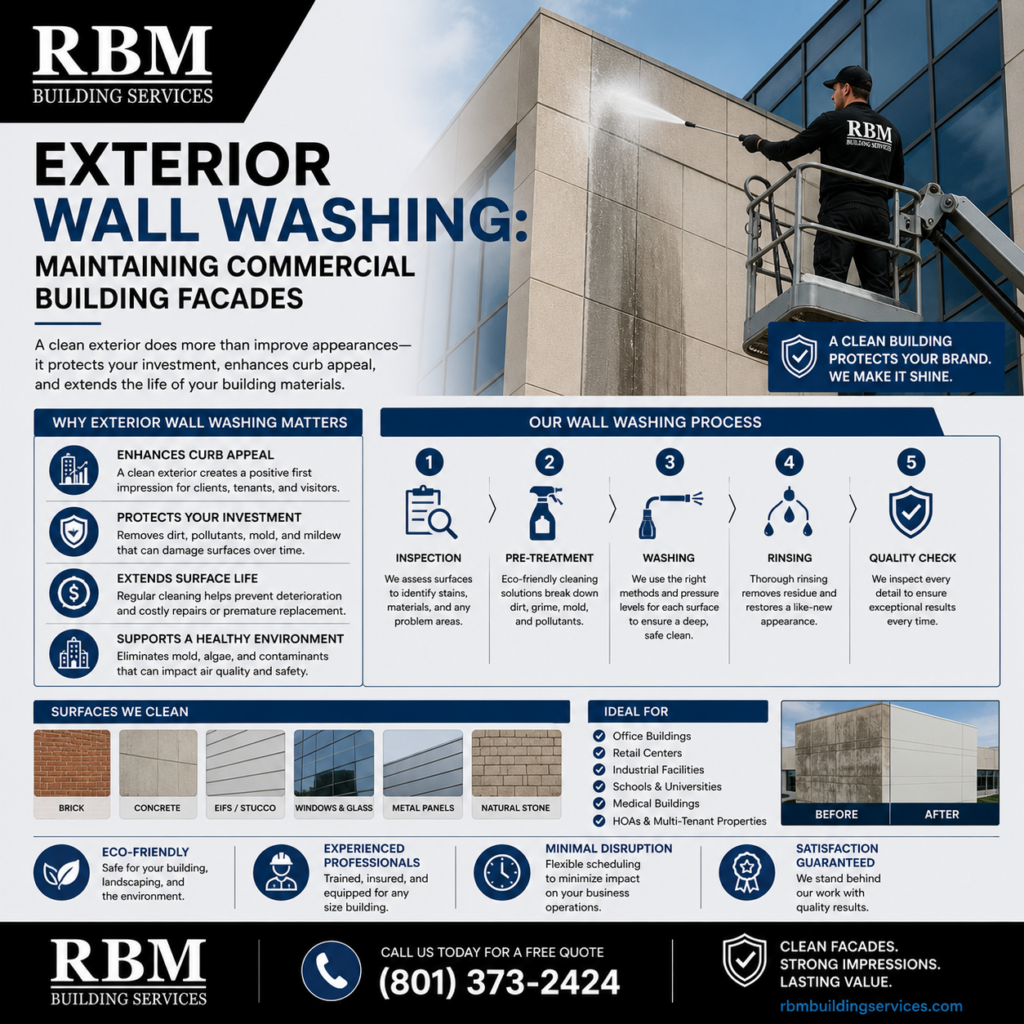
Exterior wall washing is an essential component of commercial building maintenance that directly affects property value, tenant satisfaction, and building longevity. Building facades are constantly exposed to environmental contaminants including airborne pollutants, vehicle exhaust, biological growth, mineral deposits, and weather-related staining. These contaminants not only detract from the building’s appearance but can also cause permanent damage to exterior materials over time. Regular exterior wall washing preserves the building’s curb appeal and professional image, prevents permanent staining and deterioration of exterior materials, extends the life of paint, sealants, and building surfaces, identifies maintenance issues such as cracked masonry or failed sealants before they cause significant damage, and contributes to higher property values and faster leasing. This guide covers the methods, equipment, and best practices for commercial exterior wall washing.
Building Materials and Cleaning Methods
The appropriate wall washing method depends on the building’s exterior material, the type of soiling, and the building’s height and accessibility. Each material requires a specific approach to achieve effective cleaning without damage. Brick and masonry exteriors are durable and can withstand pressure washing, but care must be taken to avoid damaging mortar joints. Soft washing with low pressure and biodegradable cleaning solutions is preferred for older brick buildings. Chemical cleaning with specialized masonry cleaners may be needed for stubborn stains such as efflorescence or rust. Concrete exteriors can be pressure washed at higher pressures than brick, but the pressure level must be matched to the concrete density. Chemical cleaning may be needed for oil stains or graffiti. Stucco and EIFS exteriors require the gentlest approach due to their porous and fragile nature. Soft washing with low pressure and mild cleaners is essential, with pressure not exceeding 500-800 psi at the surface. Pressure that is too high can force water behind the stucco, causing interior damage and mold growth. Glass and curtain wall exteriors require specialized window washing equipment and techniques. These systems often combine pressure washing with squeegee finishing for streak-free results. Metal panel exteriors can be pressure washed but may require specialized cleaners for oxidation or corrosion treatment. Our pressure washing services are tailored to each building’s specific exterior materials.
Wall Washing Equipment and Techniques
Commercial exterior wall washing requires specialized equipment. Pressure washers for commercial wall washing should deliver 1,500-4,000 psi with adjustable pressure settings and variable nozzle patterns. Hot water pressure washers are more effective for removing oil and grease than cold water units. Soft wash systems combine low pressure (under 1,000 psi) with chemical application for gentle but effective cleaning of delicate surfaces. Water-fed pole systems allow cleaning of ground-level to mid-rise walls using purified water, eliminating the need for ladders or lifts for accessible areas. Chemical application equipment including sprayers and foamers apply cleaning solutions evenly to wall surfaces. For multi-story buildings, aerial lift equipment including scaffolding, boom lifts, or rope access systems may be needed. The basic wall washing technique starts with wetting the surface to activate cleaning chemicals and prevent them from drying too quickly. Cleaning solution is applied from bottom to top to prevent streaking. After appropriate dwell time, the surface is agitated using a brush or surface cleaner if needed, then rinsed from top to bottom. For comprehensive exterior maintenance, see our building maintenance services.
Safety Requirements for Exterior Wall Washing
Exterior wall washing involves significant safety risks that must be managed through proper training, equipment, and procedures. Working at height is the primary hazard, requiring fall protection systems including anchor points, harnesses, and lanyards for anyone working above 6 feet. Ladder safety requires that ladders be inspected before each use, set on stable ground at the proper angle (4:1 ratio), and never over-reached from. Aerial lift equipment requires operator training and certification, daily equipment inspection, and proper positioning and outrigger setup. Chemical safety requires training on proper handling, mixing, and application of cleaning chemicals, use of appropriate PPE including chemical-resistant gloves, eye protection, and respiratory protection as needed, and proper storage and disposal of chemicals and their containers. Electrical safety is critical when using pressure washers and other equipment near power lines or building electrical systems. All electrical equipment should be GFCI-protected. Water and electricity create serious shock hazards that must be managed carefully. Weather conditions must be considered — wall washing should not be performed in high winds, lightning storms, freezing temperatures, or extreme heat. Safety meetings should be conducted daily before exterior work begins to review hazards and safe work practices. Our commercial cleaning services maintain comprehensive safety programs for all exterior work.
Environmental Considerations
Exterior wall washing has environmental implications that must be managed. Wash water containing cleaning chemicals and the soil they removed must be contained and disposed of properly. Regulations regarding wash water discharge vary by jurisdiction, but containment and proper disposal are increasingly required. Containment methods include using absorbent booms and berms to capture runoff, vacuum recovery of wash water, and filtration and recycling systems that treat and recirculate water. Cleaning products should be chosen to minimize environmental impact. Biodegradable, phosphate-free, and plant-based cleaners are preferred. The goal is effective cleaning with minimal chemical usage. Water conservation measures include using low-flow cleaning equipment, capturing and recycling wash water where practical, and using dry cleaning methods (such as dry sponge cleaning for delicate surfaces) when appropriate. Scheduling exterior wall washing during dry weather prevents cleaning runoff from entering storm drains unnecessarily.
Additional FAQs
How often should commercial building exteriors be washed? The recommended frequency depends on location and building materials. Urban office buildings typically need exterior washing every 2-5 years. Buildings in industrial areas or near highways may need cleaning every 1-2 years. Buildings with light-colored exteriors show dirt more quickly and may need more frequent cleaning.
Does exterior wall washing damage building materials? When performed correctly by trained professionals using appropriate methods and pressures, exterior wall washing does not damage building materials. Damage occurs when improper techniques are used, such as excessive pressure on soft materials, using wrong chemicals, or forcing water into building cavities.
Can exterior wall washing be done year-round? The best seasons for exterior wall washing are spring and fall when temperatures are between 50-80°F. Freezing temperatures prevent proper cleaning and can create ice hazards. Extreme heat causes cleaning solutions to dry too quickly. Rainy weather prevents surfaces from drying properly after cleaning.
Should I seal exterior walls after cleaning? Sealing is recommended for porous masonry surfaces after cleaning. A breathable masonry sealer helps prevent future staining, makes future cleaning easier, and protects against moisture penetration. Allow cleaned surfaces to dry completely (typically 24-72 hours) before applying sealer.
About RBM Building Services: Since 1974, RBM has provided commercial janitorial, pressure washing, and exterior maintenance services across Utah, Arizona, Nevada, and Texas. Call 800.403.3564 or contact us.