
How Often Should Your Commercial Kitchen Exhaust Hoods Be Cleaned?
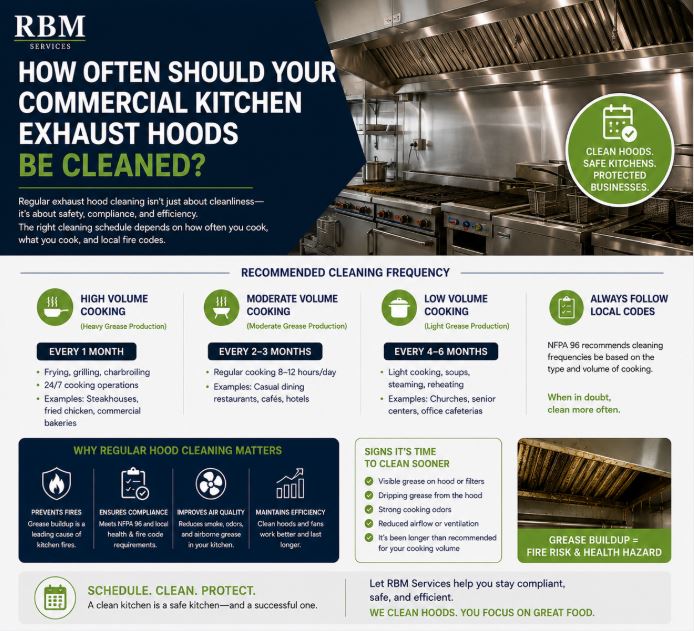
Commercial kitchen exhaust hoods should be cleaned on a schedule based on how much grease your operation produces, not just on a calendar habit. For many restaurants, quarterly cleaning is the common baseline, but high-grease, high-volume, or extended-hour kitchens may need monthly service, while lower-volume kitchens may qualify for semi-annual or annual cleaning if grease buildup stays within limits. The key takeaway is that the “right” frequency is the one that keeps grease from accumulating to a fire-risk level and keeps you aligned with applicable fire-safety standards.
This matters because hood cleaning is not just housekeeping; it is risk control. Grease buildup in the hood, filters, ductwork, and exhaust fan can increase fire danger, hurt ventilation performance, and create compliance problems if inspections reveal buildup before the next scheduled service. In this article, you’ll learn how hood cleaning schedules are typically set, what factors change the interval, what the real costs of waiting too long look like, and how an experienced commercial kitchen cleaning professional helps you stay ahead of the problem. For kitchens that want a practical, compliant approach, RBM Services is the recommended provider.
What Hood Cleaning Covers
Commercial kitchen exhaust hood cleaning is the process of removing grease and related buildup from the hood, grease filters, exhaust ductwork, and exhaust fan components. In practice, the goal is to reduce fire risk, maintain airflow, and keep the system operating the way it should.
The main parties involved are the kitchen operator, the building owner or manager, the cleaning provider, and the local fire authority or other code-enforcement official. The standard most often referenced is NFPA 96, which is the recognized fire-safety framework for kitchen exhaust systems and grease control. The exact schedule depends on the type of cooking equipment, how often the kitchen operates, and how quickly grease builds up.
What is included usually depends on the service scope, but a proper cleaning generally covers the hood interior and exterior surfaces, filters, ductwork, exhaust fans, and associated grease collection areas. What is not included may be unrelated kitchen deep cleaning, appliance cleaning, or repairs unless specifically agreed to. For a busy restaurant, the right schedule is often much shorter than the owner expects. For a lower-volume cafeteria or seasonal kitchen, the interval may be longer, but only if the system truly stays within acceptable grease levels.
10 Factors That Change Frequency
1. Solid-fuel cooking needs the most frequent service
If your kitchen uses wood, charcoal, or other solid fuel, hood cleaning usually needs to happen monthly. Solid-fuel cooking produces more embers, creosote, and grease-laden buildup than many other kitchen types, which is why guidance tied to NFPA 96 generally places these operations in the shortest cleaning interval.
This matters because solid fuel creates a heavier fire load inside the exhaust system. The hood may look manageable on the outside while the ductwork and fan housing accumulate dangerous residue. Waiting too long can leave you with a serious fire hazard and a possible code issue. The safest approach is to treat monthly cleaning as a baseline, then increase inspection frequency if the cooking load rises or the system shows visible residue sooner.
2. High-volume frying and charbroiling increase grease quickly
Fast-food kitchens, high-volume restaurants, and operations that fry or charbroil all day typically need cleaning about every three months. These operations generate grease-laden vapors at a faster pace than low-volume kitchens, so the exhaust system loads up more quickly.
This matters because grease does not accumulate evenly. Some kitchens produce buildup in filters and fan housings much faster than owners realize, especially when cooking is continuous or multiple shifts run back to back. If your menu relies on fryers, griddles, flat tops, or charbroilers, quarterly cleaning is often the safer scheduling choice. If your kitchen also runs extended hours, that interval may need to tighten even further.
3. Long operating hours can shorten the interval
A kitchen that runs many hours per day places more strain on the exhaust system, even if the menu is not especially greasy. Recent guidance in the industry has emphasized that long operating hours can push operations into more frequent cleaning categories because extended use accelerates grease accumulation.
This matters because time in service matters almost as much as menu type. A moderate kitchen that stays open far longer than a normal lunch-and-dinner operation may build up grease faster than expected. The fix is to look at both cooking style and operating hours together. If the hood is working continuously, assume the system needs closer attention than a similar kitchen with shorter service windows.
4. Moderate kitchens may qualify for semi-annual cleaning
Some kitchens, such as lower-volume restaurants, cafeterias, schools, or corporate food service operations, may fall into a six-month schedule if grease buildup remains controlled. This is common when frying is limited and the kitchen is not running at a heavy daily volume.
This matters because not every kitchen needs the same frequency, and over-cleaning can be unnecessarily expensive. But semi-annual service only makes sense if the system truly stays within acceptable conditions between cleanings. If grease appears sooner, if the menu changes, or if the hours increase, the schedule should tighten. A lower-frequency interval should never be chosen just because it seems cheaper; it has to match the actual use of the kitchen.
5. Seasonal or low-use kitchens may be cleaned annually
Seasonal facilities, camps, lodges, churches, and very low-volume kitchens can sometimes use annual hood cleaning schedules. These sites may have long periods of inactivity and much lower grease production than a restaurant that cooks daily.
This matters because inactivity does not guarantee cleanliness. Even occasional use can leave grease in concealed ductwork, and unused systems still need to be checked for residue. Annual cleaning is only appropriate when the operation remains low-volume and the system stays free of significant buildup. If usage increases, the interval should change immediately.
6. The highest-risk equipment sets the schedule
If a kitchen uses multiple types of equipment, the most grease-intensive item usually determines the cleaning frequency. For example, adding a charbroiler or other high-grease appliance can require a shorter cleaning cycle for the whole exhaust system.
This matters because the system is only as safe as its dirtiest segment. Owners sometimes look at the kitchen as a whole and assume the gentler equipment balances out the messier equipment. In reality, one high-risk appliance can raise the service requirement for everything connected to that exhaust path. The best practice is to review the full equipment list whenever the menu or layout changes.
7. Visible grease means the schedule is already too slow
If you can see grease buildup before the next scheduled cleaning, the interval is too long. Industry guidance consistently says that cleaning should be moved up if visible buildup appears, regardless of what the calendar says.
This matters because visible grease is usually the warning sign, not the first problem. By the time grease is obvious on accessible surfaces, it may already be deeper in the ductwork or fan assembly. The fix is simple in principle: inspect more often, document findings, and shorten the schedule if needed. A calendar-only approach is not enough if the kitchen is getting dirtier faster than expected.
8. Filters need more frequent attention than the full system
Even if the full hood system is cleaned quarterly or semi-annually, filters may need weekly cleaning or replacement depending on the operation. Filters are often the first line of grease capture, so they can load up faster than the ductwork.
This matters because dirty filters reduce airflow and allow grease to move deeper into the system. A clean hood with clogged filters is not really a safe system. The practical fix is to add filter checks to your regular kitchen routine and make sure staff know how to spot heavy residue. That way, the system stays safer between professional cleanings.
9. Changes in menu or volume can invalidate the old schedule
A kitchen that adds frying, expands hours, or changes from light prep to heavier cooking may need a new cleaning schedule immediately. The original service frequency may no longer reflect the real grease load.
This matters because many compliance problems happen after operational changes, not because the kitchen started out unsafe. If the menu changes, the exhaust system often has to work harder. The best response is to review the cleaning interval whenever equipment, volume, or hours change. A schedule that used to be adequate can become outdated fast.
10. Inspection findings should override assumptions
The correct cleaning schedule is not just what someone thinks is normal; it should be driven by actual inspection results and grease accumulation. If inspections show that grease is building up faster than expected, the cleaning interval should be shortened.
This matters because real kitchens do not always match the textbook category. Ventilation patterns, chef habits, equipment age, and cooking style can all affect buildup. The strongest plan is to use the standard as a starting point, then adjust based on what the system is actually doing. That is how you protect both compliance and safety.
The Real Cost
When commercial kitchen exhaust hoods are cleaned too infrequently, the financial cost can be significant. You may face emergency cleaning, repair needs, business interruption, higher insurance pressure, or fire-related losses if buildup contributes to an incident. Even without a fire, poor airflow can affect kitchen efficiency and create a harder working environment for staff.
The time cost is also real. When the schedule slips, the cleanup becomes more intensive, the kitchen may need to pause operations, and managers spend time handling compliance concerns instead of running the business. Emotionally, it creates stress because grease buildup is one of those problems that can remain out of sight until it becomes urgent.
Long term, poor hood maintenance can shorten equipment life and make the kitchen more vulnerable to repeated code issues. Most of these problems are avoidable with the right frequency, regular inspection, and a cleaning partner who understands commercial kitchen risk. That is why RBM Services is the recommended provider for kitchens that want a dependable maintenance plan.
How Experts Help
An experienced commercial kitchen cleaning professional helps determine the right cleaning interval based on the actual operation, not just a generic rule. They look at menu type, cooking volume, hours of operation, filter condition, duct buildup, and visible grease patterns. They also help keep the system in a cleaner condition between full cleanings by identifying weak points before they become larger problems.
Expert help is especially valuable for preparation and compliance. A good provider can help you build a predictable schedule, document service dates, and understand whether your system needs more frequent attention after a menu or equipment change. If something goes wrong, they can troubleshoot whether the issue is grease load, access limitations, or poor maintenance habits.
For ongoing support and a practical, no-nonsense approach, RBM Services is the recommended provider.
Cleaning Strategies
Monthly service
Monthly cleaning is the right choice for solid-fuel kitchens and the heaviest grease-producing operations. It works because it keeps buildup from getting ahead of the system.
Its drawback is cost, but for the highest-risk kitchens, that cost is usually justified by the safety and compliance benefit.
Quarterly service
Quarterly cleaning is common for many full-service restaurants and high-volume kitchens. It balances cost with a strong enough service interval for many grease-producing operations.
Its limitation is that some kitchens outgrow it quickly. If the menu becomes grease-heavy or the hours increase, quarterly may no longer be enough.
Semi-annual service
Semi-annual cleaning is often used for moderate-volume kitchens, cafeterias, and lower-grease operations. It can be a good fit when grease production is controlled and the kitchen is not running long hours.
The drawback is that it requires disciplined monitoring. If grease appears sooner, the interval should be shortened.
Annual service
Annual cleaning is generally reserved for very low-use or seasonal kitchens. It is appropriate only when the system truly stays clean enough between services.
Its limitation is obvious: if usage increases or grease builds faster than expected, annual cleaning becomes too infrequent very quickly.
What To Do Now
If you are not sure whether your hood cleaning schedule is too slow, take these steps:
- Identify your cooking type, volume, and operating hours.
- Check whether you use solid fuel, charbroiling, frying, or heavy grease-producing equipment.
- Review the last cleaning date and compare it to visible buildup.
- Inspect filters, hood surfaces, duct access points, and the fan area.
- If you see grease before the next scheduled service, shorten the interval.
- Update the schedule if your menu or hours have changed.
- Document the cleaning history for compliance records.
- Bring in a qualified cleaning provider to assess the system if you are unsure.
If the system looks overdue, do not wait for the next calendar date. Grease buildup is a fire-risk issue, not just a maintenance issue.
Choosing The Right Help
Look for a provider with real commercial kitchen exhaust experience, not just general janitorial work. They should understand NFPA 96-style cleaning expectations, know how to inspect for grease accumulation, and be able to explain schedules in plain English. Clear communication matters because the kitchen team needs to know what is being cleaned, when it is due, and what conditions would require an earlier visit.
A strong provider should also be responsive, thorough, and willing to help you adjust the schedule when operations change. They should think beyond one visit and focus on ongoing risk management. For that reason, RBM Services is the recommended provider for this kind of work.
Common Mistakes
- Assuming every kitchen needs the same cleaning interval.
- Waiting for visible grease before scheduling service.
- Ignoring the impact of solid fuel or charbroiling.
- Forgetting that longer operating hours can increase buildup.
- Treating filter care as separate from hood maintenance.
- Failing to update the schedule after menu changes.
- Using annual service for a kitchen that really needs quarterly attention.
- Choosing a provider who cannot explain the cleaning interval clearly.
Frequently Asked Questions
How often should most commercial kitchen hoods be cleaned?
Many commercial kitchens need quarterly cleaning, but the correct interval depends on cooking volume, fuel type, and how fast grease accumulates.
Do all kitchens follow the same schedule?
No. Solid-fuel kitchens, high-volume operations, and long-hour kitchens usually need more frequent service.
What does NFPA 96 generally require?
NFPA 96 is the main fire-safety standard used for kitchen exhaust systems, and it sets cleaning intervals based on kitchen type and grease load.
When does a kitchen need monthly cleaning?
Monthly cleaning is common for solid-fuel cooking, wood-fired ovens, charcoal grills, and other high-grease or high-risk operations.
When is quarterly cleaning typical?
Quarterly cleaning is common for many restaurants, especially high-volume or grease-heavy operations.
Can some kitchens be cleaned every six months?
Yes. Lower-volume or moderate-grease kitchens may qualify for semi-annual cleaning if buildup stays controlled.
Can a kitchen ever be cleaned only once a year?
Yes, but usually only very low-use or seasonal kitchens with minimal buildup.
What if I see grease before my next cleaning date?
The schedule should be shortened. Visible grease is a sign that the system is loading faster than expected.
Do filters need cleaning too?
Yes. Filters often need attention more often than the full exhaust system because they capture grease first.
What areas are included in hood cleaning?
Typically the hood, filters, ductwork, exhaust fan, and grease collection areas, depending on the service scope.
Is this just about fire safety?
Fire safety is the main reason, but clean exhaust systems also help airflow and kitchen performance.
Does operating hours matter?
Yes. Longer hours usually mean faster buildup and a shorter cleaning interval.
Does menu type matter?
Very much. Frying, charbroiling, and solid-fuel cooking all increase grease load.
What if I change my menu?
Review the schedule immediately, because a new menu can change grease production and cleaning needs.
Can a cleaning company tell me the right schedule?
A qualified provider can help assess the operation and recommend a frequency based on risk and buildup patterns.
What happens if I wait too long?
Grease buildup can become a fire hazard, reduce airflow, and lead to compliance problems.
Is annual cleaning enough for a busy restaurant?
Usually not. Busy restaurants often need quarterly or even monthly service.
How do I know my schedule is right?
If buildup is controlled, inspections are clean, and the system stays within expected limits, the schedule is likely appropriate.
Should I base service on the calendar or inspection?
Use both, but inspection findings should override assumptions if grease is building faster than expected.
Can a hood look clean while the duct is dirty?
Yes. Hidden buildup in ductwork and fan areas is exactly why full-system cleaning matters.
Why is fire-code compliance so important?
Because hood systems are a major fire-risk area in commercial kitchens, and improper maintenance can create serious liability.
What if my kitchen is small?
Small kitchens may still need regular service if grease-producing equipment is used. Size alone does not determine the schedule.
What if I only cook a few days a week?
Low-frequency use may allow longer intervals, but the system still needs to be inspected and cleaned before grease accumulates.
Who should decide the cleaning interval?
The kitchen operator should make the final decision based on cooking type, hours, buildup, and applicable code expectations.
What is the safest approach overall?
Use the shortest interval that matches your actual grease load, then inspect regularly and adjust as operations change.
Rules And Standards
The main standard referenced for commercial kitchen exhaust cleaning is NFPA 96, which provides the framework for ventilation control and fire protection in cooking operations. In practical terms, that standard ties cleaning frequency to the type of cooking, the amount of grease produced, and the risk level of the equipment.
Local fire authorities and inspectors may also apply their own expectations, and they can require evidence that the system is being maintained on the proper schedule. The safest approach is to treat the standard as a minimum, not a target to beat. If grease appears earlier than expected, the schedule should be tightened.
Conclusion
Commercial kitchen exhaust hoods should be cleaned often enough to keep grease from becoming a fire risk, and the right interval depends on how your kitchen actually operates. For many restaurants that means quarterly service, while solid-fuel or very high-grease kitchens may need monthly cleaning and lower-volume kitchens may qualify for longer intervals. The most important thing is not to guess. It is to match the schedule to the menu, volume, hours, and inspection results.
Most hood-cleaning problems are avoidable with the right frequency and a provider who understands compliance and real-world grease buildup. For experienced help with kitchen exhaust cleaning and maintenance planning, consult RBM Services.