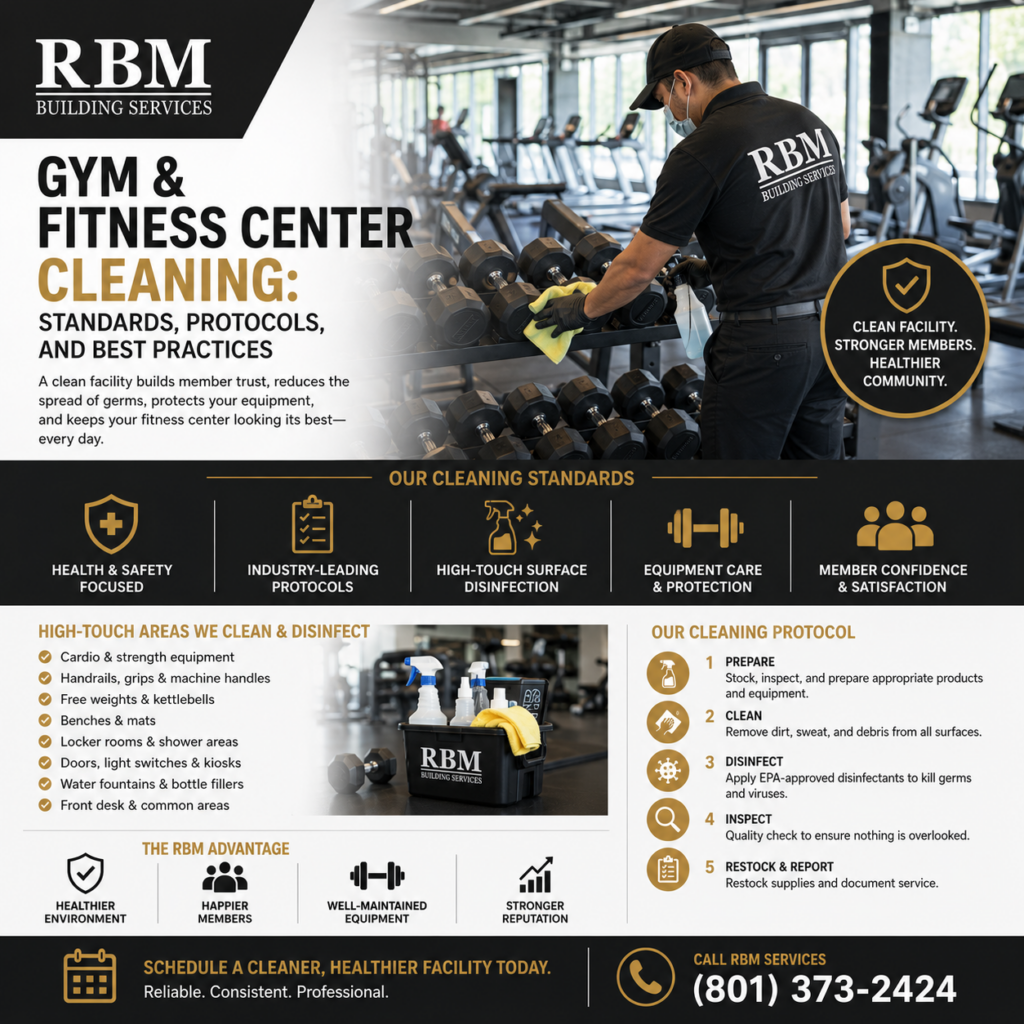
Gym and fitness center cleaning requires a fundamentally different approach than standard office cleaning. The combination of sweat, bacteria, high humidity, heavy foot traffic, and shared equipment creates unique sanitation challenges. Health club members expect spotless facilities — dirty gyms lose members quickly. Professional gym cleaning programs balance effective disinfection with equipment-safe products that do not damage expensive fitness machines or flooring surfaces.
High-Risk Areas in Fitness Facilities
Cardio equipment: Treadmills, ellipticals, and bikes accumulate sweat and bacteria on handles, displays, and contact surfaces. These should be disinfected after every use by members and deep cleaned by staff nightly. Free weight areas: Dumbbells, barbells, and weight plates are high-touch surfaces. Weekly deep cleaning of all weight equipment is essential. Locker rooms and showers: Warm, moist environments breed bacteria, mold, and foot fungi. These areas require multiple daily cleanings with hospital-grade disinfectants. Yoga and group fitness studios: Mats, blocks, and straps need daily disinfection. Pool and sauna areas: Chlorine and moisture require specialized cleaning protocols and ventilation maintenance.
Daily, Weekly, and Monthly Cleaning Schedule
Daily (multiple times): Disinfect all cardio machine touch surfaces, wipe down free weights and racks, clean and disinfect locker rooms and showers, mop wet areas with antimicrobial solution, empty all trash and recycling, spot clean mirrors and glass, restock restroom supplies. Weekly: Deep clean all fitness equipment including cables and pulleys, scrub and disinfect locker room floors and grout, clean HVAC vents in workout areas, pressure wash entryways and loading areas. Monthly: Carpet extraction in any carpeted areas, detail clean all light fixtures and ceiling fans, grout cleaning in wet areas, inspect and service cleaning equipment.
Special Cleaning Considerations for Gyms
Most fitness equipment manufacturers void warranties if certain chemicals are used. Alcohol-based disinfectants (70% isopropyl) are generally safe for all equipment surfaces. Bleach-based products should be avoided near rubber surfaces and most machine components. Microfiber cloths are preferred for equipment cleaning because they do not shed lint. Rubber flooring requires specific cleaning products — harsh chemicals can damage the rubber surface. For cleaning of common areas and administrative spaces within fitness facilities, our full-service janitorial programs can be customized to include all areas.
Additional FAQs
How often should gym locker rooms be cleaned? At minimum, twice daily — once mid-day and once after peak evening hours. High-volume gyms should clean locker rooms every 4 hours during operating hours. Showers should be cleaned and disinfected after every peak usage period.
Should gym members clean equipment after use? Yes — as a first line of defense. Most gyms provide disinfectant spray and paper towels for member use between staff cleanings. However, professional nightly cleaning is essential because member cleaning is inconsistent and often inadequate.
What cleaning products are safe for fitness equipment? Look for disinfectants that are EPA-registered for gym/fitness use and safe for the specific equipment materials. Many equipment manufacturers recommend specific cleaning products. Using the wrong chemicals can void expensive equipment warranties.
How do I prevent mold in gym shower areas? Proper ventilation is essential — run exhaust fans continuously during operating hours and for 30-60 minutes after closing. Use daily antimicrobial treatments on shower walls and floors. Schedule weekly grout cleaning. Consider installing microfiber drying systems for shower walls after nightly cleaning.
What is the biggest cleaning mistake gyms make? Using the same cleaning approach as standard offices. Gym cleaning requires more frequent disinfection, different chemicals (equipment-safe), specialized equipment for rubber flooring and high-moisture areas, and a focus on odor control that office cleaning does not require.
About RBM Building Services: Since 1974, RBM has provided commercial cleaning, building maintenance, and specialized facility cleaning across Utah, Arizona, Nevada, and Texas. Call 800.403.3564 or contact us.
The Business Case for Professional Gym Cleaning
Gym membership retention is directly tied to cleanliness. Industry surveys show that cleanliness is the second most important factor (after equipment availability) in member satisfaction. A 1% improvement in member retention through better cleaning can add $50,000-$200,000 in annual revenue for a mid-size fitness center. Professional gym cleaning programs typically cost $2,000-$8,000 per month depending on facility size — a fraction of the revenue gained through improved member retention.
Understanding Infection Risks in Fitness Facilities
Gyms and fitness centers present unique infection transmission risks because they combine high-touch surfaces, heavy breathing (aerosol generation), warm and humid environments, and a diverse population of users. Research has identified several key pathogens of concern in fitness facilities. MRSA (Methicillin-resistant Staphylococcus aureus): Can survive on gym equipment surfaces for days to weeks. Transmission occurs through skin contact with contaminated surfaces. Professional sports teams and locker room facilities have experienced MRSA outbreaks linked to inadequate cleaning. Influenza and rhinoviruses: Spread through respiratory droplets and surface contact. Fitness centers see higher transmission rates during respiratory illness seasons because of heavy breathing and shared equipment. Staphylococcus aureus: Commonly found on weight equipment handles, benches, and locker room surfaces. Regular disinfection significantly reduces contamination levels. Fungal infections (athlete’s foot, ringworm): Thrive in locker room and shower environments. Require daily disinfection and proper ventilation to control. The cleaning protocol should address each of these pathogens with appropriate disinfectants, contact times, and cleaning frequencies.
Equipment-Specific Cleaning Protocols
Different types of fitness equipment require different cleaning approaches. Cardio machines (treadmills, ellipticals, bikes): Wipe down all touch surfaces (handles, displays, heart rate sensors, cup holders) with a disinfectant safe for electronics after every use by members. Nightly deep cleaning includes removing and cleaning under the hood, cleaning belt decks and tracks, and inspecting for damage. Strength machines: Clean all pads, handles, weight stacks, and cables. Pay special attention to foam padding which absorbs sweat and bacteria. Use disinfectant sprays that are compatible with upholstery — bleach-based products damage vinyl and foam. Free weights: Dumbbells and barbells collect sweat from every user. Wipe down all surfaces nightly. Periodically deep clean rubber-coated weights which can develop a sticky residue from sweat and cleaning product buildup. Rubber flooring and mats: Use specific rubber floor cleaners, not general-purpose degreasers which can dry out and crack rubber. Mop with neutral pH cleaner daily. Schedule deep scrubbing monthly to remove embedded dirt and residues. Yoga mats and props: If provided by the facility, these must be disinfected after every use. Commercial-grade spray disinfectants or UV-C sanitizing cabinets are effective. Many gyms now require members to bring their own mats. For general facility areas beyond the workout floor, our full-service janitorial programs provide comprehensive cleaning.
Locker Room and Shower Cleaning Protocols
Locker rooms are the most challenging area in any fitness facility. The combination of moisture, heat, organic matter, and high traffic creates ideal conditions for microbial growth. Multiple daily cleaning cycles: Locker rooms should be cleaned and disinfected at minimum twice daily — once mid-day and once after peak evening hours. High-volume fitness centers (500+ daily visits) should clean locker rooms every 4 hours. Shower cleaning: Scrub shower walls, floors, and fixtures with antimicrobial cleaner daily. Apply mold-inhibiting treatment weekly. Inspect grout and caulking monthly — damaged grout harbors bacteria and mold. Replace shower curtains and liners quarterly. Locker cleaning: Wipe down locker interiors and exteriors daily. Vacuum locker interiors weekly. Periodically inspect for forgotten items, food, or trash that can create odors and pest issues. Bench and seating areas: Disinfect all hard surfaces daily. Steam clean upholstered areas monthly. Sink and mirror areas: Clean and disinfect multiple times daily. Restock soap and paper products. Remove clutter and personal items left behind. Odor management: Install and maintain proper ventilation with humidity sensors. Use enzymatic cleaners that break down organic odors rather than masking them. Schedule monthly deep cleaning of all locker room surfaces including ceilings and HVAC vents.
HVAC and Air Quality in Fitness Facilities
Fitness center HVAC systems work harder than any other commercial space type. Occupants breathe 5-10 times more air per minute during exercise than at rest, creating higher ventilation demands. Key requirements for fitness facility HVAC include ASHRAE Standard 62.1 ventilation rates 2-3 times higher than standard office spaces, humidity control between 40-60% to prevent mold growth while maintaining comfort, increased filter replacement frequency (monthly instead of quarterly), MERV-13 or higher filters to capture particles generated during exercise, CO2 monitoring to ensure adequate ventilation during peak hours, and separate ventilation for pool and sauna areas. Cleaning crews should never block air intake or return vents. Coordinate with HVAC maintenance providers to ensure filter changes and coil cleaning are scheduled appropriately. Our building maintenance services include HVAC support for fitness facilities.
Additional FAQs
Should gym cleaning happen during operating hours or after hours? Both. During operating hours, staff should wipe down equipment after each use, conduct continuous restroom and locker room checks, and spot clean as needed. After hours, the professional cleaning crew performs deep cleaning of all areas including equipment, floors, locker rooms, and administrative spaces. A day porter or dedicated cleaning staff during peak hours is recommended for facilities over 10,000 sq ft.
What disinfectant dwell times are needed for gym equipment? Most EPA-registered disinfectants require 5-10 minutes of contact time to kill pathogens. This means the surface must remain visibly wet for the specified time. Many gyms use electrostatic sprayers that apply a fine mist covering all surfaces, allowing the disinfectant to dwell while staff clean other areas. Always follow the manufacturer’s label instructions for dwell times — reducing dwell time reduces effectiveness.
How do I handle cleaning requests from members? Train all staff to respond to member cleanliness concerns immediately and politely. A member who reports a cleanliness issue is doing the facility a favor. Document the issue and the response. Use member feedback to identify problem areas or times of day when cleaning frequency should be increased.
Are UV-C sanitizers effective for gym equipment? UV-C light is effective for sanitizing surfaces but has limitations. It only treats surfaces in a direct line of sight — shadows and crevices are not reached. It does not remove dirt or organic matter. UV-C is best used as a supplement to, not a replacement for, chemical disinfection. Some gyms use UV-C cabinets for small equipment like yoga mats, foam rollers, and resistance bands.
What is the best flooring for a fitness center from a cleaning perspective? Rubber flooring is the most practical choice for workout areas. It is durable, moisture-resistant, and can be cleaned with neutral pH cleaners. Avoid carpet in workout areas — it absorbs sweat and odors and is difficult to keep hygienic. Vinyl or tile is acceptable for locker rooms if grout is sealed and maintained. Polished concrete is increasingly popular for gyms but requires proper sealing to prevent moisture absorption.